The bodyguard is a professional who operates at the intersection of private security and high-risk protection. Their daily work involves facing threats such as firearm assaults, attacks, or traffic accidents during protective transfers. Added to this is extreme stress from the responsibility of safeguarding lives, forced postures, and physical overexertion. 3D technology offers key tools to mitigate these dangers.
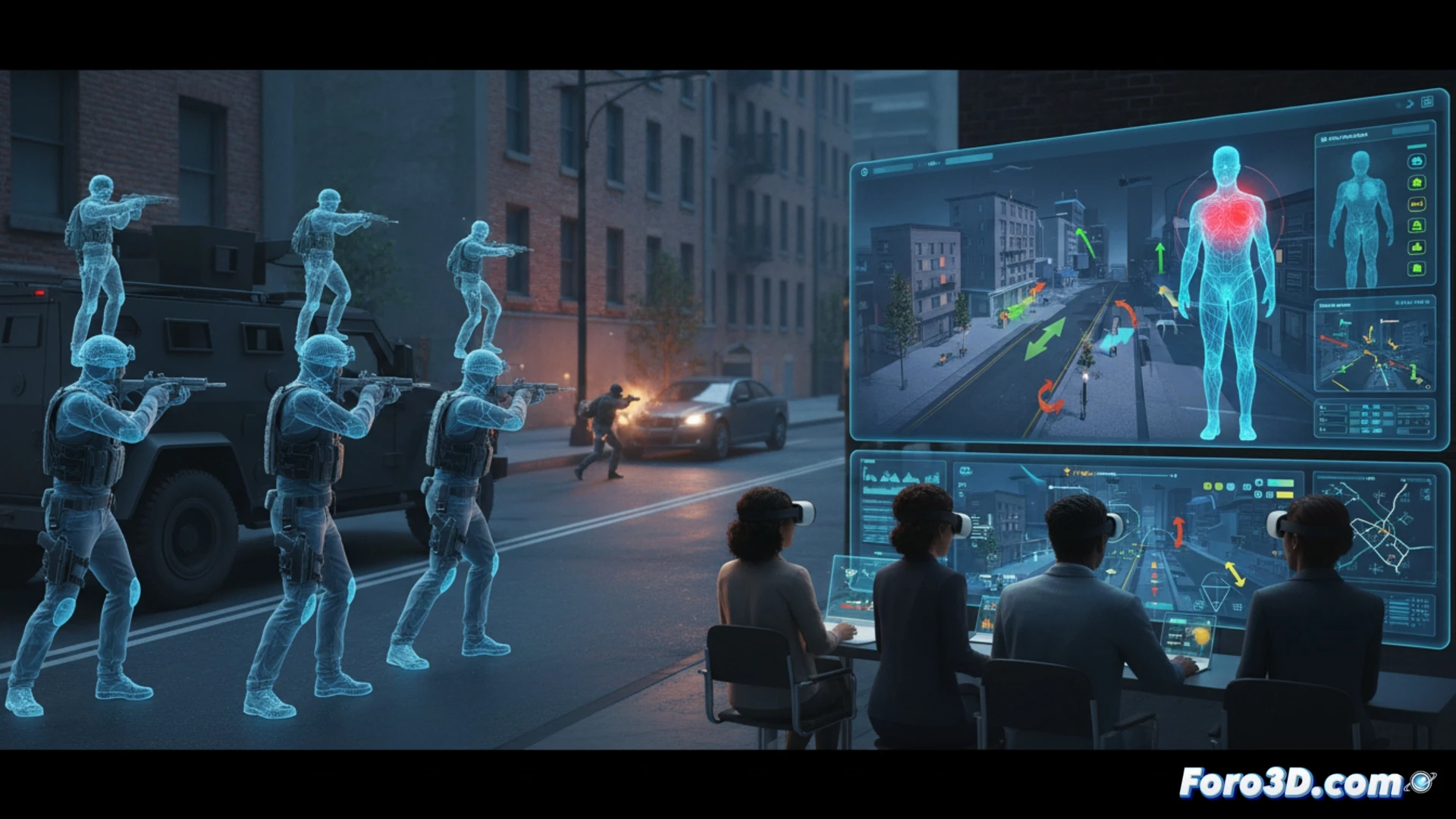
3D Simulation of Critical Scenarios for Tactical Training 🎯
Three-dimensional modeling allows for faithfully recreating attacks, ambushes, or emergency evacuations without exposing the bodyguard to real risk. Using digital twins of buildings or armored vehicles, escape routes and reaction protocols under crossfire can be rehearsed. This immersive training reduces the surprise factor and trains decision-making under pressure. Additionally, simulating traffic accidents in virtual environments helps prevent collisions during transfers, improving the protective driver's anticipation skills.
Technical Vulnerability and Regulatory Compliance 🛡️
Bodyguards share risks similar to those of police officers in high-risk operations, but without the same tactical support. 3D technology not only trains but also documents each exercise to comply with private security regulations. A digital twin can integrate early warning sensors and monitor the agent's physical conditions in real time, preventing injuries from forced postures or overexertion. It is an investment in real protection for those who protect the most vulnerable groups.
What interfaces would you propose so that verifiers can easily identify special cases?