The traffic manager is an essential professional whose work involves constant exposure to psychosocial and physical risk factors. Among these are stress from real-time incident management, visual fatigue from continuous screen use, a sedentary lifestyle, musculoskeletal disorders, and anxiety derived from rotating night shifts. This often invisible profile falls within vulnerable groups in the workplace, where prevention requires advanced technological solutions beyond traditional ergonomics.
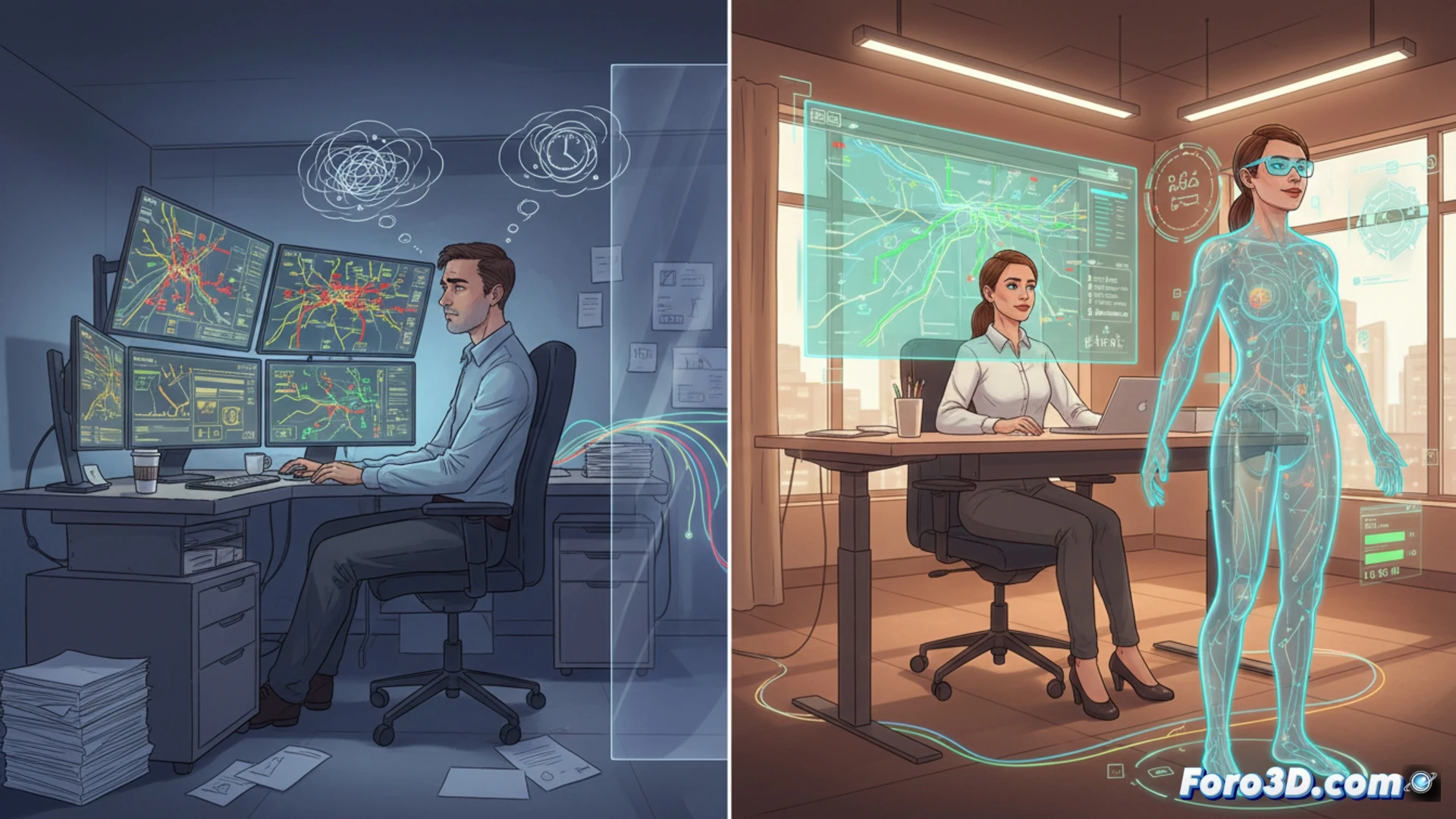
3D simulation and shift verification for stress mitigation 🧠
The application of digital twins of the control station allows for accurately recreating the manager's real environment. Through immersive 3D simulations, it is possible to analyze mental load during traffic peaks and evaluate the visual impact of screens under low nighttime lighting conditions. These models allow for virtually testing the redistribution of rotating shifts, identifying patterns that generate chronic fatigue. Additionally, visual alert systems integrated into the digital twin can detect signs of stress or drowsiness, activating active break protocols or immediate rotation, thus improving regulatory compliance for risk prevention.
Redesigning the space to protect the invisible professional 🛡️
3D technology is not only useful for diagnosis but also for redefining workplace safety from the design stage. By simulating the layout of furniture, lighting, and control interfaces, musculoskeletal disorders can be prevented and visual fatigue reduced before they materialize. Protecting the traffic manager as a vulnerable group involves understanding that their mental and physical health is a critical system indicator. Investing in these simulations means betting on a more humane and sustainable work model in high-demand sectors.
How can a digital twin of the traffic manager anticipate and mitigate stress and fatigue peaks in high-demand environments, thereby reducing the risk of workplace accidents and the incidence of psychosocial disorders.
(PS: checking status is like leveling the bed: if you don't do it right, the first layer (and the rights) fail)