The profession of geriatric caregiver has a high incidence of musculoskeletal disorders, biological risks, and work-related stress. The mobilization of bedridden patients, forced postures during hygiene care, and aggression from people with dementia are constant sources of danger. To address this issue at its root, 3D technology offers simulation tools that allow for redesigning work protocols, minimizing physical impact, and improving safety for both the caregiver and the resident.
Virtual ergonomics and simulation of risk scenarios 🛡️
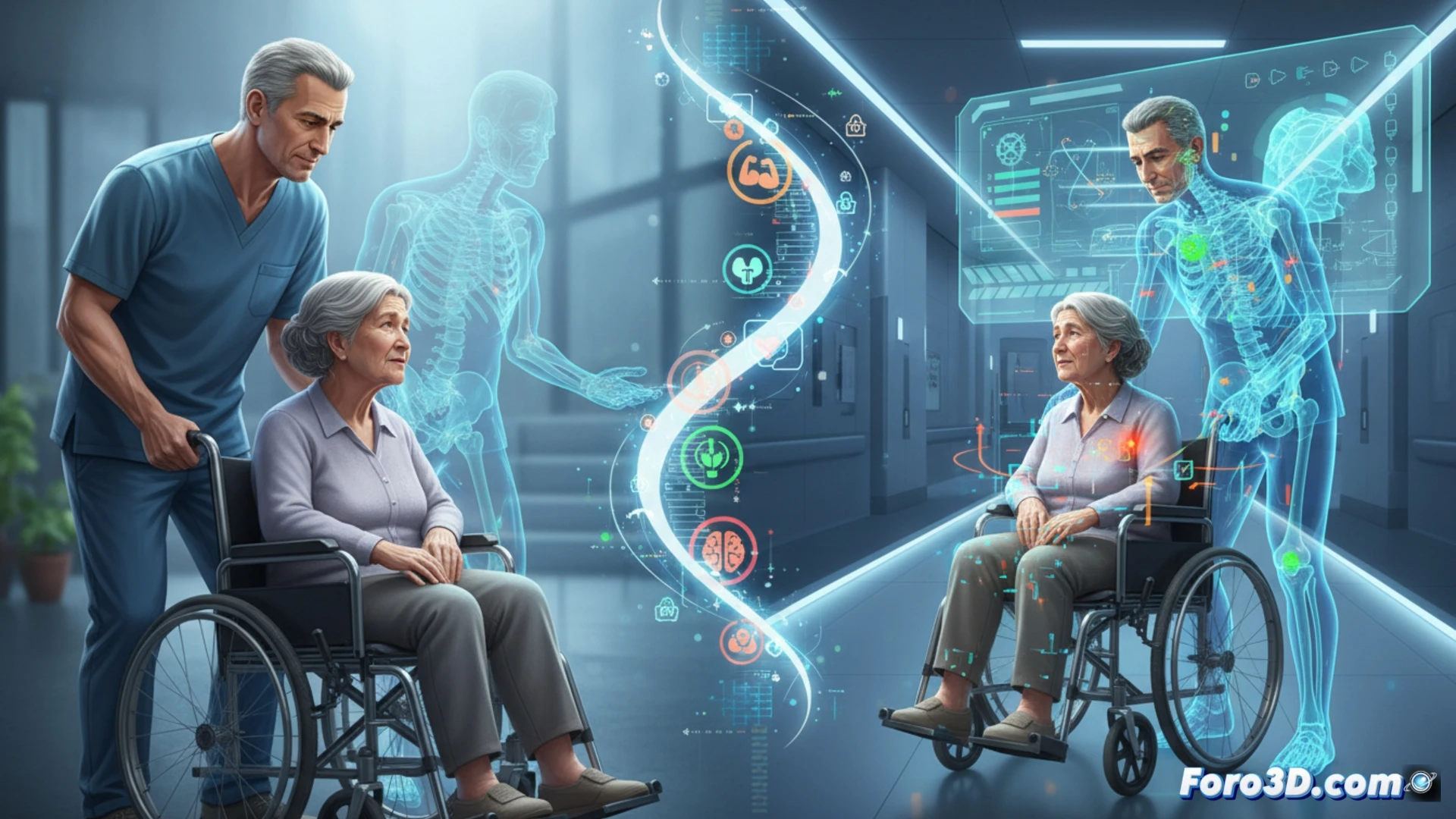
Through motion capture and 3D modeling, it is possible to create digital twins of the workplace to analyze the biomechanics of the geriatric caregiver. Loads on the lumbar spine during a transfer from bed to wheelchair are visualized, identifying critical angles of flexion and torsion. This simulation allows for designing safer mobilization protocols and selecting the optimal technical furniture. Additionally, virtual environments are recreated to train staff in de-escalating aggression from Alzheimer's patients, exposing them to controlled stress situations without real risk. The simulation also models early warning systems to detect falls or a glove tear during exposure to biological fluids.
Technology at the service of the caregiver and care 🤝
It is not just about preventing physical injuries, but about dignifying an essential profession. The application of 3D technology in protecting the geriatric caregiver represents a paradigm shift: moving from reacting to an accident to anticipating it. By reducing physical strain and stress, staff turnover decreases and the quality of care for the elderly improves. Investing in virtual ergonomics and simulation is a commitment to a safer work environment, where technology does not replace human touch, but protects and enhances it.
How can a digital twin of the geriatric caregiver anticipate high-risk biomechanical movements and emotional loads in real time to prevent injuries and stress before they occur in a nursing home?
(PS: warning systems are like coffee: if they don't go off when they should, the day goes wrong)