The figure of the system administrator, a pillar of digital compliance, faces invisible but critical occupational risks: stress from on-call duties, eye strain, and exposure to hostile server room environments. This article explores how 3D modeling and digital twins can simulate these conditions to anticipate incidents, improve ergonomics, and comply with prevention regulations in technology companies.
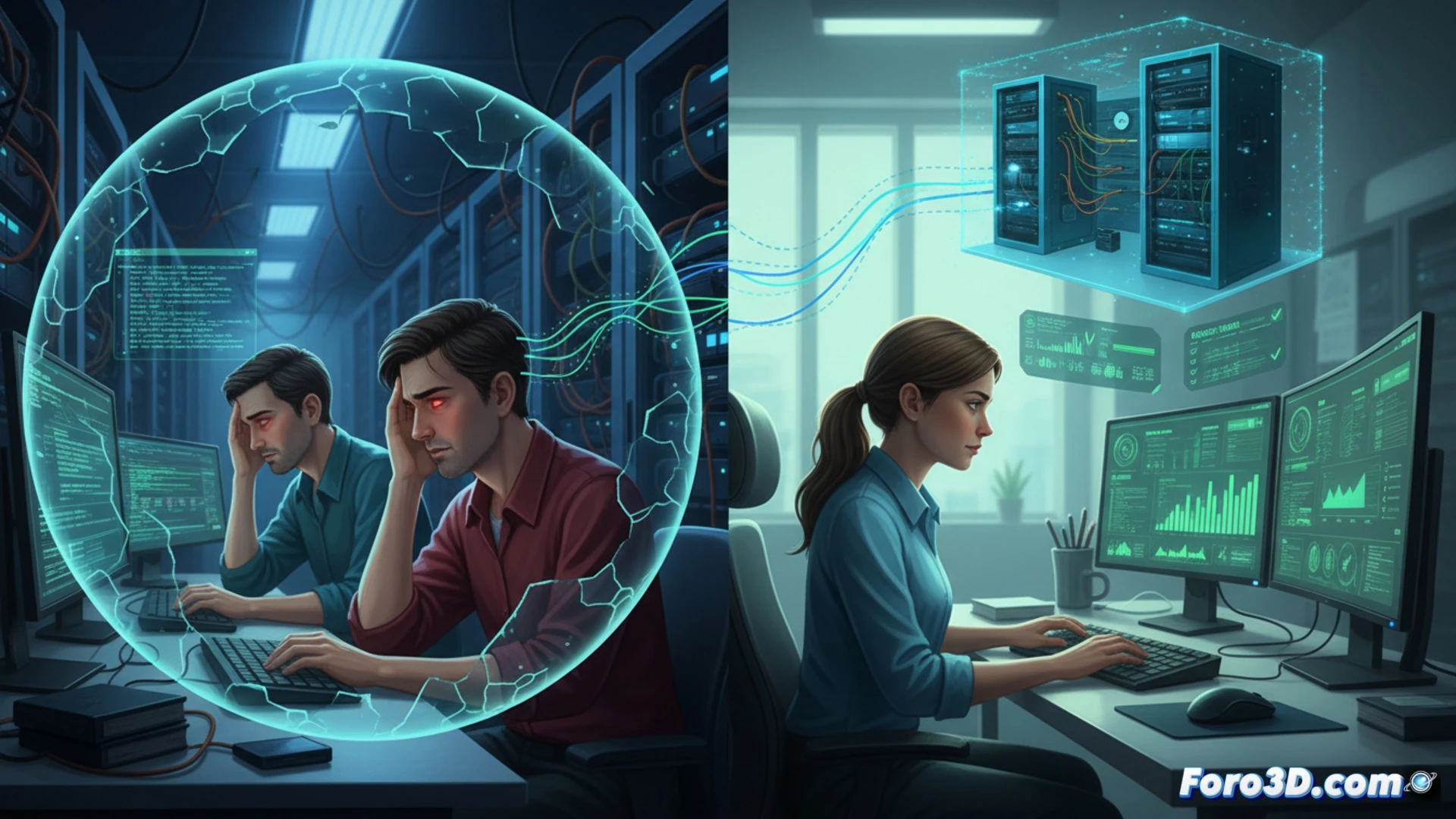
3D Visualization of Extreme Conditions in Server Rooms 🖥️
Server rooms present electrical risks, constant noise, and extreme temperatures. Through laser scanning and parametric modeling, it is possible to recreate these spaces in an interactive 3D environment. Overheating scenarios can be simulated, electrical contact points identified, or cable layouts analyzed to prevent trips and falls. Additionally, volumetric representation of forced postures allows for adjusting the location of racks and equipment, reducing musculoskeletal disorders. This digital twin serves as a training tool for the administrator to recognize hazards without physical exposure.
Simulation of Stress as a Quantifiable Risk Factor 🧠
Stress from continuous availability and on-call duties cannot be visualized with 2D plans. Here, 3D technology offers cognitive heat maps and animated workflow timelines. By modeling workstations and evacuation routes, high-pressure scenarios can be recreated. This representation helps compliance areas justify the need for shift rotation and active breaks, protecting the administrator's mental health and aligning the company with the standards of the Occupational Risk Prevention Law.
How can a digital twin replicate in real-time the stress and fatigue patterns of a sysadmin to activate preventive protocols before a critical error materializes in the digital compliance infrastructure?
(PS: at Foro3D we know that the only compliance that works is the one tested beforehand, not afterwards)