The figure of the notary, a pillar of public trust, faces a silent paradox: while guaranteeing the legal security of third parties, their own occupational health suffers under the weight of legal responsibility, public interaction, and a sedentary lifestyle. This technical analysis explores how 3D simulation and digital twins can transform risk prevention in the notarial sector, integrating regulatory compliance with digital ergonomics.
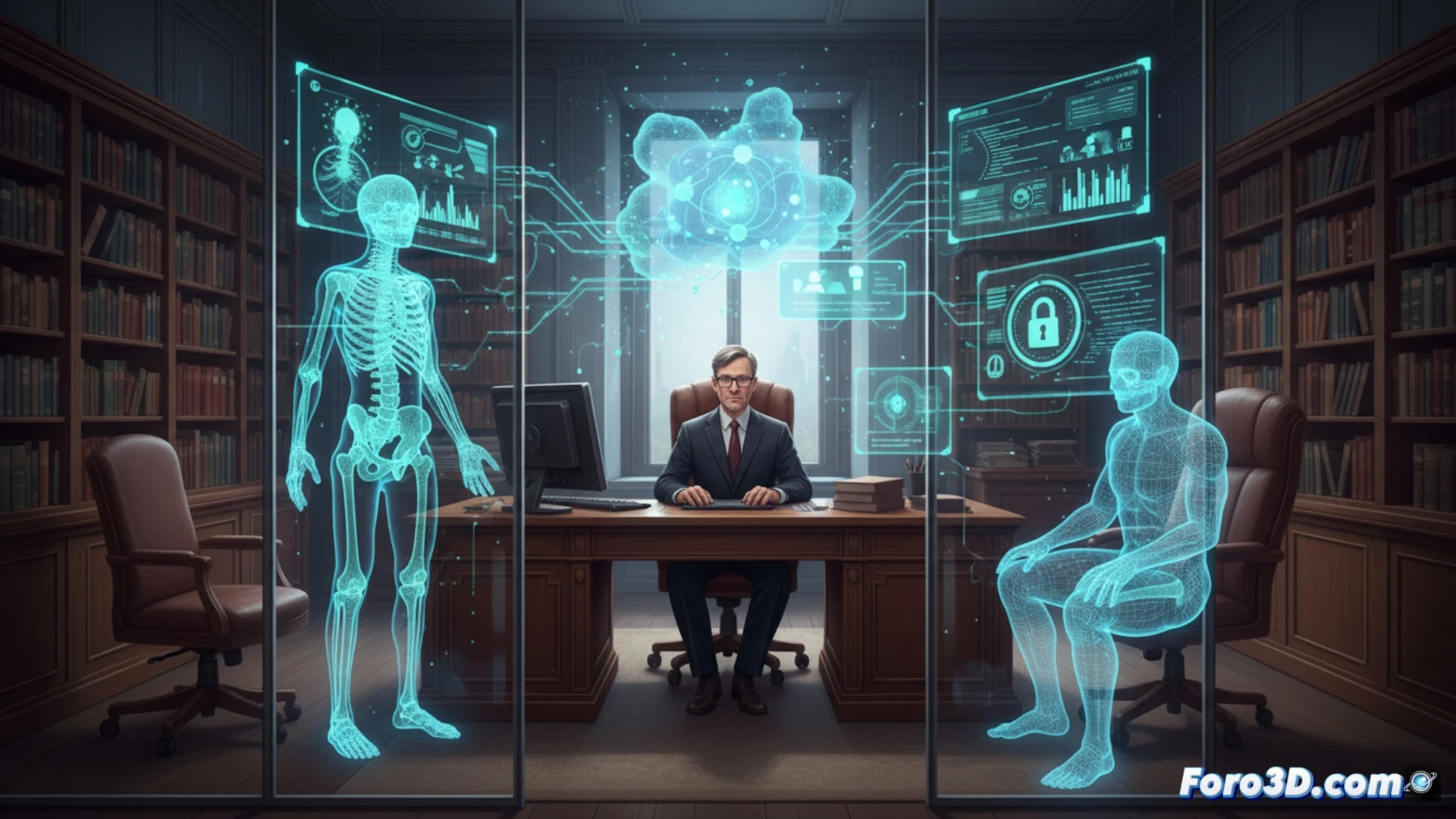
3D Simulation of Postural Loads and Visual Fatigue 🖥️
The application of digital twins allows for precise modeling of the notary's workstation. Using IoT sensors and motion capture, a virtual environment is recreated that records hours of sitting, joint angles, and blinking in front of screens. Ergonomic simulation software, such as those based on ISO 11228 standards, identifies critical points of cervical and lumbar tension. Additionally, high cognitive demand scenarios, such as reviewing complex deeds, can be simulated to measure physiological response (heart rate, variability) and anticipate episodes of anxiety or mental overexertion before they become chronic.
Labor Compliance as a Competitive Advantage ⚖️
Implementing these technologies not only mitigates risks but also positions the notarial office as a benchmark in digital compliance. The visual representation of stress and posture data allows human resources departments to design personalized active breaks and task rotations. By integrating the simulation of verbal aggression (using reactive virtual avatars), the notary is trained in de-escalation techniques without being exposed to real danger. The result: a demonstrable reduction in sick leave and an improvement in the quality of public service, documented through auditable 3D indicators.
How can a digital twin of a notary's office anticipate and mitigate the psychosocial risks arising from the mental load and legal responsibility of the notary?
(PS: verification systems are like printing supports: if they fail, everything collapses)