The work of the Mossos d'Esquadra exposes officers to a lethal combination of risks: physical assaults, traffic accidents, exposure to biological fluids, and high post-traumatic stress. Prevention regulations require tools beyond the theoretical manual. 3D technology now allows for the millimeter-precise recreation of intervention scenarios to anticipate danger and design real safety protocols.
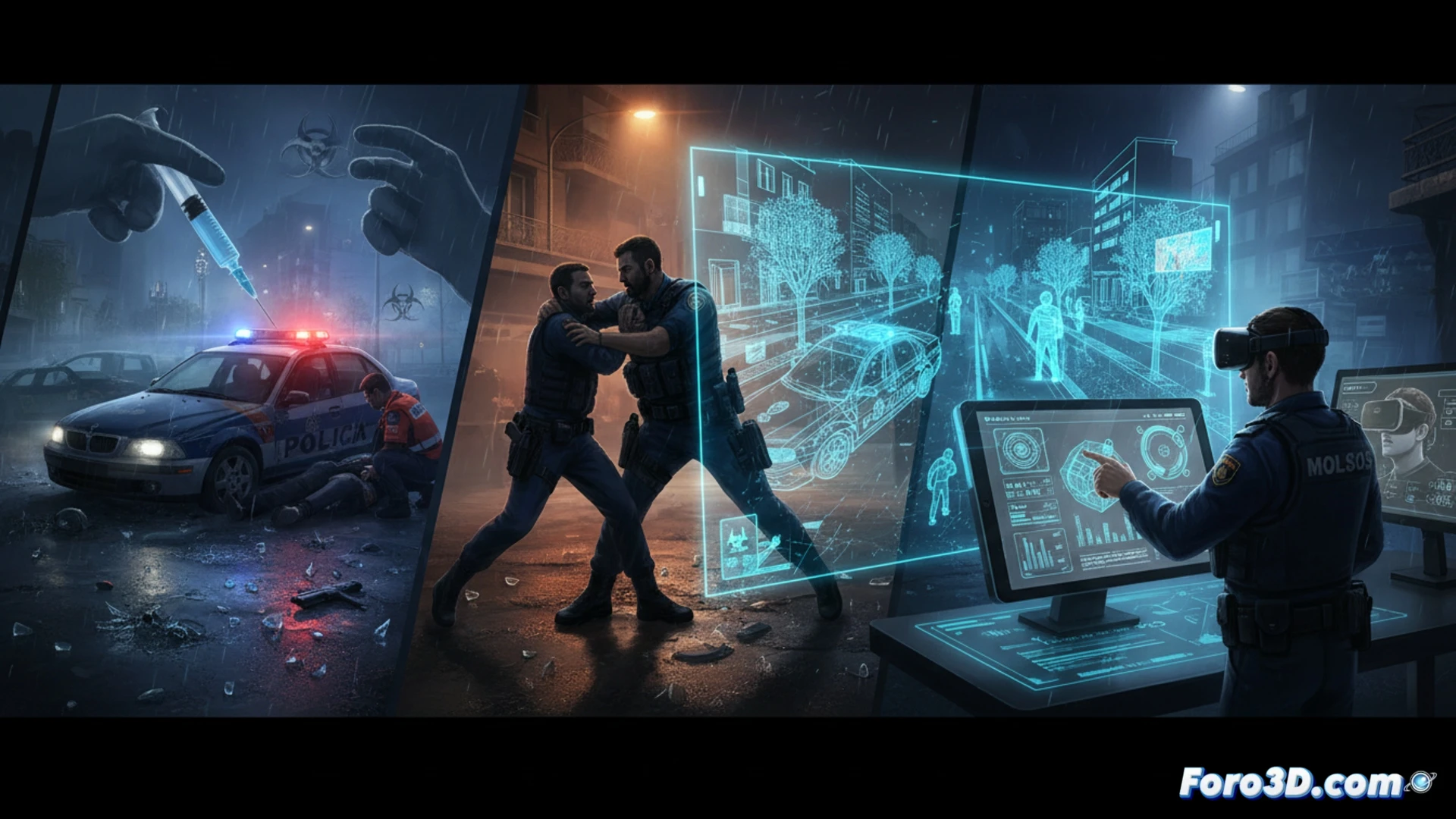
3D simulation of hostile environments and evacuation routes 🛡️
By creating digital twins of police stations, urban conflict zones, and night patrols, it is possible to model each identified risk. For example, an assault at a traffic checkpoint can be simulated to study impact trajectories and design a vest with deformation sensors. Traffic accidents are also recreated in 3D to analyze blind spots in emergency driving. For night shifts, immersive visual alert systems are developed that detect eye fatigue and altered sleep patterns, allowing rest schedules to be adjusted before the officer suffers a disorder. These simulations make it possible to validate compliance with the Occupational Risk Prevention Law without exposing anyone to real danger.
Invisible protection: mental health and post-traumatic stress 🧠
The greatest challenge is psychological damage. Verbal assaults and traumatic interventions leave a mark that reports do not record. Immersive virtual reality allows for recreating high-tension situations to train the officer's emotional management in a controlled environment. A digital twin of a shooting scene or a serious accident can be used as a therapeutic tool for desensitization and treatment of post-traumatic stress, thus protecting the mental health of the most exposed group.
How can a digital twin simulate in real time the fatigue and post-traumatic stress of an officer to activate rotation protocols before they become a preventable occupational risk?
(PS: alert systems are like coffee: if they don't go off when they should, the day goes sideways)