Office work in public administration exposes civil servants to a combination of physical and psychosocial risks that are often underestimated. Eye strain from screens, a sedentary lifestyle, musculoskeletal disorders from forced postures, and stress derived from administrative workload and public service are constant threats. Added to this are verbal aggression and anxiety, along with basic risks such as falls in official premises. Protecting this vulnerable group requires a proactive and technological approach.
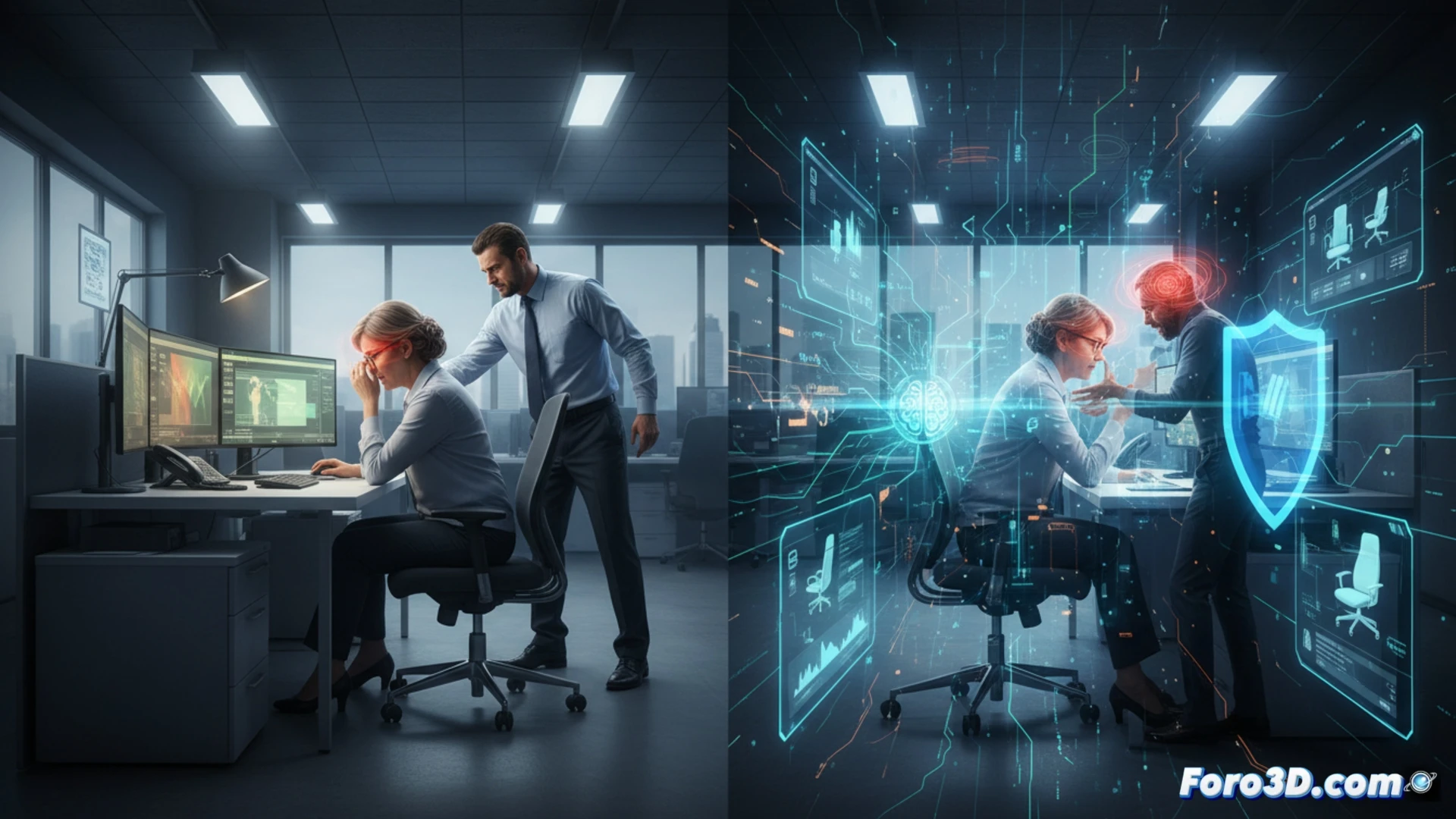
3D Simulation and Ergonomic Verification of the Workstation 🖥️
The implementation of digital twins allows for accurately recreating the civil servant's work environment. Using 3D modeling software and motion capture, it is possible to simulate daily routines: from monitor and chair height to file reach trajectories. The system verifies postural deviations in real time and calculates accumulated physical load. Additionally, virtual sensors can be integrated to monitor screen brightness and flicker, generating early warnings against eye strain, optimizing workspace design before an injury occurs.
Early Warnings for Stress and Public Service 🧠
Beyond the physical, 3D technology allows simulating scenarios of high psychosocial demand. Conflictive public service situations can be recreated, measuring the nervous system's response in a safe environment. The digital twin, fed with biometric data, identifies anxiety peaks and stress patterns. This enables designing active break protocols, furniture relocation to avoid crowding, and regulatory compliance verification systems, protecting the civil servant's mental health and ensuring a safer and more humane work environment.
How can a digital twin of a civil servant's workstation predict and mitigate in real time psychosocial risks such as burnout or chronic eye strain, in addition to ergonomic ones?
(PS: alert systems are like coffee: if they don't go off when they should, the day goes wrong)