The position of administrative assistant concentrates risks that are often underestimated due to their apparent low danger: forced postures, eye strain from screens, sedentary lifestyle, repetitive movements, and stress from customer service and tight deadlines. Prevention regulations require identifying and mitigating them, but in digital environments, compliance clashes with the difficulty of measuring the intangible. Here, 3D technology offers a disruptive solution.
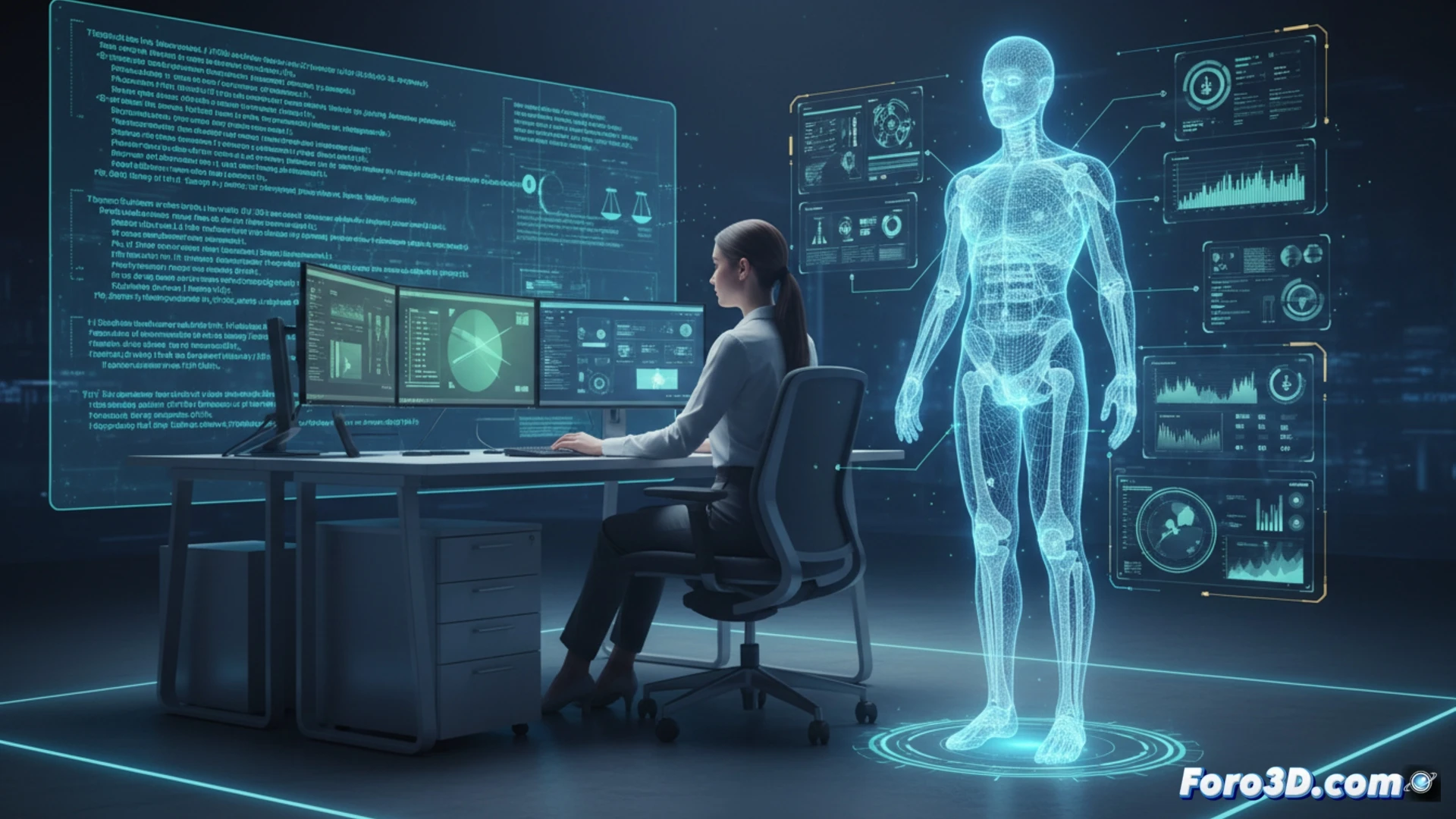
3D simulation of ergonomics and eye strain in the office workstation 🖥️
Using digital twins of the workspace, it is possible to accurately recreate the position of furniture, screen height, lighting, and the worker's joint angles with metric precision. A parameterized biomechanical avatar allows detecting forced postures that exceed the thresholds recommended by ISO 11226 standards. Additionally, simulating gaze trajectories and screen glare quantifies accumulated eye strain. This visualization not only identifies the risk but also allows redesigning the workstation virtually before implementing physical changes, ensuring regulatory compliance without interrupting work activity.
Proactive compliance: from simulated risk to real protection 🛡️
Verification of compliance in occupational risk prevention is usually reactive, based on periodic inspections. A system of interactive 3D simulations changes the paradigm: it allows real-time auditing of the effect of active breaks, task rotation, or redistribution of mental load during stress peaks. For digital compliance, this means moving from a static checklist to a predictive model. The administrative assistant, often a vulnerable group in the teleworking era, thus obtains protection based on visual and verifiable data.
How a digital twin can be implemented to model and prevent the specific ergonomic and psychosocial risks of the administrative assistant within the framework of digital compliance.
(PS: verification systems are like printing supports: if they fail, everything collapses)