The profession of industrial mechanic concentrates some of the most serious risks in logistics and production: entrapment in active machinery, cuts from hand tools, chemical exposure to oils and solvents, falls on slippery floors, and repetitive strain injuries. Traditional prevention relies on manuals and signage, but 3D simulation offers a qualitative leap by allowing each hazard to be visualized before stepping into the real workshop.
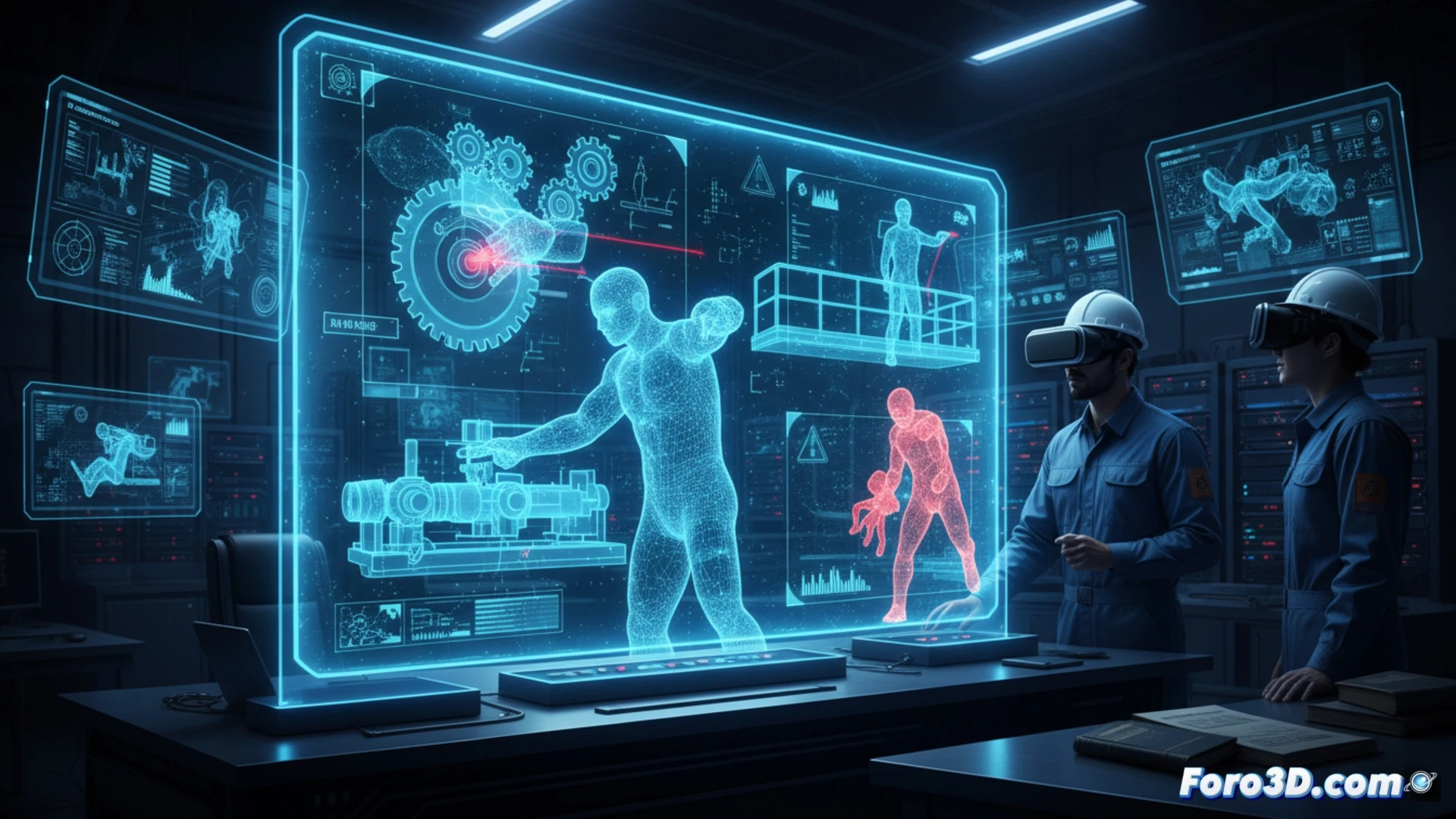
Simulation of lockout protocols and exclusion zones 🛡️
Using digital twins of industrial plants, it is possible to model the operating areas of robotic arms, conveyor belts, and hydraulic presses with millimeter precision. The technician can explore a virtual workshop in virtual reality where entrapments and impacts are simulated, learning to identify blind spots and safety distances. Additionally, maintenance scenarios can be programmed where the operator practices locking out energy sources (LOTO) without exposure to accidental activation. Visualizing oil or solvent spills on the floor allows for designing evacuation routes and decontamination zones, reducing falls and skin contact.
Prevention as an immersive culture, not a document 🧠
The quietest risk for the industrial mechanic is routine: familiarity with noisy, greasy machines normalizes danger. 3D simulation breaks this inertia by forcing the operator to face immediate virtual consequences, such as a simulated crushing or vapor intoxication. Investing in these tools not only reduces accidents but transforms safety into a trainable, measurable, and updatable technical skill for each new piece of equipment or production process.
How can a digital twin model in real time the trajectories of an operator in entrapment risk zones to activate predictive safety protocols in active industrial machinery?
(PS: 3D bottlenecks are like traffic jams: you see them coming but can't avoid them)