Analyzing the occupational risks of a tour guide involves dealing with a professional profile where travel over uneven terrain, extreme climate exposure, and stress from group management converge. Although not a vulnerable group in the traditional sense, their working conditions require specific protection systems. 3D technology allows modeling these scenarios to design more effective prevention protocols.
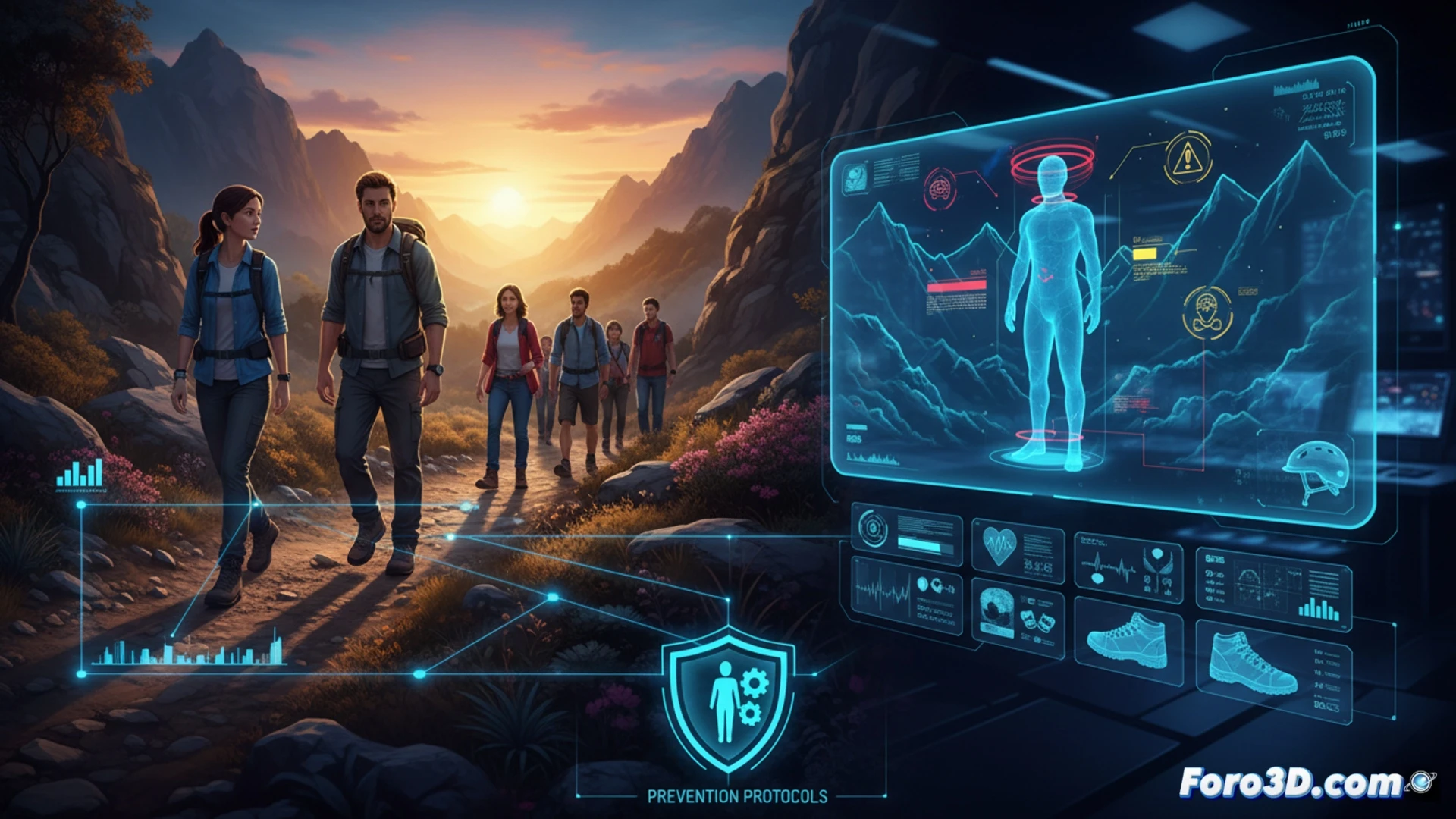
3D terrain modeling and simulation of forced postures 🏔️
The first technical step is to create a digital twin of the tour route using LiDAR scanning or photogrammetry. This allows identifying critical points for falls due to uneven ground, steps, or irregular pavement. On this model, historical climate variables can be superimposed to simulate thermal stress from UV radiation or rain. Furthermore, 3D biomechanical modeling allows analyzing the guide's forced postures during prolonged stops, calculating accumulated fatigue in the knees and spine. The result is a virtual heat map that indicates high-risk zones and recommended maximum exposure times.
Regulatory compliance through safe route visualization 🛡️
Once risks are identified, the same 3D platform can generate alternative routes that avoid critical points, integrating virtual warning signs and scheduled rest areas. This system allows auditing compliance with occupational risk prevention regulations, offering visual reports that justify the relocation of stops or the reduction of material load. Dynamic simulation of group flow also helps mitigate guide stress, adjusting schedules based on predicted fatigue.
How can a digital twin anticipate and mitigate the specific risks of a tour guide when traversing unstable or unpredictable terrain during an excursion?
(PS: alert systems are like coffee: if they don't go off when they should, the day goes wrong)