The craft of the embroiderer, essential in haute couture fashion and decoration, hides a silent reality of chronic occupational hazards. From needle pricks to intense eye strain and musculoskeletal disorders in the neck, back, and hands, the profession demands an update in prevention. 3D technology, applied to textile design, offers revolutionary tools to simulate postures and work environments before damage occurs.
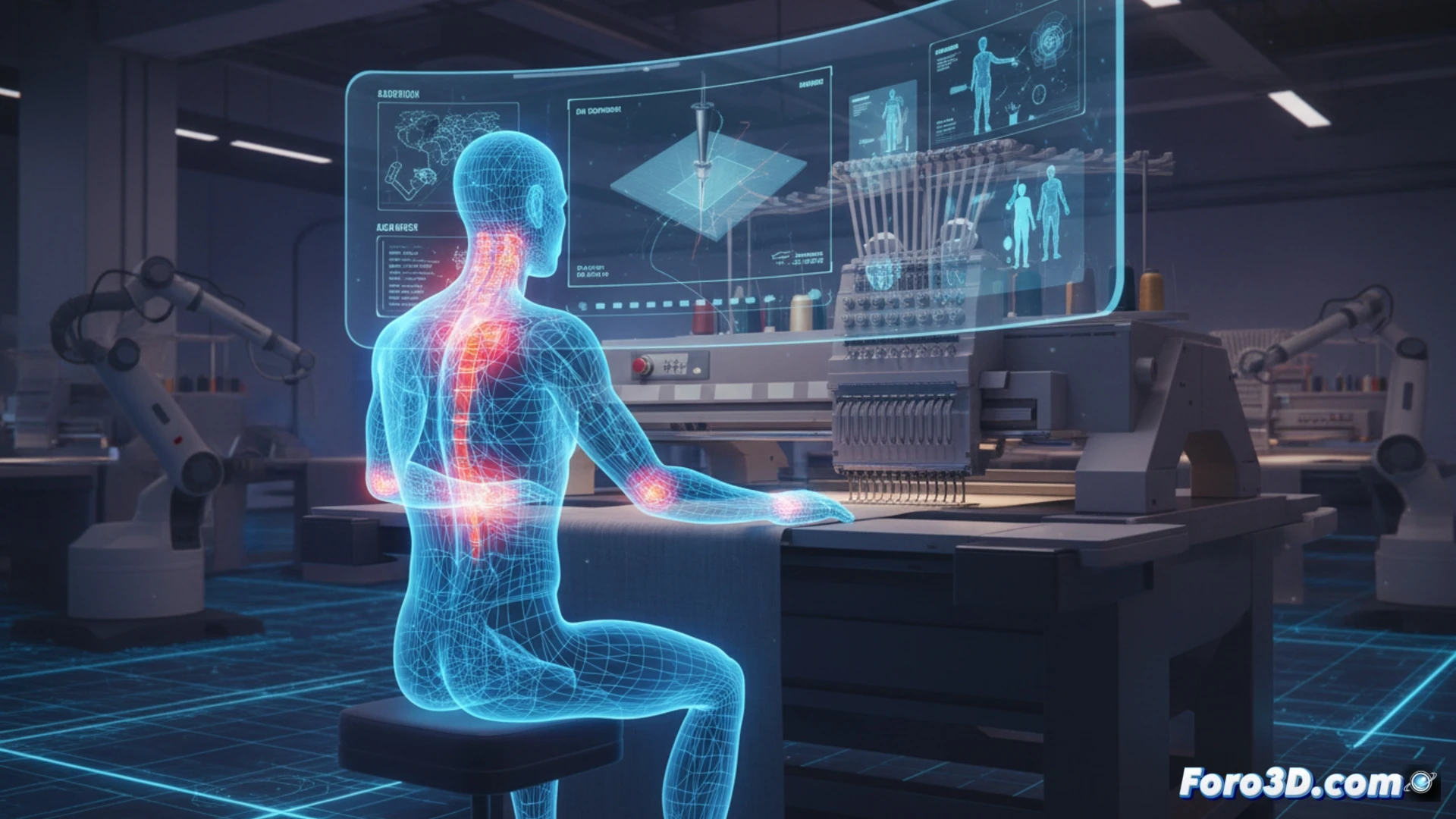
Biomechanical simulation and virtual ergonomics in 3D 🧵
3D modeling allows creating digital avatars of the embroiderer on which repetitive motion analysis is applied. Using textile simulation software, it is possible to parameterize the neck inclination over the frame and the wrist tension during punching. Virtual ergonomic hoops and frames can be designed, adjusting their weight and angle before manufacturing them. Additionally, lighting simulation in 3D environments helps reduce eye strain by optimizing light without shadows or glare on the fabric.
Digital prevention for a craft trade 🪡
The implementation of digital twins of the workstation allows industrial designers and ergonomists to identify critical points of overexertion without the need for costly physical prototypes. This approach not only protects the embroiderer's health but also preserves the quality of the craftsmanship by reducing sedentary behavior and injuries from fiber dust. 3D Fashion and Textiles cease to be merely aesthetic and become a tool for occupational well-being.
How can digital twins simulate and mitigate the specific ergonomic and mechanical risks of textile embroidery, such as fatigue from repetitive movements or needle tension, before injuries or production failures occur?
(PS: Designing fashion in 3D has the advantage that you never have to sew a button.)