The teleoperation sector presents a critical paradox: a seemingly static job that generates high rates of musculoskeletal disorders, chronic visual fatigue, and pathological stress. Forced neck and wrist postures, combined with productivity metric pressure and continuous screen exposure, make these professionals a vulnerable group requiring specific technical solutions beyond conventional ergonomic chairs.
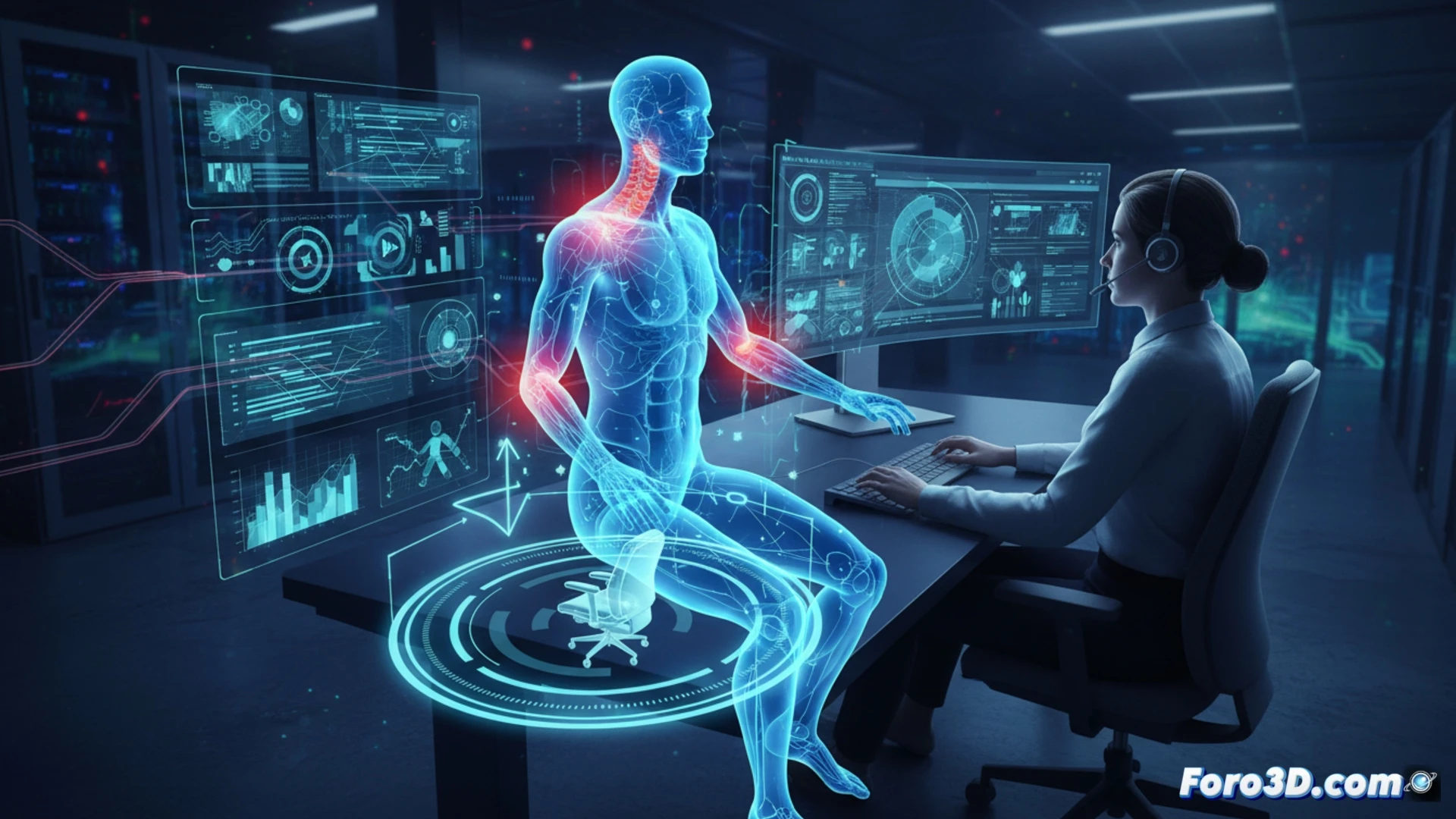
3D simulation of biomechanical loads and visual fatigue 🖥️
The implementation of digital twins of the workstation allows for millimeter-precise modeling of the teleoperator's joint deviations during their shift. Through motion capture with inertial sensors, a 3D avatar is generated that visualizes in real time the accumulated tension in the cervical spine and wrist tendons. This early warning system, combined with visual fatigue heat maps derived from eye tracking, allows for redesigning monitor placement and adjusting work surface heights before pathologies such as vocal nodules or carpal tunnel syndrome develop.
Towards a verification standard for vulnerable telework 🛡️
3D technology should not only diagnose but also train. Immersive simulations allow the teleoperator to practice active breaks and visual micro-rests in a virtual environment that replicates their real stress. The true breakthrough lies in integrating these digital twins as mandatory verification systems in occupational risk assessments, transforming passive prevention into an active protocol that protects the vocal and mental health of a group that, silently, sustains the customer service infrastructure.
How can a digital twin anticipate and correct a teleoperator's subconscious movements before they trigger a chronic musculoskeletal injury?
(PS: at Foro3D we protect vulnerable groups... and unsaved files)