Forestry is one of the occupations with the highest rate of serious accidents. The use of chainsaws and axes exposes workers to deep cuts and amputations, while working at height on uneven terrain increases the risk of fatal falls. Added to this are impacts from branches or logs, chronic exposure to noise and vibrations, and contact with toxic herbicides. Each of these factors can trigger a personal catastrophe if not managed with precise protocols.
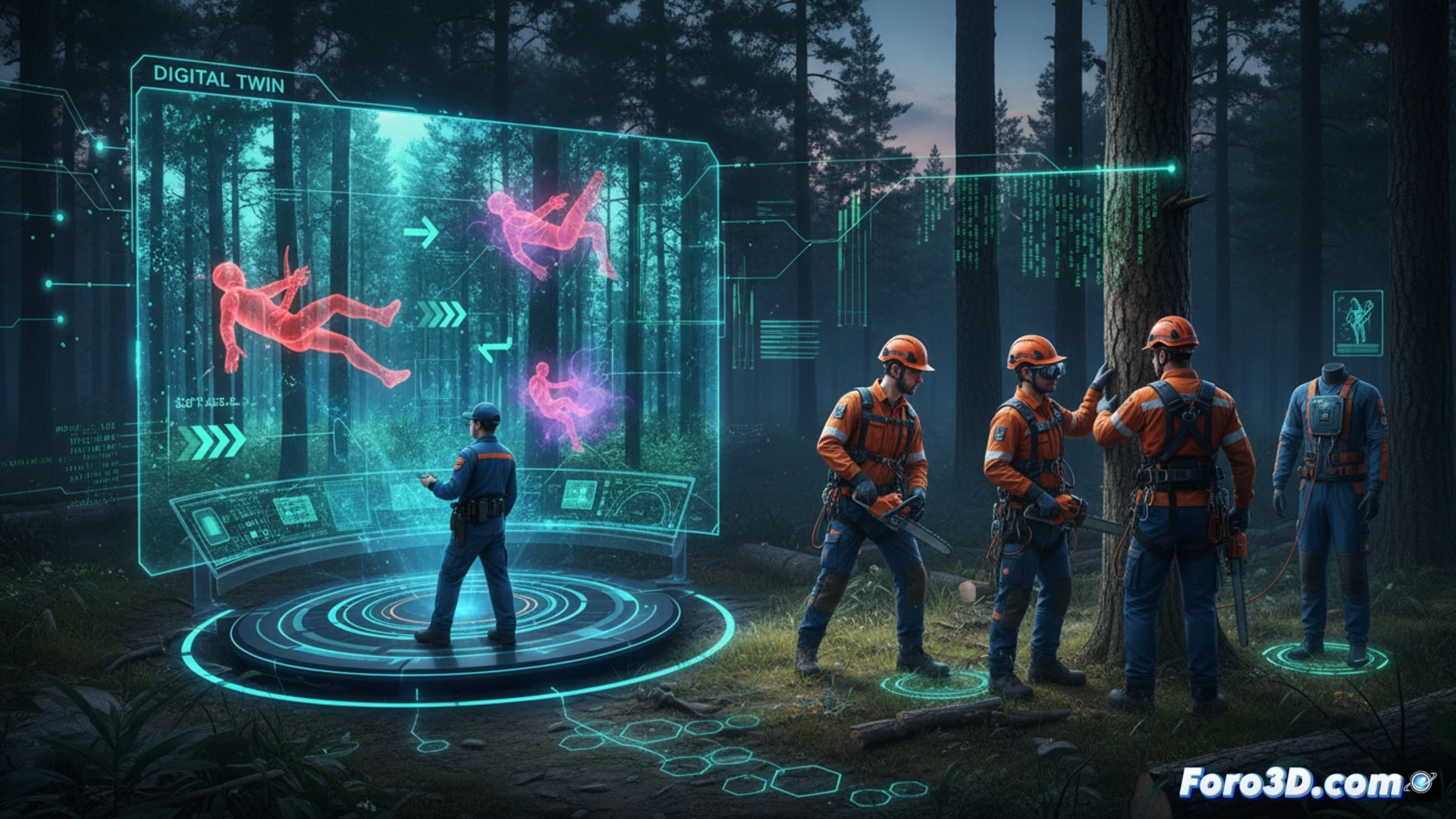
3D simulation of accidents and design of safety protocols 🛡️
Digital twin technology allows recreating the forest environment with high geometric and physical fidelity. We can simulate the impact of a chainsaw when control is lost on a slope, modeling the trajectory of the operator and the tool to identify critical risk zones. It is also possible to visualize falls from different pruning heights, evaluating the effectiveness of harnesses and virtual lifelines. By integrating chemical exposure data, these models help design safe evacuation routes and immediate decontamination plans.
Immersive training as a barrier against catastrophe 🎮
Immersive virtual reality allows forestry workers to rehearse emergency scenarios without exposing themselves to real danger. Practicing the reaction to a serious cut or an unexpected fall in a digital twin reduces response time and improves decision-making under stress. This approach not only minimizes the probability of a catastrophe but transforms prevention into an active and measurable tool, raising the safety standard in an essential yet extremely risky occupation.
What variables would you consider to model this disaster? 🤔