Faced with the triple crisis of food, water, and energy security in Mexico, agrivoltaics emerges as an integrative solution. This technology, which elevates solar panels above crops to share the land, finds its ideal optimization tool in digital twins. The Mexican Agrivoltaic Network (RAMe), created in 2023 and present in 14 states, marks the beginning of a revolution that we can now virtually model to maximize its performance.
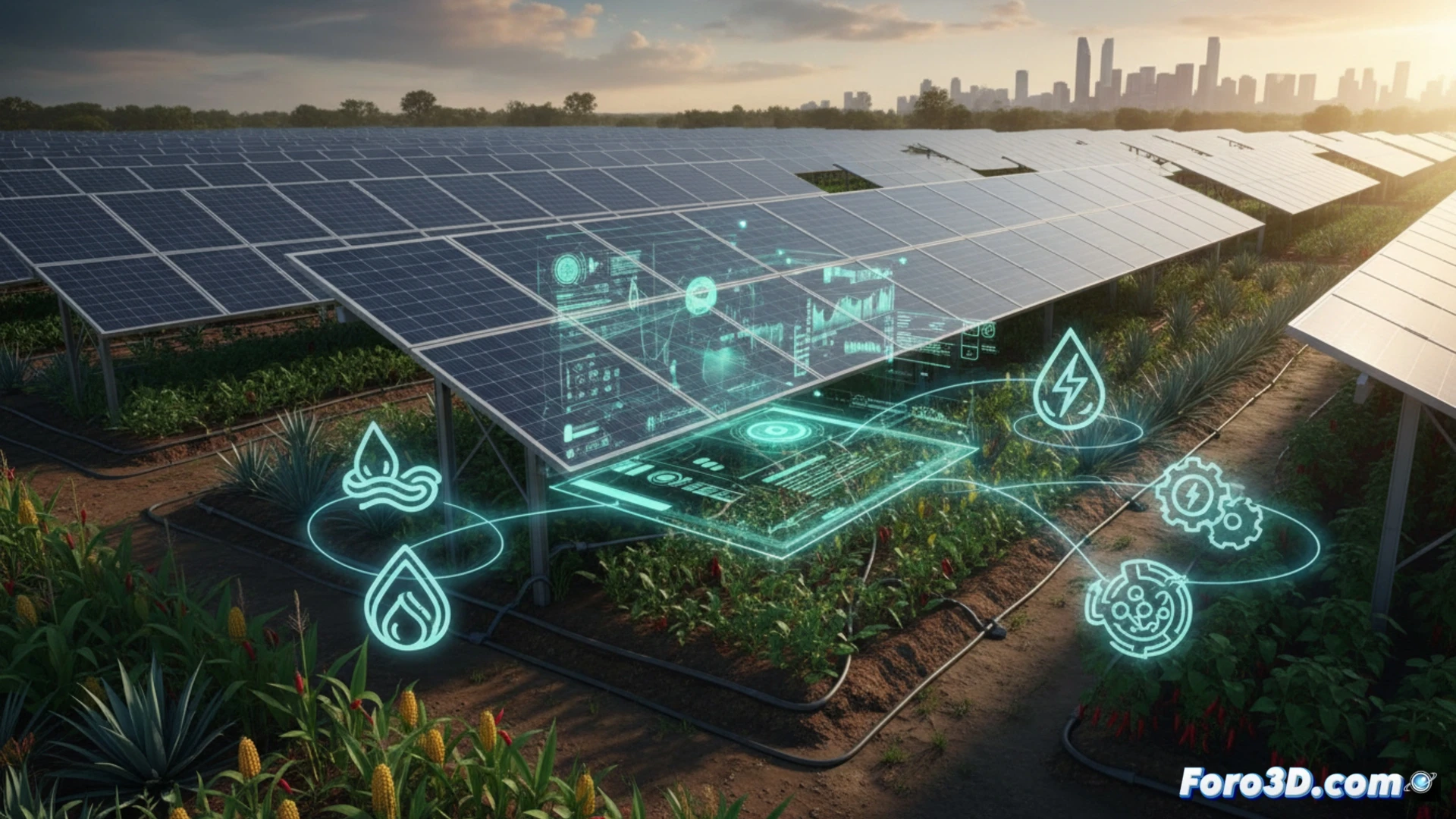
3D Modeling and Simulation of Physical Interactions 🌱
To build an agrivoltaic digital twin, a precise 3D model of the terrain, vegetation, and panel structure is required. Tools like Unity or Unreal Engine allow recreating the geometry of tilted photovoltaic modules, while physics simulation engines calculate the dynamic shadows cast on crops. It is crucial to integrate real-time data from humidity, solar radiation, and soil temperature sensors. The model must be calibrated with local Mexican variables, such as irradiation in the Bajío region or rainfall patterns in Yucatán, to accurately predict agricultural yield (e.g., tomatoes or corn) and electricity generation.
The Challenge of Validation with Mexican Data ⚡
The key to the success of an agrivoltaic digital twin lies in its adaptability. Although initial models come from Germany, the Mexican context requires adjustments due to high radiation and crop diversity. RAMe can act as a bridge, providing field data to validate simulations. If we manage to make the digital twin anticipate the best panel density to avoid stressing the crop, we will have solved the most complex equation of the Mexican countryside: producing more food and energy with less water.
How can a digital twin predict and mitigate conflicts between crop water demand and solar generation efficiency in a Mexican agrivoltaic system during an extreme drought?
(PS: My digital twin is right now in a meeting, while I am here modeling. So technically, I am in two places at once.)