The industrial engineer faces a paradox: they must oversee safety in real plants while their own work exposes them to electrical, mechanical, chemical hazards, and falls. Added to this is the pressure of project management and constant travel. 3D simulation offers an anticipatory solution for this profile.
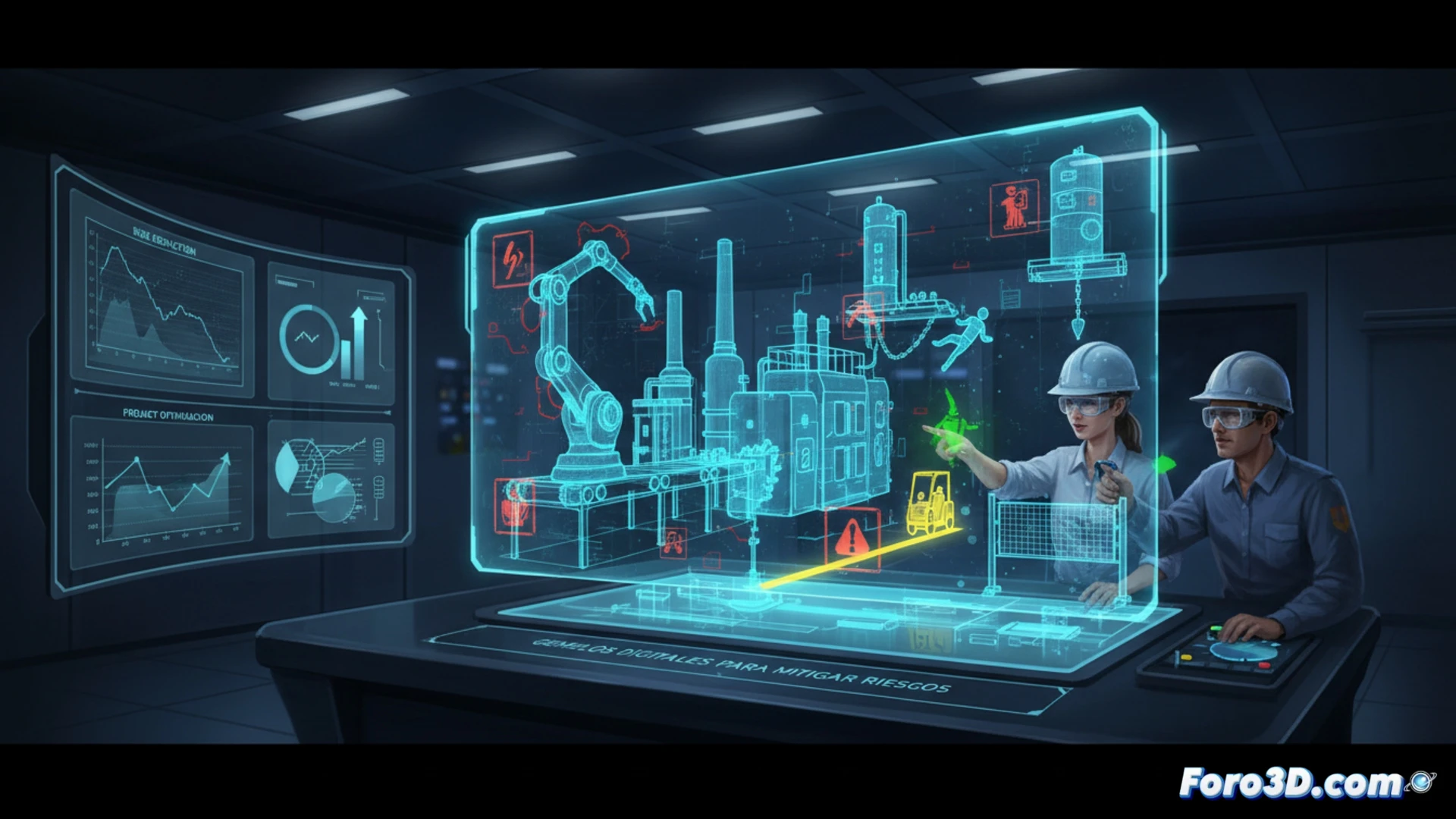
3D Simulation as a Preventive Safety Protocol 🛡️
The implementation of digital twins allows for recreating factory environments with high fidelity. The engineer can virtually tour the facility before setting foot in it, identifying blind spots, electrical or mechanical risk zones, and potential evacuation routes. 3D modeling tools facilitate the simulation of falls from height or exposure to chemical substances, all without real consequences. Furthermore, visual project planning reduces stress by allowing schedules and resources to be adjusted in a controlled environment, minimizing the fatigue associated with traditional management.
The Invisible Stress in 3D Logistics 🧠
Beyond physical risks, stress from project management is a critical factor. 3D visualization of workflows and inspection routes not only optimizes internal logistics but also provides the engineer with a clear view of their tasks. This reduces uncertainty and pressure, transforming the supervision of an industrial plant into a safer and more predictable process, both for the professional and the team.
As an industrial engineer, how can a digital twin predict and neutralize the safety risks your own supervisory work on the plant floor exposes you to before they become a real accident?
(PS: 3D bottlenecks are like traffic jams: you see them coming but you can't avoid them)