The figure of the property registrar is under constant pressure: legal responsibility for public acts, scrutiny of deadlines, and direct interaction with a public that can react aggressively. Added to this is a purely digital environment, where eye strain and a sedentary lifestyle become chronic risks. We analyze how 3D technology can offer concrete preventive solutions.
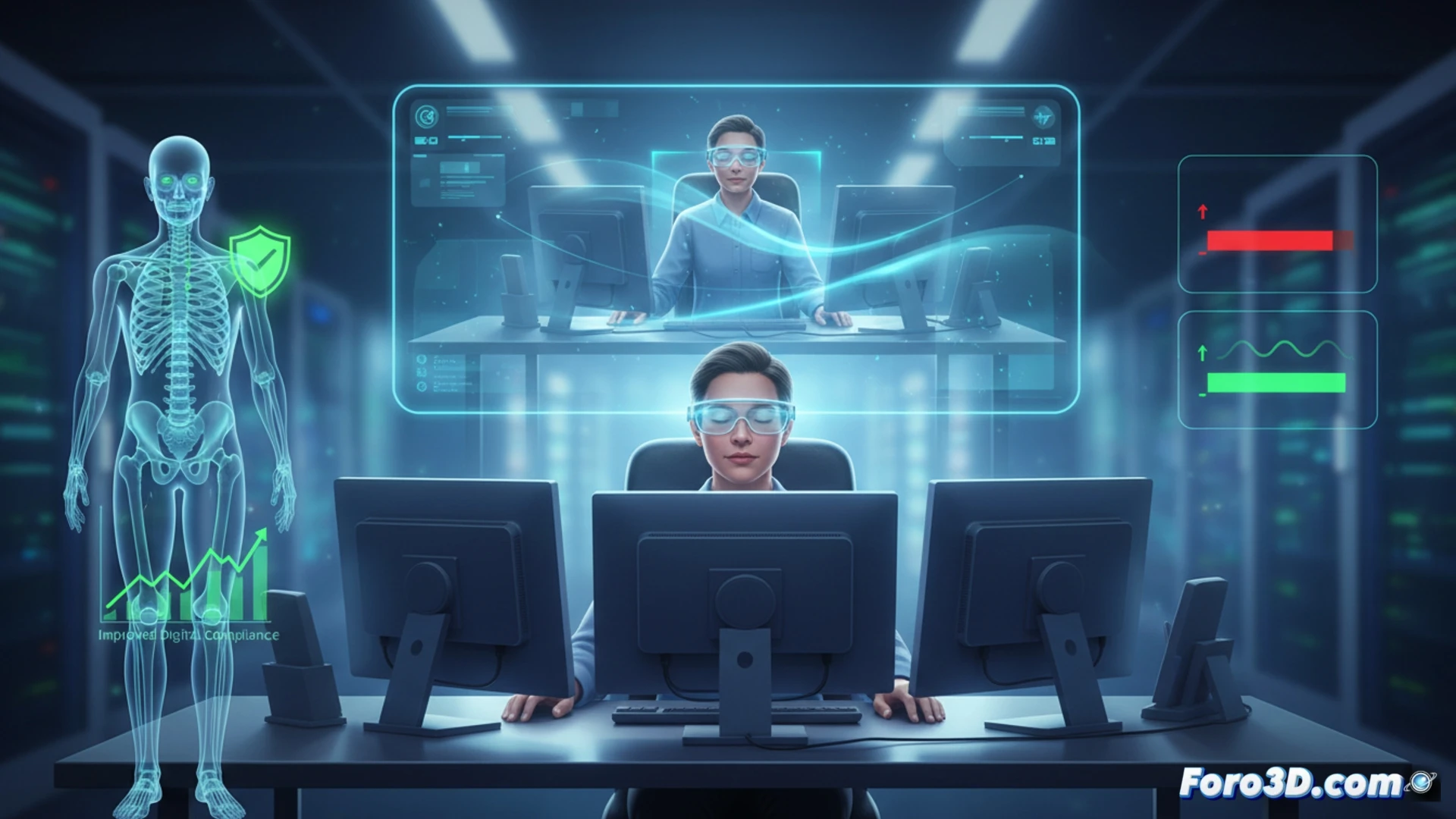
3D simulation of mental and postural load scenarios 🧠
Traditional ergonomics falls short when faced with the complexity of the workstation. Through digital twins of the registrar's office, we can map in real time forced postures and focal distance to screens. These 3D models allow simulating full high-demand workdays to identify critical points of muscle overexertion. Furthermore, integrating biometric sensors into the digital avatar can predict eye strain before pain appears, adjusting lighting or suggesting active micropauses. Volumetric visualization of compliance protocols allows rehearsing the response to verbal aggression, placing the user in an immersive environment where they can practice de-escalation without real risk.
Preventive compliance and professional protection 🛡️
The true value of 3D simulation is not just correcting the chair or the screen, but anticipating mental collapse. An early warning system based on AI, fed by data from the digital twin, can detect patterns of anxiety or cognitive overload before they lead to sick leave. This approach transforms digital compliance from a mere documentary audit into an active protection tool for the group, validating that the registrar's work environment not only meets the standard but also preserves their overall health.
Considering that a digital twin replicates the document flow and legal decisions in real time, how is it guaranteed that simulating scenarios of eye strain or stress for the registrar does not generate legal liability by anticipating a human error that has not yet occurred in the real world.
(PS: at Foro3D we know that the only compliance that works is the one tested beforehand, not afterwards)