The operation of a power plant exposes workers to a catalog of hazards including extreme noise, high temperatures, constant vibrations, electrical risks, handling of corrosive and flammable chemicals, falls from height, and entrapment in machinery. Added to this is the psychological pressure of managing emergencies in real time. Faced with this scenario, process simulation using digital twins offers a virtual environment where each of these risks can be recreated without physically exposing the operator, allowing for deep and safe training.
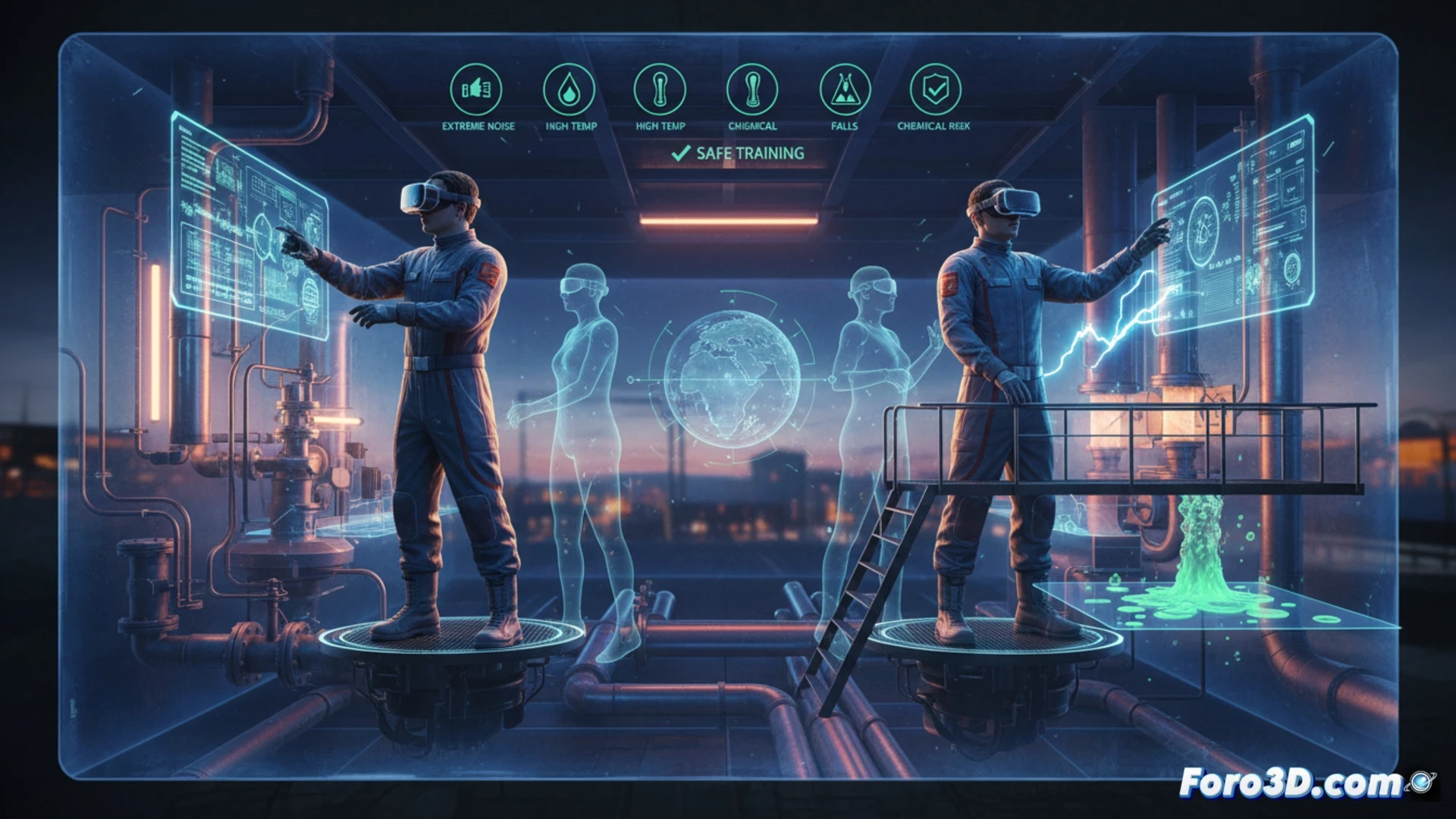
3D Simulation of Safety Protocols and Material Fatigue ⚙️
A digital twin of a power plant allows for millimeter-precise visualization of the behavior of valves, turbines, and piping systems under extreme conditions. Operators can practice responding to flammable chemical leaks, simulating gas dispersion and the activation of emergency ventilation systems. Additionally, process simulation integrates material fatigue models that predict wear on critical components, anticipating mechanical failures that could lead to entrapment. This approach drastically reduces real accidents by transferring the risk experience to the virtual plane.
Are We Training Operators or Just Certifying Survivors? 🧠
The uncomfortable question is whether traditional training, based on manuals and sporadic drills, truly prepares for decision-making under stress. 3D process simulation not only replicates noise and vibrations but forces the operator to manage multiple simultaneous alarms, as would happen in a real fire. By training in an immersive environment where failure has no lethal consequences, muscle and cognitive memory is built that saves lives. Otherwise, we will continue sending people to face an emergency for the first time on the day it actually happens.
How can a digital twin faithfully replicate extreme conditions like noise and temperature to generate a realistic physiological response in the operator during training without resorting to expensive hardware?
(PS: Simulating industrial processes is like watching an ant in a maze, but more expensive.)