Zaragoza has begun installing 4,176 photovoltaic panels in four public parking lots, covering 10,816 square meters to generate 3,638.5 MWh annually. This project, which includes 651 shaded spaces and 40 charging points for electric vehicles, represents an ideal scenario for the implementation of digital twins. Real-time monitoring of these infrastructures allows for optimizing energy performance and predicting system behavior under variable climatic conditions.
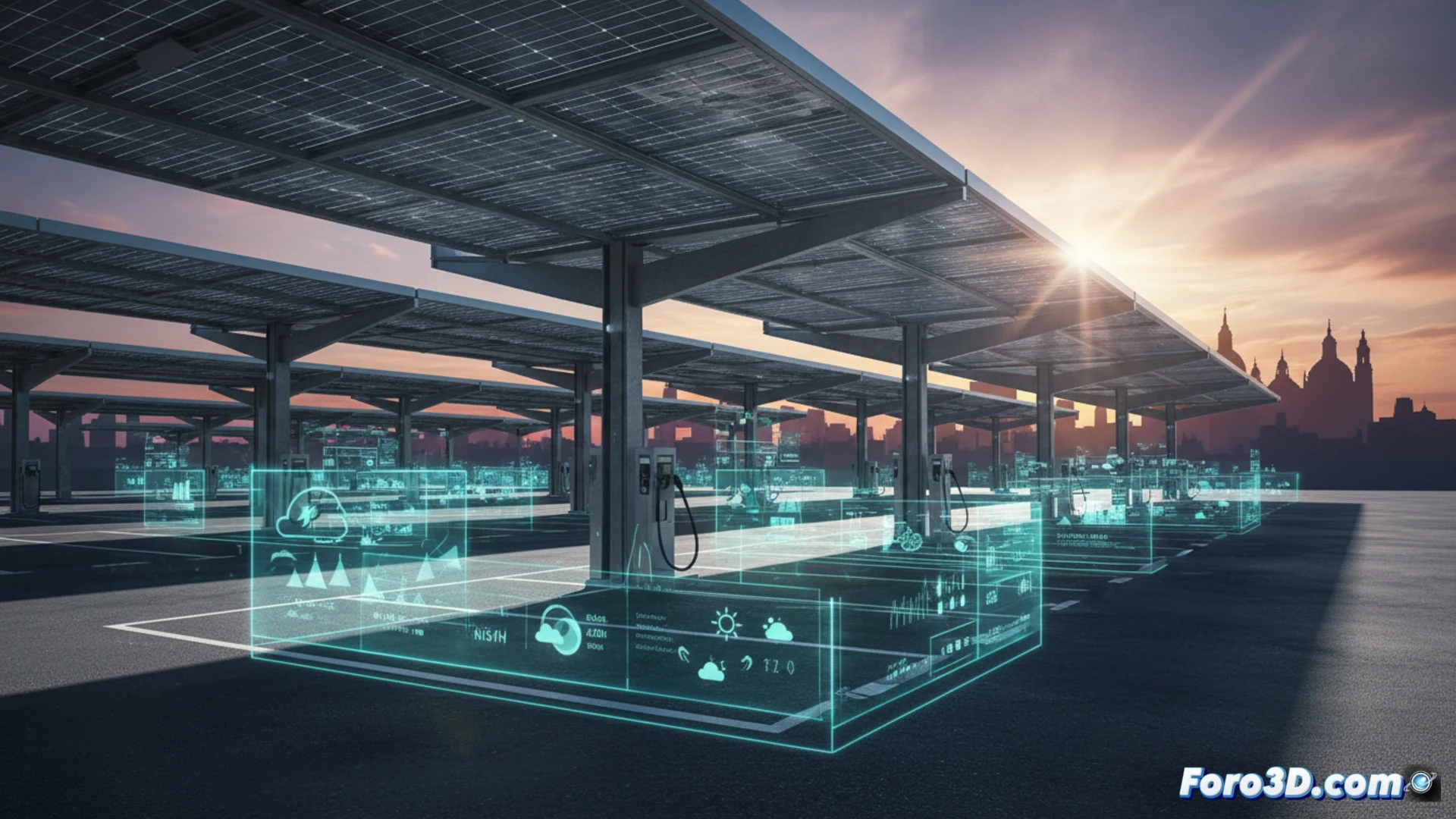
Virtual modeling and dynamic shadow simulation 🌞
To create a digital twin of these solar parking lots, one must start from a BIM (Building Information Modeling) model that integrates the exact geometry of the canopies, the orientation of the panels, and the layout of the 651 spaces. Shadow simulation based on solar position is key, as shadows cast by neighboring buildings or trees can reduce the production of adjacent modules. Using historical weather data and IoT sensors installed in the inverters, the digital twin can recalculate the efficiency of each panel in real time and predict the generation of the 3,638.5 MWh annually, automatically adjusting charging forecasts for the 40 electric points.
From shadow to data: predictive monitoring ⚡
The true value of the digital twin lies not only in visualization but in the ability to anticipate failures and optimize consumption. By cross-referencing production data with usage patterns of the charging points, the energy demand of the equivalent thousand homes supplied by the system can be planned. Additionally, monitoring the shade over the spaces allows certifying that drivers receive the promised comfort, while predictive algorithms adjust the virtual tilt of the panels to maximize solar capture throughout the year.
How can a digital twin optimize in real time the energy generation and shadow management in the four new solar parking lots of Zaragoza to maximize their operational efficiency?
(PS: My digital twin is right now in a meeting, while I am here modeling. So technically, I am in two places at once.)