An accident on an urban magnetic levitation train, where the convoy scraped the containment wall at 400 km/h, has put the railway industry on alert. The cause points to ground settlements of just millimeters, capable of distorting the delicate electromagnetic guidance field. The solution lies not in visual inspections, but in creating a precise digital twin that integrates LiDAR data, electromagnetic simulation, and infrastructure models.
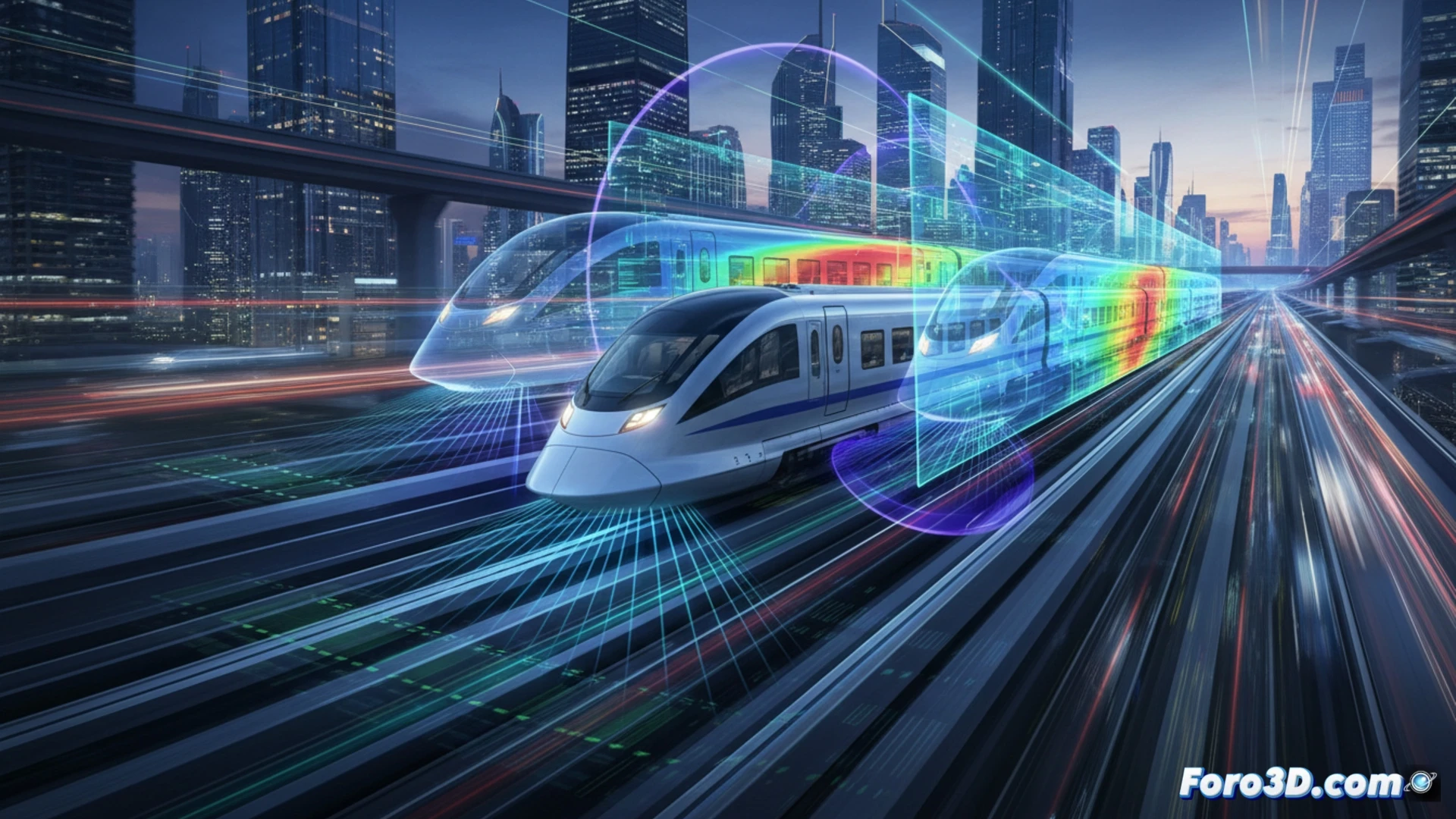
Technical workflow: RIEGL, Bentley, and Ansys Maxwell 🚄
The process begins with a long-range mobile scan using a RIEGL ScanData system, capturing the track geometry with submillimeter precision. This point cloud is imported into Bentley OpenRail to model the railway infrastructure, including the track, supports, and containment walls. The critical step is transferring this model to Ansys Maxwell, where the electromagnetic field generated by the guidance electromagnets is simulated. Any millimeter variation in the distance between the train and the track, caused by settlement, translates into a measurable alteration of the magnetic flux. This digital twin allows for predictive simulations: by inputting data from periodic scans, the system can alert about points where the guidance field degrades before physical contact occurs.
Towards proactive maintenance of critical infrastructure 🛤️
This case demonstrates that the digital twin is not just a visual representation, but a functional simulation model. The integration of tools like Bentley OpenRail and Ansys Maxwell turns a LiDAR scan into an early warning system for high-speed infrastructure. The future of railway maintenance lies in detecting potential failures before they manifest, where millimeters make the difference between safety and disaster. The question is no longer if an accident will occur, but when and where the digital twin will allow us to intervene first.
How can a real-time digital twin be integrated with distributed fiber optic sensors to detect millimeter settlements on the Maglev track before they compromise the safety of the convoy at high speeds?
(PS: don't forget to update the digital twin, or your real twin will complain)