Real estate appraisal is one of the professions with the highest exposure to silent occupational hazards. From car travel to inspections on unstable roofs or basements with asbestos, the appraiser faces falls, forced postures, and assaults daily. However, digital twin technology makes it possible to transform these high-risk visits into remote, safe, and precise inspections.
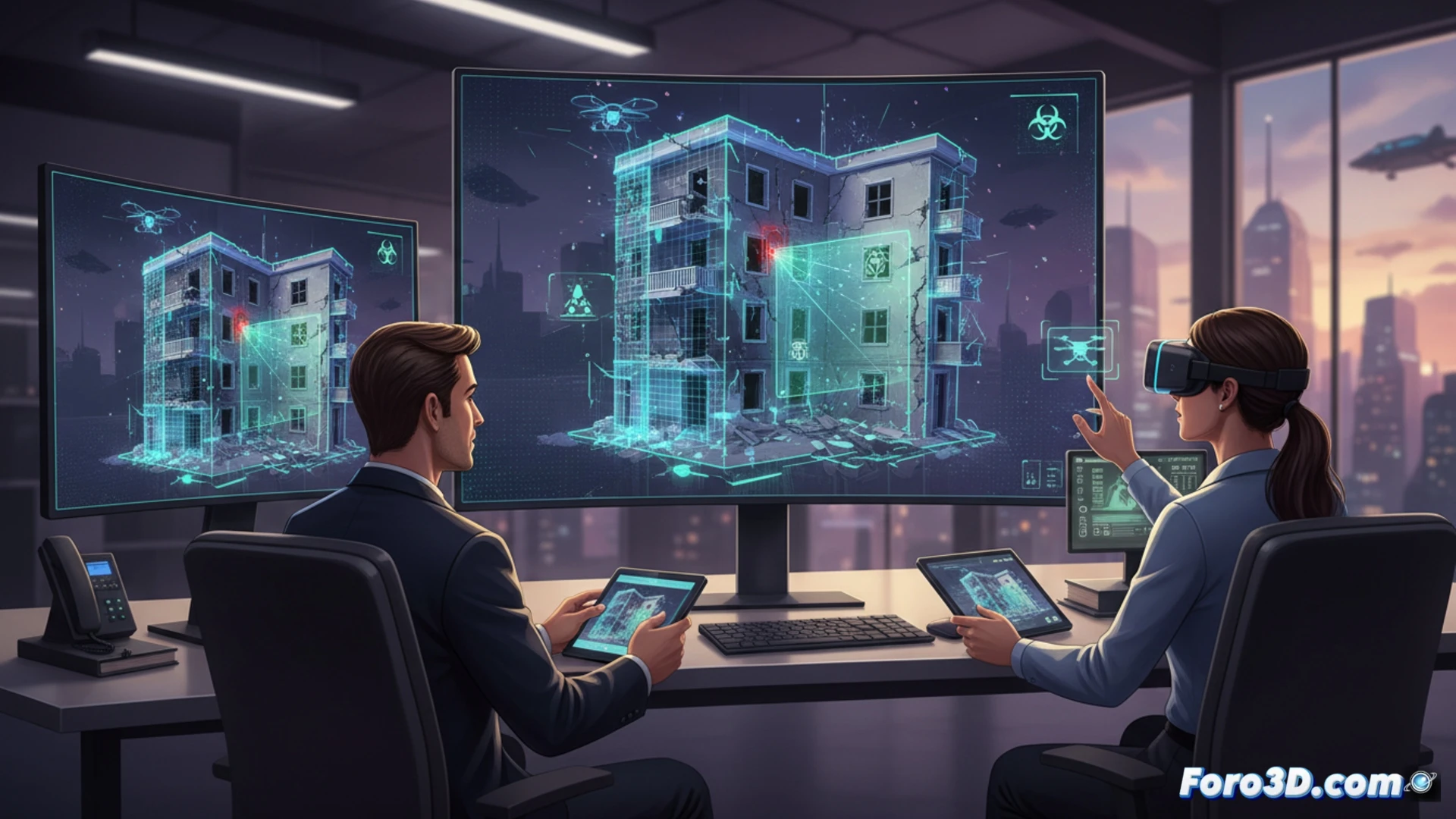
3D Scanning and LiDAR: the foundation of the digital twin for appraisers 🏗️
To mitigate the described dangers, the first step is to capture the property using 3D scanning with drones or portable LiDAR devices. This process generates a point cloud that, processed with modeling software, creates an exact virtual replica of the building. The appraiser can then tour the property from their office, take measurements without straining their back, identify suspicious materials (mold, asbestos) without direct exposure, and assess the condition of stairs or roofs without stepping on them. Even dark or hard-to-reach areas are documented, eliminating the need for forced postures and drastically reducing the risk of falls.
Safety and precision: the end of high-risk visits 🛡️
Beyond physical prevention, the digital twin protects the appraiser from assaults by avoiding in-person encounters in conflictive environments. Additionally, by centralizing all geometric and visual information of the property, unnecessary travel is reduced and work time is optimized. Adopting this technology not only makes the appraisal process more efficient but transforms a high-risk profession into an office-based task, where the professional's safety is the first pillar of the analysis.
Considering the occupational risks appraisers face when traveling to physical properties, how could a digital twin reduce these dangers while maintaining accuracy in property valuation?
(PS: My digital twin is currently in a meeting, while I'm here modeling. So technically, I'm in two places at once.)