Google Project Starline is not your typical video conference. We are looking at a system that generates a real-time volumetric replica of a person, creating a human digital twin that behaves and moves like its physical counterpart. This technology transcends the flat screen to place the interlocutor in a shared three-dimensional space, eliminating the barrier of two-dimensionality and bringing communication closer to real presence.
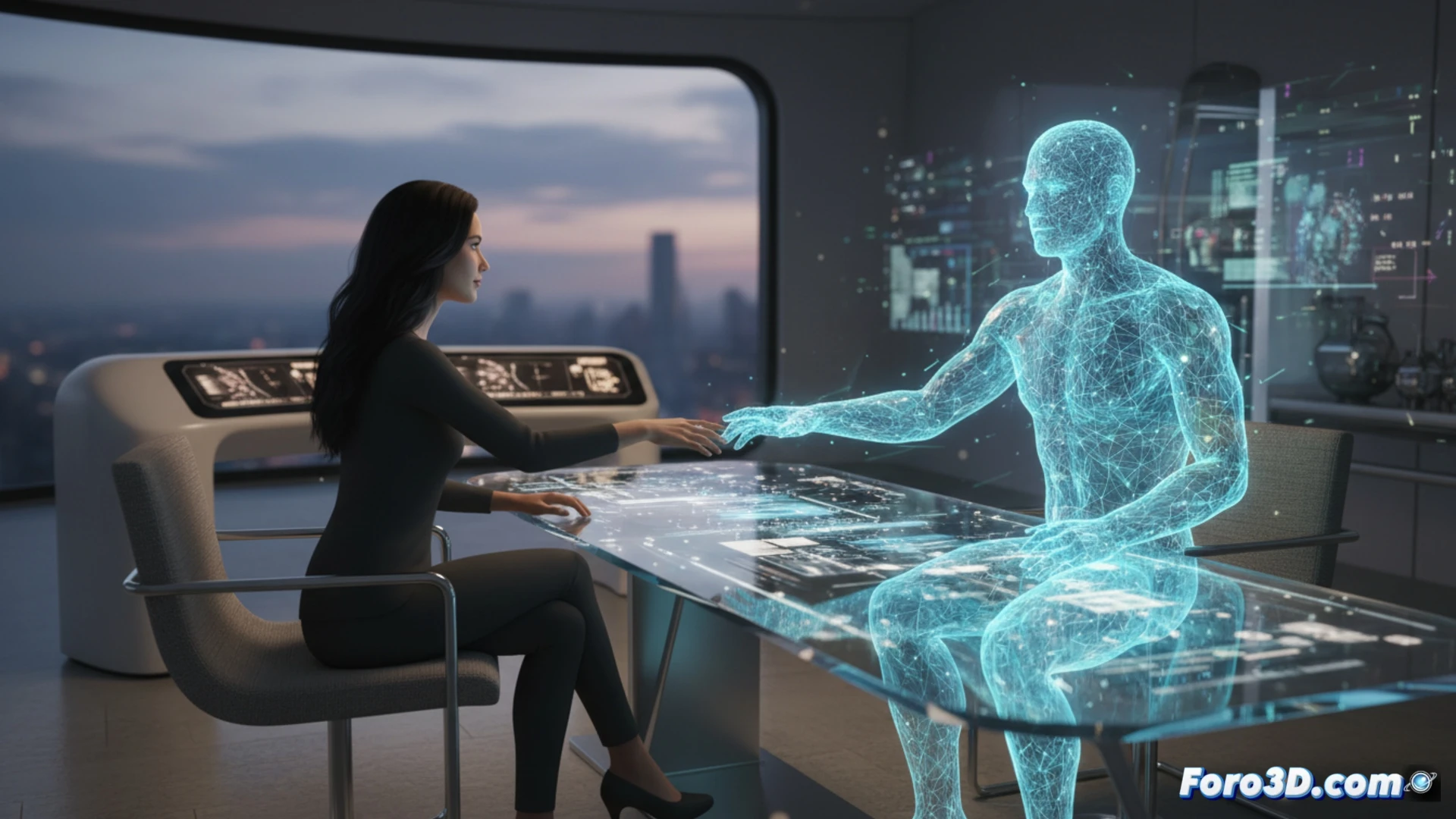
Capture and volumetric rendering architecture 🖥️
Technically, Project Starline uses a set of light field cameras and depth sensors strategically placed on a front panel. These sensors capture the user's geometry, texture, and lighting from multiple angles simultaneously. The system processes this data in real time using neural compression algorithms to generate a dynamic 3D model. Unlike predefined avatars or augmented reality filters, this digital twin is not an approximation: it is an exact copy of the person at that moment, including their body language, micro-expressions, and the way light interacts with their face and clothing.
From the industrial twin to the social twin 🤝
While digital twins in industry replicate engines or turbines to simulate failures, Project Starline replicates human essence to simulate interaction. This qualitative leap involves a greater challenge: fidelity must not only be visual, but behavioral. The system must capture and transmit communicative intent. If an industrial twin tolerates milliseconds of latency without consequences, a human twin demands absolute synchrony to avoid breaking the illusion of presence. Starline demonstrates that the future of digital twins is not just for machines, but for connecting people through virtual replicas that feel tangible.
How does Project Starline redefine the concept of digital presence by generating volumetric human twins in real time, and what technical implications does it have for the future of hyper-realistic remote interaction?
(PS: don't forget to update your digital twin, or your real twin will complain)