Professional truck driving accumulates critical risks that go beyond traffic accidents. Sustained forced postures, constant vibrations, accumulated fatigue, and manual handling of loads make this profession one of the most demanding in the logistics chain. The analysis of these factors requires tools that allow visualizing and quantifying the physical wear and tear of the driver before an injury materializes.
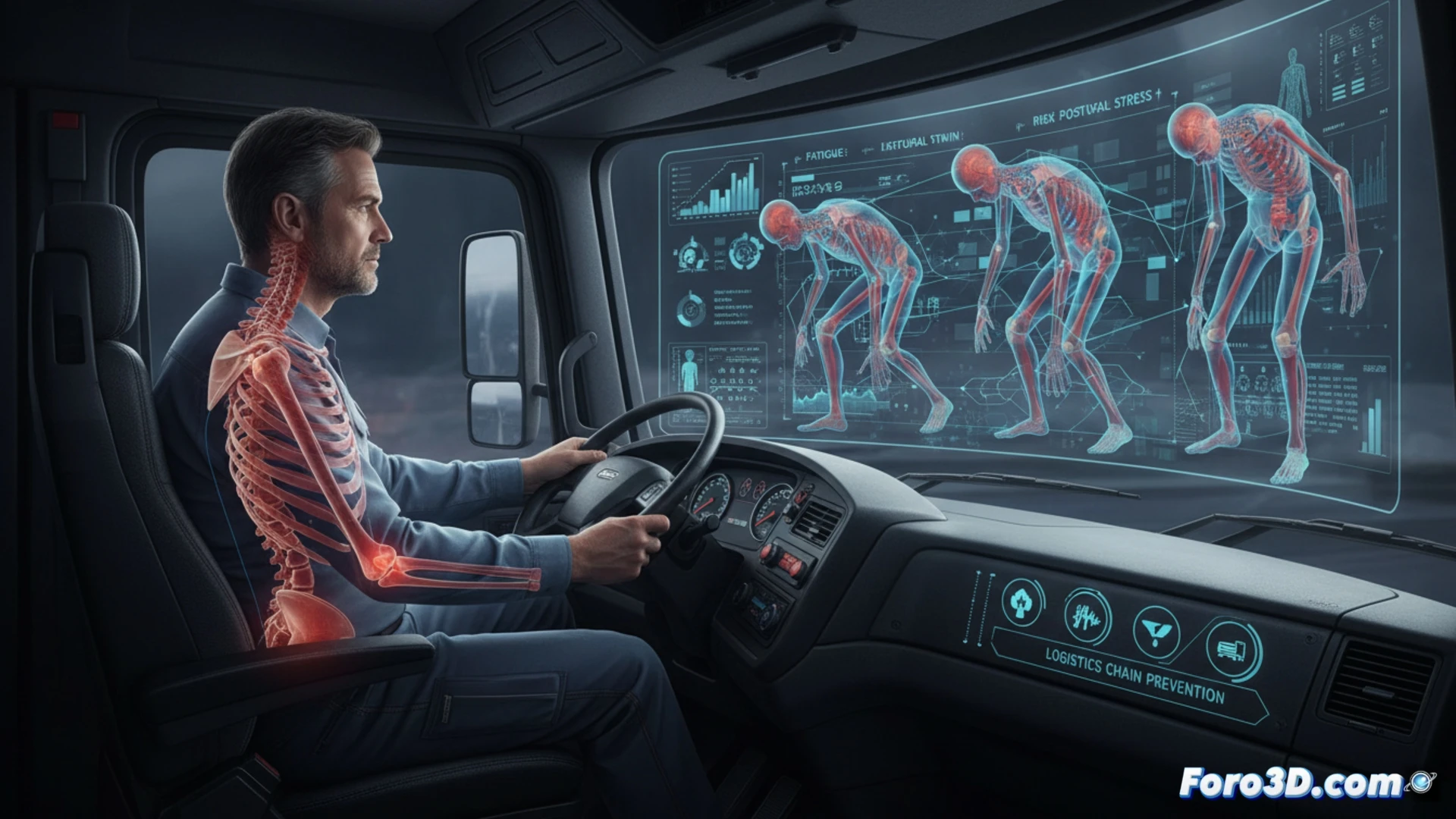
3D simulation to mitigate vibrations, postures, and fatigue 🚛
The creation of digital twins of the cabin allows mapping critical points such as seat inclination, steering wheel reach, and pedal location. Through dynamic simulations, exposure to low-frequency vibrations and their effect on the spine can be modeled. Additionally, the virtual recreation of logistics routes with slopes, sharp curves, and continuous driving times helps predict peaks of drowsiness. This information makes it possible to redesign the workstation to reduce overexertion and adjust breaks, improving ergonomics without the need for costly physical prototypes.
Immersive prevention and redesign of the driving workstation 🎯
Training in virtual environments allows the driver to practice truck boarding and alighting maneuvers without the risk of falls, as well as load handling techniques under controlled conditions. Visualizing in 3D the consequences of poor posture or accumulated fatigue raises awareness about safety. The industrial 3D logistics sector already has the tools to turn prevention into a measurable process, reducing accident rates and optimizing the workflow of road transport.
How can 3D simulation of cabin digital twins anticipate and mitigate the driver's ergonomic risks before they become chronic injuries?
(PS: simulating an industrial plant is like playing The Sims, but without pools to remove the ladder)