The caregiver profile, whether in geriatric centers or private homes, faces critical occupational risks such as overexertion when mobilizing patients, forced postures, and emotional stress. The lack of ergonomics in domestic spaces aggravates back injuries and falls. 3D simulation allows modeling these environments to anticipate hazards before they occur.
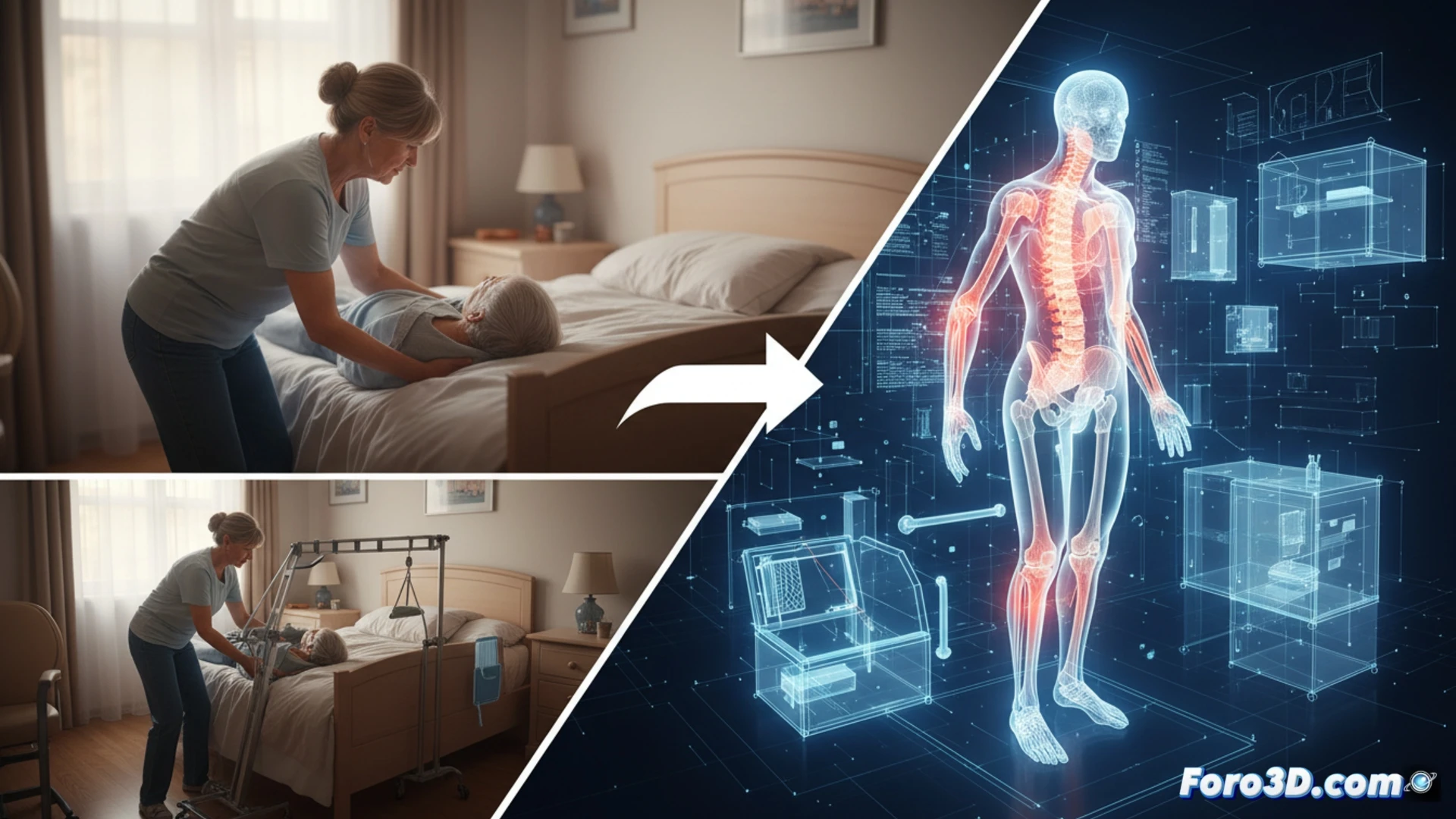
Biomechanical modeling and visual alerts in care environments 🛠️
Using digital twins of the home or nursing home, it is possible to recreate patient transfer scenarios from the bed to the wheelchair. Joint angles and forces applied to the caregiver's spine are analyzed. Visual alerts integrated into the 3D model signal dangerous postures in real-time, such as lumbar twists or lifts with extended arms. This allows redesigning the furniture layout or training staff in safe routines, reducing biological and physical risk.
Protecting the caregiver is protecting the dependent 🛡️
3D technology not only prevents musculoskeletal injuries; it also mitigates emotional stress by offering the caregiver a predictable and safe environment. By simulating aggressions or falls, response protocols are designed that improve the professional's confidence. Investing in virtual ergonomics is betting on the stability of the vulnerable group, because a healthy caregiver guarantees dignified and continuous care.
How can 3D digital twins integrate real-time biomechanical data to anticipate and prevent musculoskeletal disorders in caregivers of dependents during patient mobilization?
(PS: the 28 affected soldiers are like 28 polygons with inverted normals: they shouldn't be like that)