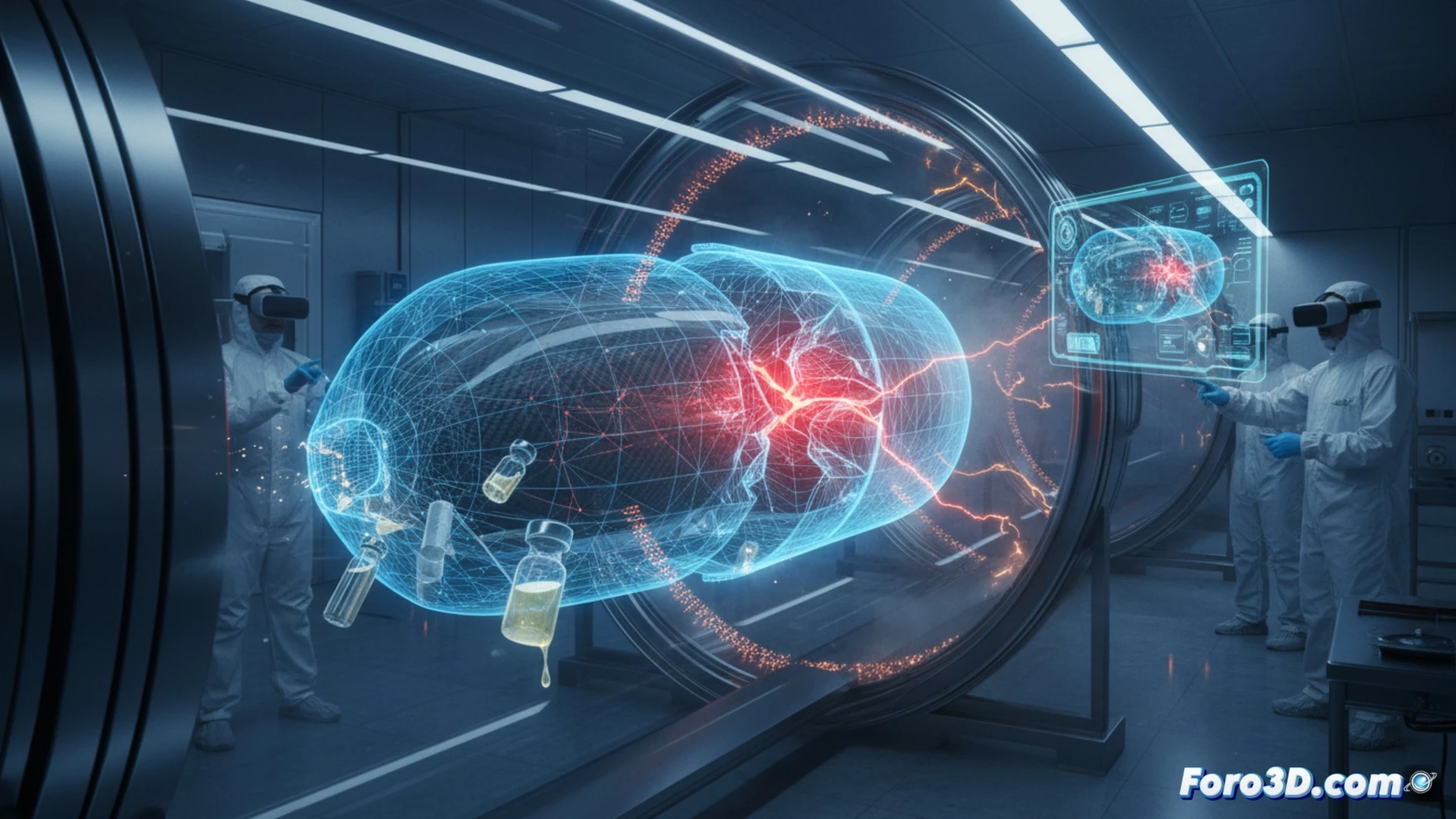
A critical failure in a Maglev pneumatic tube system halted the transport of pharmaceutical samples in a high-security facility. The capsule lost levitation and collided inside the vacuum tube, damaging the contents. Without direct visual access to the interior of the sealed conduit, the engineering team turned to a precise digital twin, combining 3D scanning, CAD modeling, and electromagnetic simulation to diagnose the root cause without dismantling the infrastructure.
Building the digital twin with SolidWorks, FARO BuildIT, and Ansys Maxwell 🛠️
The process began with dimensional scanning of the track and the capsule's neodymium magnets using a FARO measurement arm. The point cloud data was imported into FARO BuildIT to verify tolerances and geometric deviations. With the measurements validated, the complete assembly was modeled in SolidWorks, including the tube profile and the vehicle's magnetic arrangement. This CAD model was exported to Ansys Maxwell, where the static and dynamic magnetic field was simulated. The simulation revealed a micrometric irregularity on the surface of the levitation rail, impossible to detect with the naked eye. This imperfection generated a force gradient that destabilized the magnetic suspension at a specific curve in the path, causing physical contact and the subsequent collision.
Remote diagnosis and lessons for predictive maintenance 🔍
The digital twin not only identified the exact location of the defect but also allowed simulating the capsule's trajectory under different load and speed conditions. The analysis confirmed that the irregularity was a manufacturing defect of the track, not operational wear. This case demonstrates the strategic value of digital twins in critical transport systems: they enable diagnosing complex failures without interrupting the operation of the rest of the facility, reducing downtime and disassembly costs. The final solution involved localized grinding of the rail, subsequently validated in a new electromagnetic simulation.
As a simulation engineer, what methodology did you apply to validate that the digital twin accurately reflected the hidden failure in the Maglev capsule before its physical manifestation?
(PS: My digital twin is currently in a meeting, while I'm here modeling. So technically, I'm in two places at once.)