An algae-based carbon capture system began to fail without an apparent mechanical cause. Biomass production plummeted, and initial analysis pointed to a lack of irradiance inside the tubes. Inspection revealed a layer of biofilm adhered to the inner wall of the polymer, blocking the passage of light. To understand the phenomenon, the team developed a digital twin of the 3D tubular photobioreactor, integrating data on surface roughness and biofilm thickness.
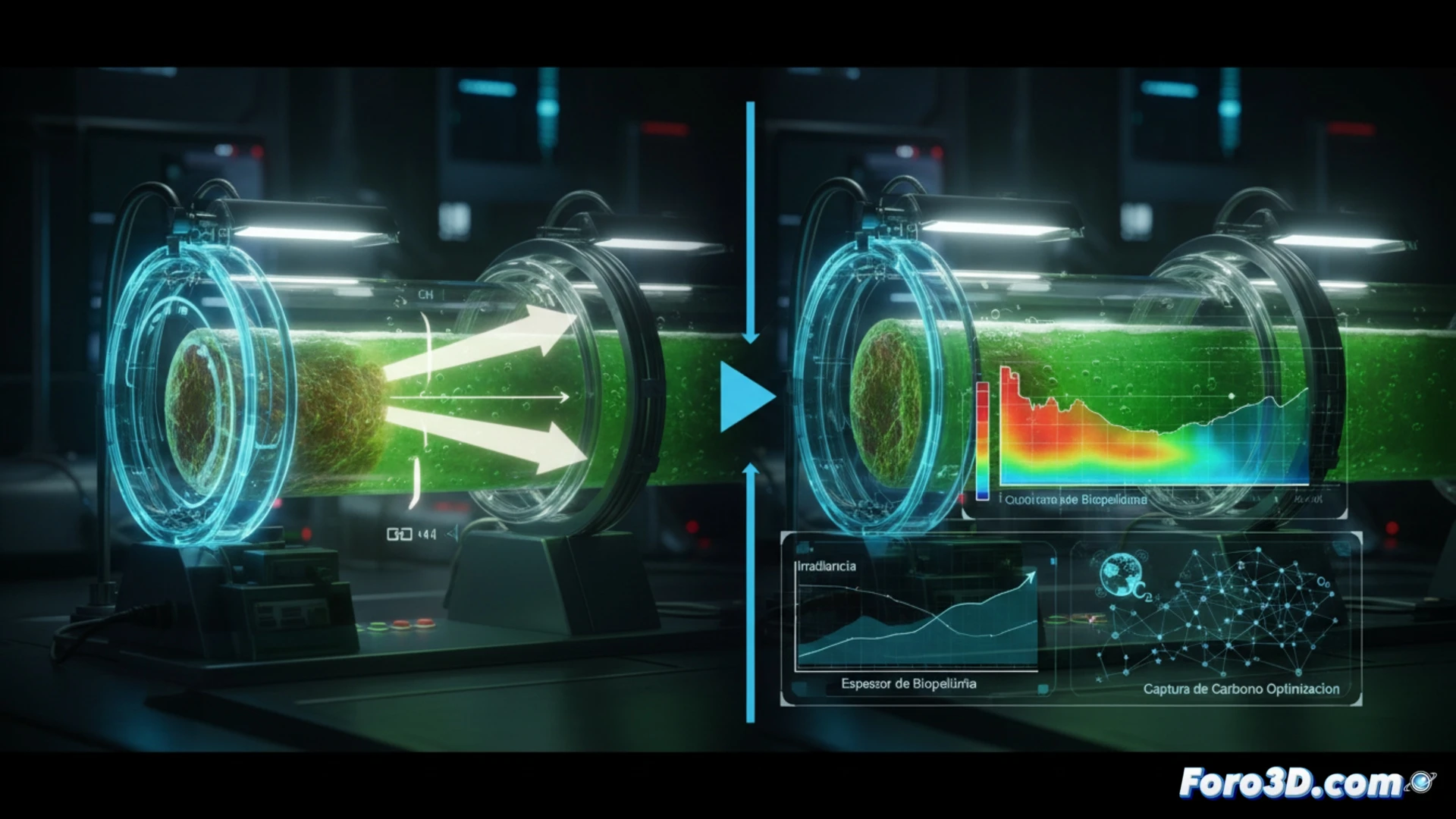
Parametric modeling and simulation of light obstruction 🧬
The process began in MATLAB, where roughness profiles obtained by optical profilometry were processed. Parameters such as Ra and Rz were calculated to determine if the internal texture of the tube favored initial bacterial adhesion. Biofilm thickness data was mapped as a translucent layer with a variable absorption coefficient. This information was exported to SolidWorks to build the exact geometry of the reactor, including wall irregularities. Finally, KeyShot was used to render the scene with realistic lighting, simulating the path of photons through the obstructed tube. The visual simulation quantified the loss of transparency at 73% compared to the clean tube.
Design lessons for the next generation of reactors 🔬
The digital twin not only explained the failure but also allowed predicting critical points of biofilm accumulation. It was identified that the initial roughness of the polymer acted as an anchor for the first bacterial colonies. With this virtual replica, engineers can now simulate different surface finishes and materials before manufacturing a single meter of pipe. The conclusion is clear: an optimized reactor must prioritize smooth surfaces and geometries that avoid areas of light stagnation, and the digital twin is the tool to validate those decisions without building physical prototypes.
What parameters of the digital twin allowed detecting the variation in light transmittance caused by the biofilm before biomass production was significantly affected in the algae reactor?
(PS: My digital twin is right now in a meeting, while I am here modeling. So technically, I am in two places at once.)