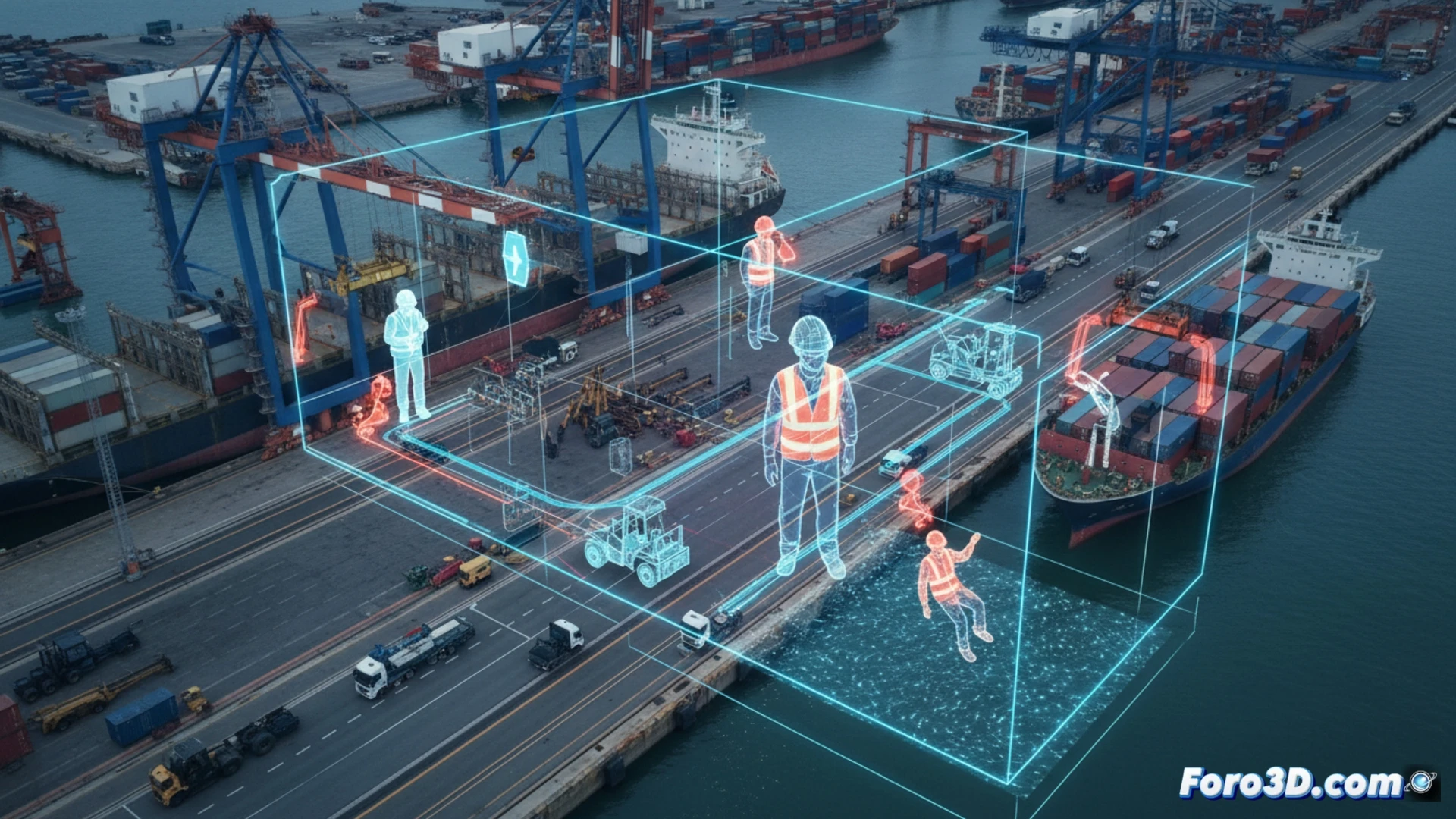
The port technician faces a deadly combination of hazards: constant movement between heavy machinery, falls into the water, entrapment during maneuvers, and exposure to vibrations or chemicals. 3D simulation of a port allows modeling every variable, from vehicle traffic to ship decks, to anticipate incidents before they occur in the real environment.
Modeling risk scenarios and blind spots 🚧
In the digital recreation, pedestrian transit zones and routes for cranes or trucks are defined. The virtual twin identifies blind spots where the technician could be run over, as well as areas of high noise or vibrations near engines. Falls from height are also simulated by modeling ship railings and ladders, along with extreme weather conditions that affect visibility and grip. This analysis allows redesigning workflows and marking safe routes, reducing entrapment during mooring or loading maneuvers.
Active prevention through industrial simulation 🛡️
3D simulation not only documents risks but also trains the technician in an environment without real danger. By navigating the digital twin, the operator learns to detect exclusion zones, react to moving machinery, and use specific protective equipment. For port logistics, this technology transforms safety into a measurable and improvable process, moving the worker away from accident statistics.
What advantages does 3D simulation in a digital twin offer to anticipate and mitigate the risks of falls and run-overs faced by the port technician in their work environment?
(PS: visualizing logistics flows is like watching ants... but with less order and more budget)