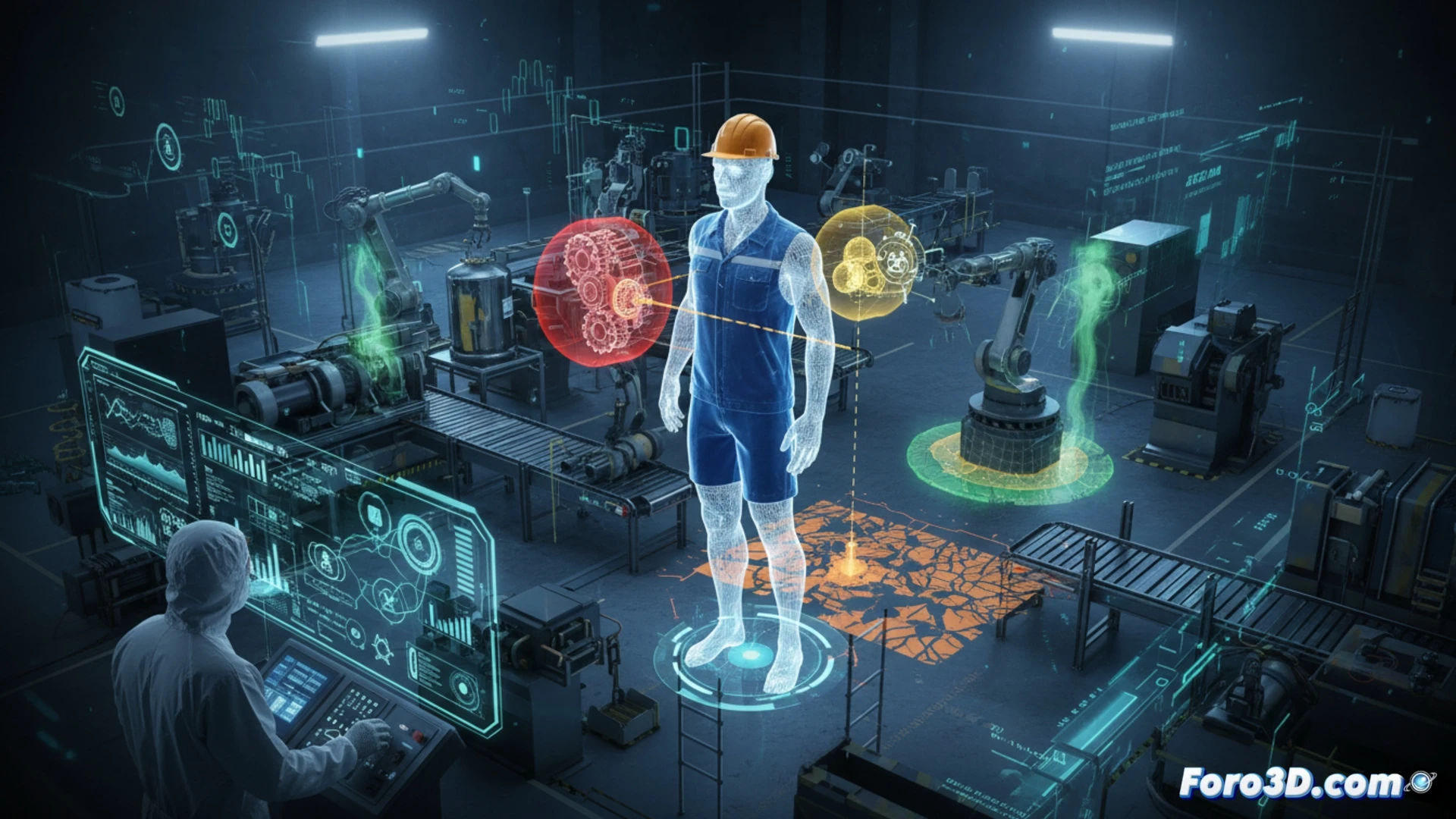
The figure of the factory worker concentrates some of the most frequent occupational hazards in industrial production. Entrapment in conveyor belts, impacts from falling objects, slips on the same level, and constant exposure to noise, dust, and chemicals create a high-risk scenario. 3D simulation allows these dangers to be transferred to a controlled virtual environment for detailed analysis.
Modeling critical zones and overlaying environmental data 🏭
To address these risks, the development of a digital twin of the plant is proposed. The 3D modeling must include the conveyor belts with their gear points and rollers, the heavy machinery with its operating zones, and the pedestrian walkways. On this geometric base, heat maps are overlaid representing noise levels in decibels and concentrations of dust or chemical vapors. This integrated visualization allows identifying the exact points where overexertion from repetitive postures or lack of signage increases accident rates.
Simulation as an active prevention tool 🛡️
Beyond visual inspection, the digital twin allows executing incident simulations without putting workers at risk. Entrapments in the conveyor belt or falls in slippery areas can be recreated to study causes and consequences. This methodology transforms occupational risk prevention into an immersive and quantifiable practice, optimizing staff training and the redistribution of safety elements in the real factory.
How can a digital twin anticipate the operator's entrapment risks on a production line without replacing the need for their real-time situational judgment?
(PS: visualizing logistics flows is like watching ants... but with less order and more budget)