Barcelona Metro Line 9 has been dragging a decade of paralysis in its central section. Abandoned construction shafts and halted tunnel boring machines reflect a project that has exceeded all economic forecasts. Faced with this frozen infrastructure, digital twin technology offers a precise solution to virtually replicate the current state of the works, allowing managers and citizens to understand the magnitude of the problem.
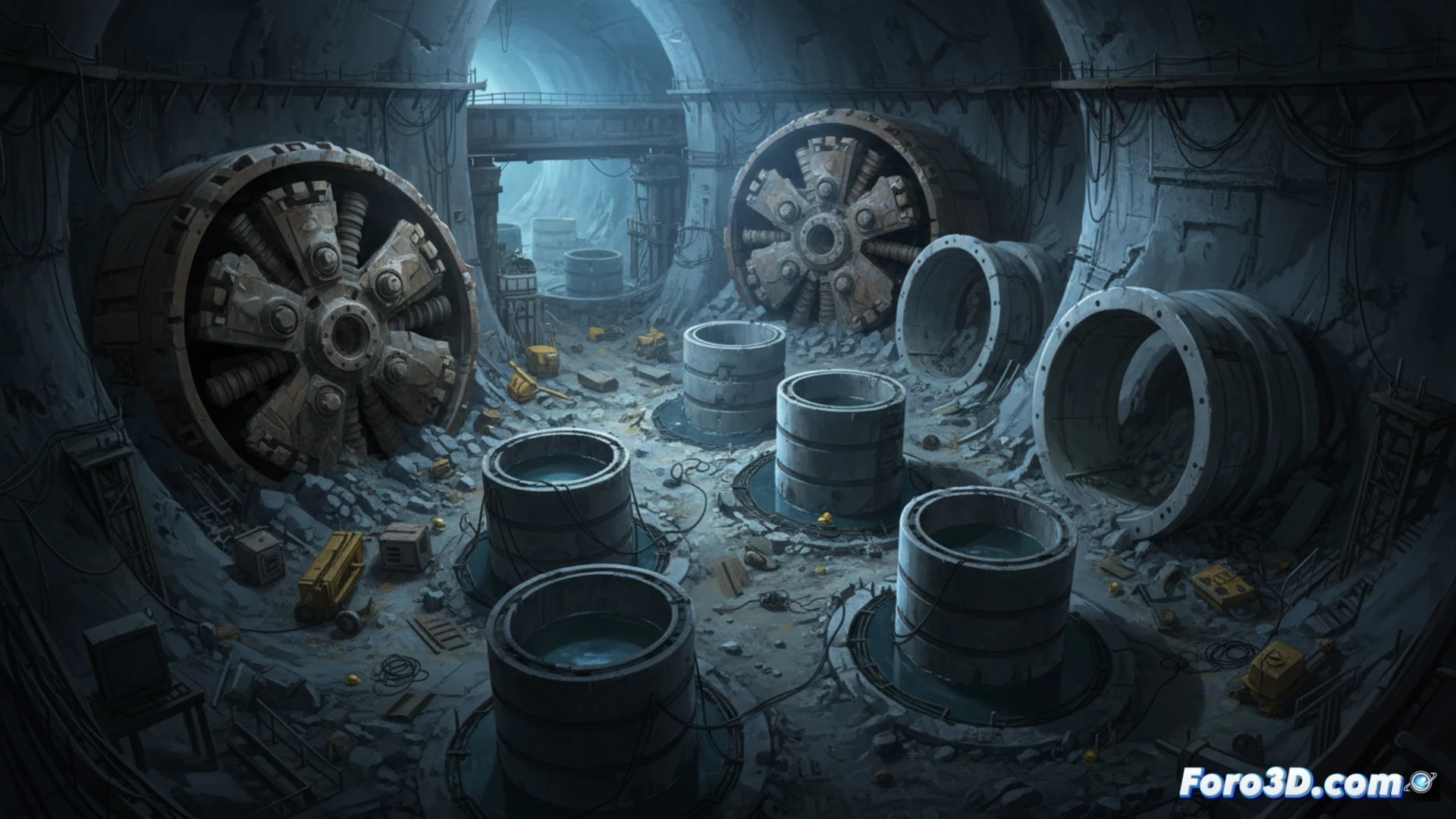
3D visualization of the current state and scenario simulation 🚇
A digital twin of the central section of Line 9 would integrate laser scanning data, photogrammetry, and geotechnical records to generate an exact replica of the unfinished shafts and tunnels. This 3D platform would allow real-time monitoring of structural deterioration, from beam corrosion to the accumulation of water leaks. Additionally, engineers could simulate the resumption of works, evaluating different construction sequences and calculating the economic and time impacts of each alternative. The tool would facilitate decision-making by quantifying the cost of reactivating a tunnel boring machine versus the option of permanently sealing the access points.
Citizen transparency and legacy management 🏗️
Beyond engineering, a digital twin of Line 9 would function as an interactive public record. Citizens could navigate the virtual model to understand why the project was halted and what solutions are viable. This technical transparency would restore confidence in infrastructure management, turning the scar on Diagonal Avenue into a case study on how 3D technology can rescue colossal projects from oblivion and cost overruns.
Could a digital twin fed with historical vibration and geology data predict the exact point of rupture on the excavation face of Line 9, thus avoiding further stoppages?
(PS: don't forget to update the digital twin, or your real twin will complain)