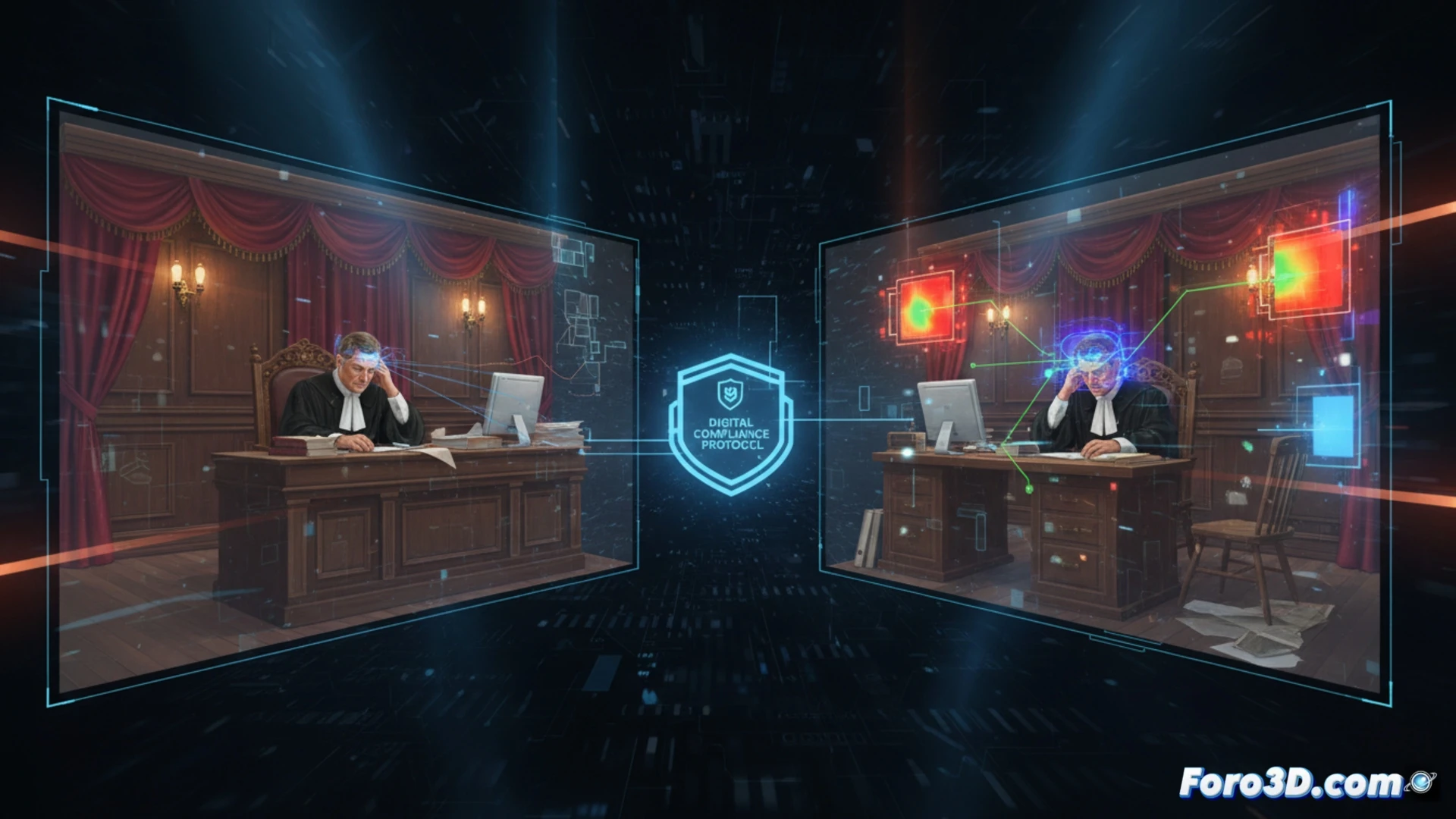
The figure of the judge faces silent but devastating occupational risks: extreme stress from the pressure of ruling, physical assaults in courtrooms, and pathologies derived from a sedentary lifestyle. This article proposes the design of a digital twin of a courthouse to model the office and the courtroom in 3D. The objective is to visualize danger zones, eye strain, and mental overload to develop digital compliance protocols that protect the magistrate.
3D Modeling of Jurisdictional Environments for Risk Prevention 🏛️
The digital twin replicates the judge's office with eye strain indicators, represented by light heat maps on the monitor and the reading stand. The courtroom is modeled with aggression risk zones, marked with dynamic colors that change according to the simulated procedural tension. The seats incorporate virtual posture sensors to detect prolonged sedentary behavior. Integrating workload data, the system generates burnout and sleep disorder alerts, allowing for the design of active breaks and room rotations. This simulation facilitates regulatory compliance in occupational prevention within the judicial field.
Towards a Judiciary Assisted by Technological Simulation ⚖️
Visualizing risk is not alarmism; it is proactive prevention. This technological approach allows the judge and prevention services to identify blind spots in their daily routine before they lead to sick leave. The 3D simulation becomes a digital compliance tool that humanizes the burden of the profession, proposing safer and more sustainable work environments. Justice also needs to take care of those who administer it.
How could a judicial digital twin anticipate and mitigate the psychosocial risks of the judge, such as extreme stress or emotional burnout, before they affect their health and ruling capacity?
(PS: at Foro3D we know that the only compliance that works is the one tested beforehand, not afterwards)