An experimental modular fission reactor (SMR) suffered critical overheating due to a blockage in its liquid coolant circuit. Unable to physically access the system due to high radiation levels, the engineering team turned to a digital twin. Using remote LIDAR sensors and thermographic cameras, the internal geometry of the reactor was captured to create a precise 3D model of the affected circuit.
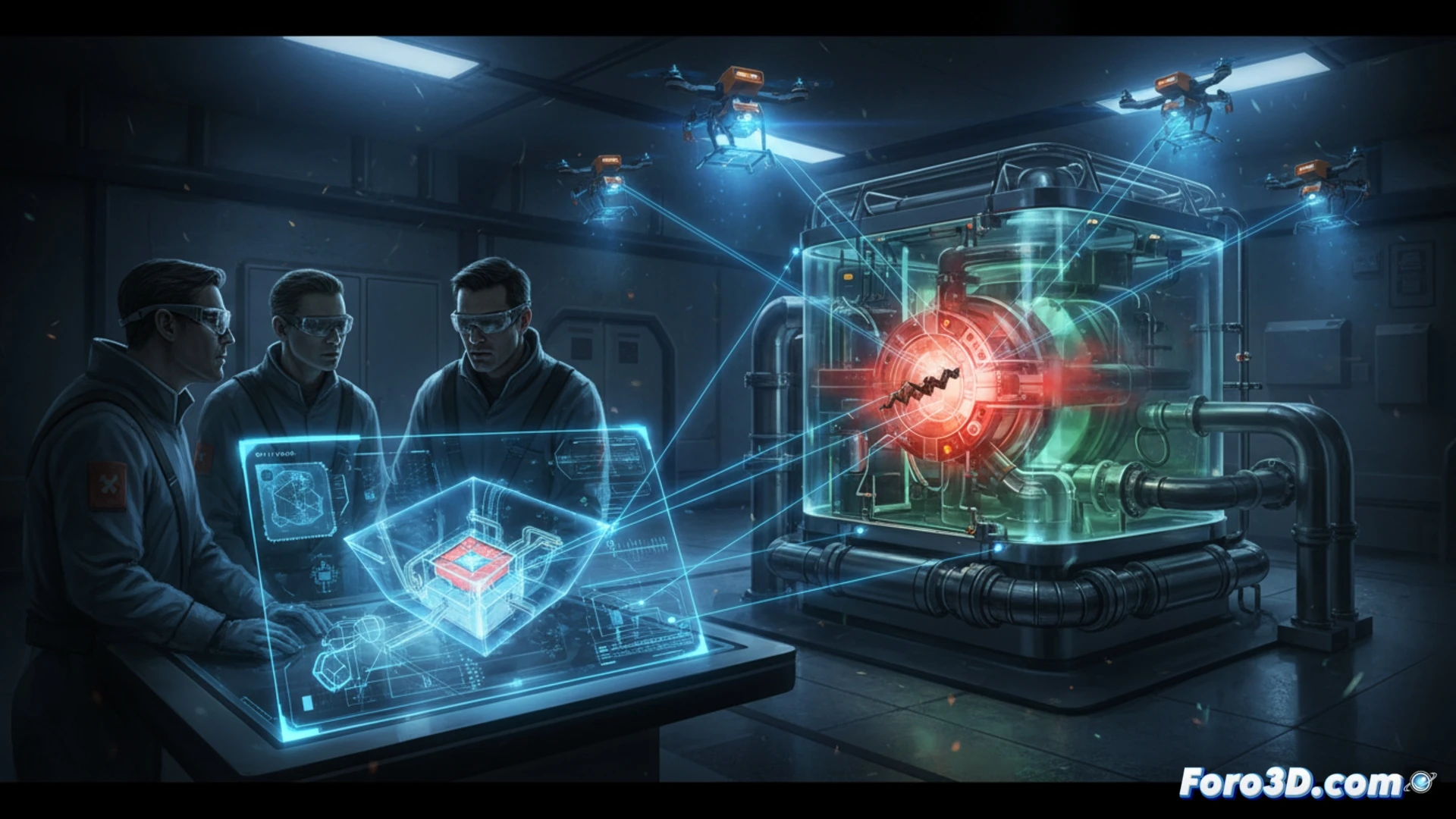
3D Reconstruction and Simulation with Geomagic Control X and COMSOL 🛠️
The obtained point cloud was processed in Geomagic Control X, where it was aligned with the reactor's original CAD design. The detected deviations revealed an area of anomalous narrowing in a secondary duct. This geometric model was exported to COMSOL Multiphysics to simulate the coolant flow. The simulation confirmed that the obstruction, identified as poorly purged welding residues, reduced the flow rate by 40%, causing localized hot spots. Autodesk ReCap facilitated the integration of field data with the digital model, allowing for an accurate visualization of the failure without needing to disassemble the reactor.
Lessons for the Modular Nuclear Industry ⚛️
This incident demonstrates that digital twins are not just design tools, but critical diagnostic systems in hostile environments. The ability to detect a millimeter-scale obstruction without physical intervention drastically reduces exposure risks and downtime. For SMR reactors, where passive safety is key, integrating remote sensors with simulation software like COMSOL becomes a necessary standard to ensure long-term operational reliability.
What advantages does early detection of welding defects in a digital twin of an SMR reactor offer compared to traditional non-destructive inspection methods?
(PS: don't forget to update the digital twin, or your real twin will complain)