The industrial buyer is a critical link in logistics, but their role concentrates silent risks: eye strain from screens, sedentary lifestyle, deadline stress, and mental overload. Additionally, visits to warehouses and factories expose them to falls and collisions. At Foro3D, we analyze how simulation and the digital twin allow us to visualize and prevent these hazards before they occur.
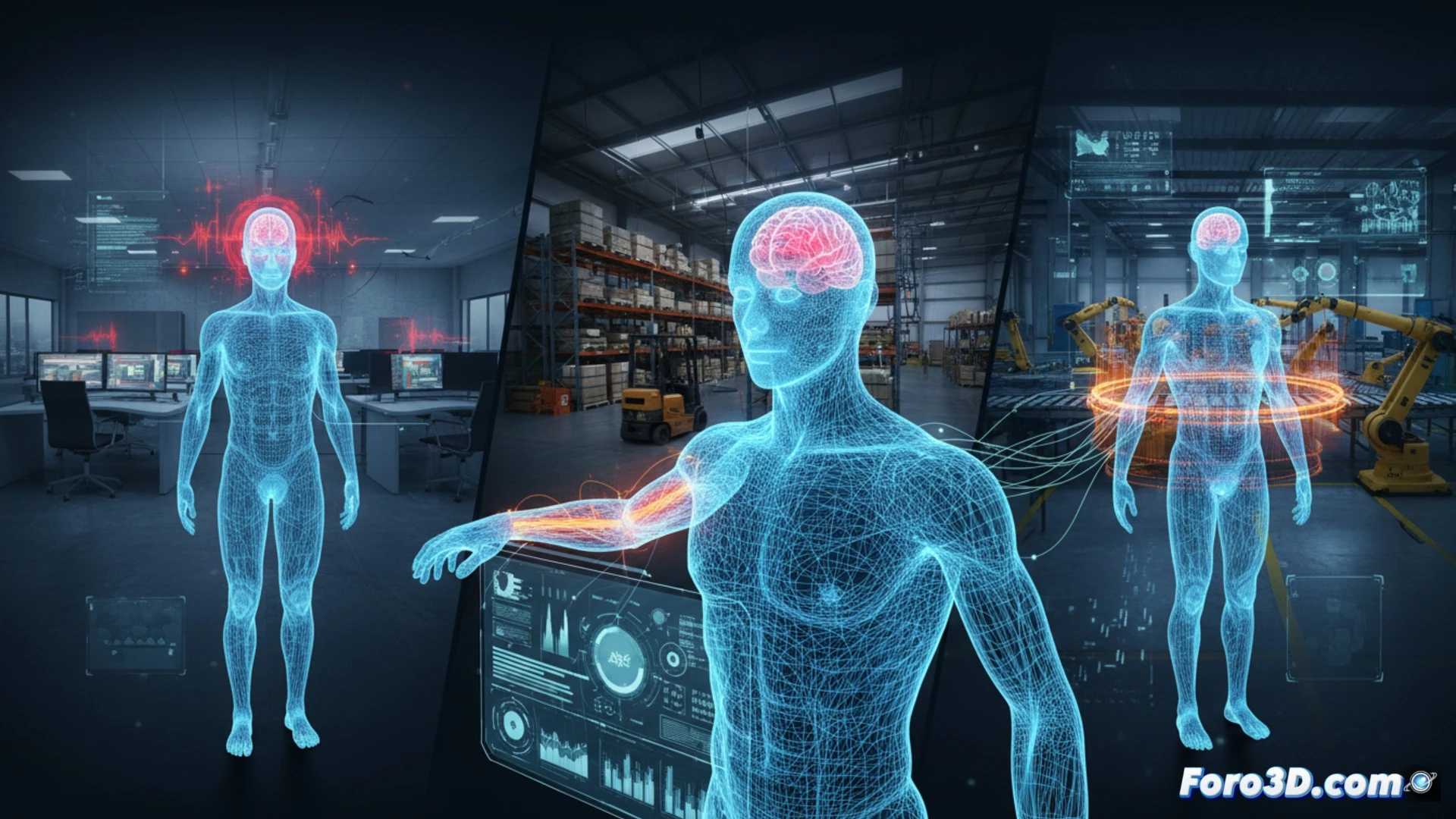
3D modeling of the office workstation and preventive ergonomics 🖥️
Simulating the buyer's environment allows for precise recreation of lighting, screen distance, and furniture height to assess eye strain and musculoskeletal disorders. Through an interactive 3D model, variables such as monitor angle or lumbar support can be adjusted, testing optimal configurations without the need for physical changes. This approach, integrated into a workflow digital twin, also identifies peaks of mental load by visualizing the accumulation of tasks, deadlines, and communications with suppliers, proposing active breaks and workload redistribution.
Recreating the warehouse to avoid real risk 🏭
Travel to warehouses and factories is necessary but dangerous. 3D simulation of these environments allows for anticipating blind spots, forklift crossings, and fall points, training the buyer in a safe virtual space. By integrating these scenarios into the logistics digital twin, protected pedestrian routes and emergency protocols can be designed. 3D technology not only documents risk but transforms it into an active and visual prevention tool.
How can a digital twin of the industrial buyer model the cumulative eye strain from prolonged screen use during long workdays to predict and mitigate risks in 3D logistics?
(PS: 3D logistics is beautiful until you try to fit a container where it doesn't fit)