The Heirloom Limestone DAC plant represents a milestone in direct atmospheric CO2 capture, utilizing chemical cycles based on limestone and modular refining infrastructure. To optimize its performance, creating a digital twin becomes essential. This technical article explores how to model this industrial facility in 3D, replicating its calcination and carbonation processes using climate simulation and energy automation software.
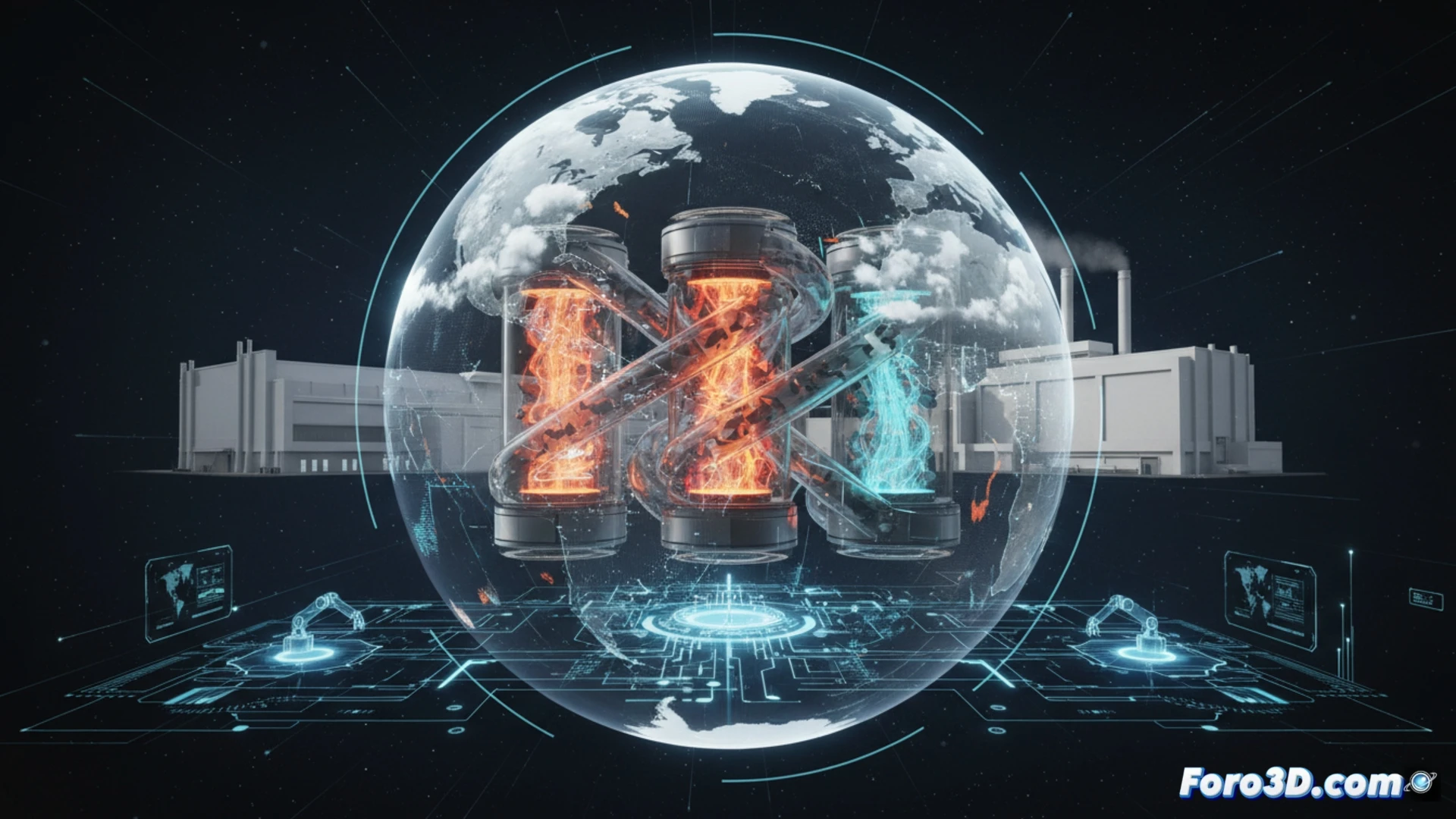
3D modeling of chemical cycles and automation in DAC plant 🏭
The Heirloom digital twin requires a precise replica of its calcination modules, where limestone breaks down into quicklime and CO2, and the carbonation beds that reabsorb the gas. For this, industrial software such as Unity Reflect or Twinmotion is used, integrating data from IoT sensors that monitor temperature, pressure, and airflow. Energy automation is modeled through scripts that control valves and conveyors, replicating the 24-hour cycles. This approach allows simulating efficiency scenarios, predicting limestone degradation, and adjusting process speeds without intervening in the physical plant, reducing operational costs and residual emissions.
Reflection on predictive simulation in climate infrastructure 💡
The true value of the Heirloom DAC digital twin lies in its ability to anticipate failures in heat exchangers and optimize CO2 capture in real time. By integrating machine learning models with 3D geometry, operators can visualize the wear of limestone beds and reschedule regeneration cycles. This technology not only accelerates the energy transition but also turns modular infrastructure into a living system, where each virtual iteration improves the real efficiency of the plant.
How can 3D modeling of the Heirloom DAC plant digital twin optimize the energy efficiency of the chemical CO2 capture cycle with limestone?
(PS: don't forget to update the digital twin, or your real twin will complain)