The profession of a barista, although creative, hides real physical risks: steam burns, repetitive wrist movements, forced postures, and stress from high demand. In the logistics and 3D industrial production sector, these dangers can be anticipated through digital twins. Modeling a coffee shop in a virtual environment allows simulating each task, identifying critical points, and training staff without exposing them to real danger, optimizing safety and workflow efficiency.
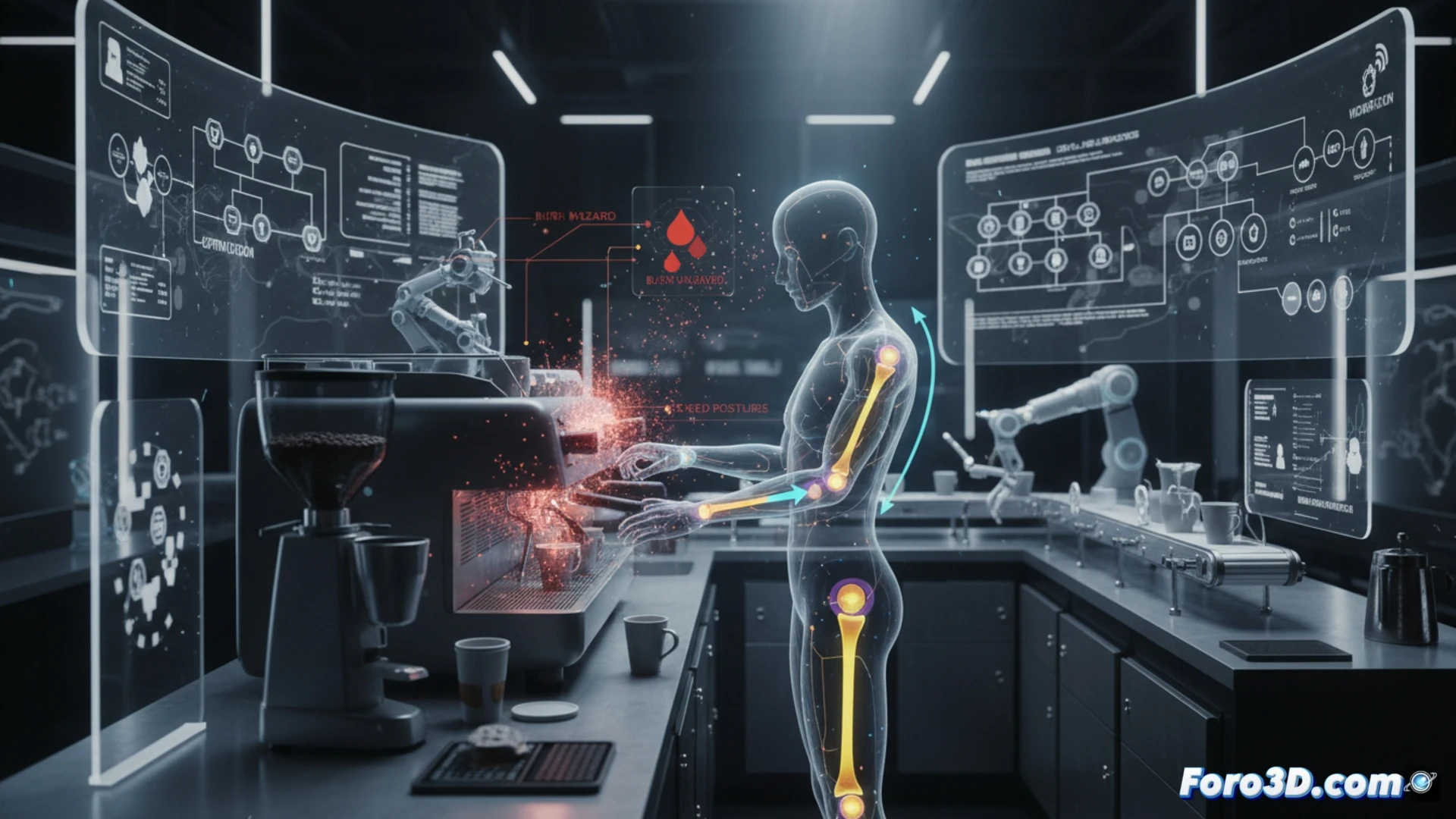
3D modeling of barista risks and workflow ☕
To build the simulation, the work area must be modeled with precision: the espresso machine, the steam area, the tamping station, and the floors prone to splashes. The barista animation must replicate the repetitive wrist movements when tamping and preparing drinks, as well as prolonged standing postures. The digital twin allows visualizing the heat zones around the coffee groups and wet surfaces, marking high-risk points for falls. Additionally, the high-demand simulation allows adjusting the layout of utensils and the order flow to reduce stress and overexertion when handling coffee bags.
Reflection: virtual training as real prevention 🛡️
3D simulation not only identifies hazards but transforms prevention into an interactive experience. Staff can practice correct postures and efficient movements without the risk of burns or cuts. By anticipating fatigue from repetitive movements and stress from demand peaks, the digital twin becomes a key tool for industrial logistics. Ultimately, the future of occupational safety involves visualizing risk before it occurs, and the coffee shop is a perfect laboratory to demonstrate this.
How can a digital twin of a coffee shop simulate the repetitive movements of a barista to predict and prevent musculoskeletal injuries before they appear?
(PS: 3D bottlenecks are like traffic jams: you see them coming but can't avoid them)