The figure of the streamer has established itself as a digital profession with specific risks that are rarely addressed from a technical prevention standpoint. Forced postures for hours, chronic visual fatigue, extreme sedentary lifestyle, and psychosocial stress make up a vulnerability profile that demands solutions beyond basic ergonomic advice. This article analyzes how 3D simulation and verification systems can transform the safety of the content creator.
Three-dimensional simulation and biomechanical monitoring 🖥️
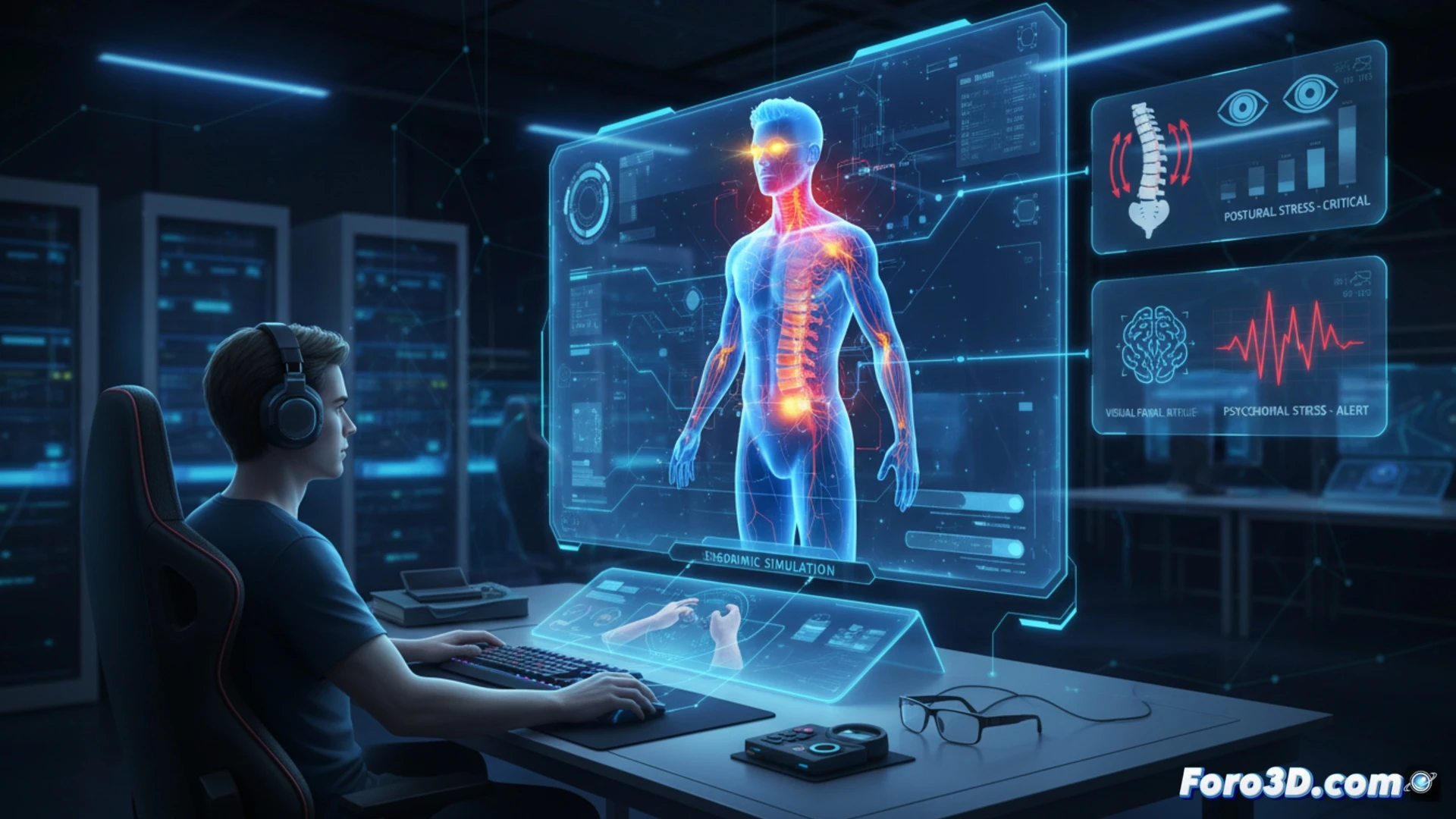
Digital twin technology allows recreating the streamer's workstation in an exact virtual environment. Using 3D biomechanical models, it is possible to visualize the load on the lumbar spine, cervical angle, and wrist deviation during prolonged sessions. The system can simulate visual fatigue by projecting heat maps onto the virtual retina, adjusting lighting and blinking. Additionally, IoT sensors are integrated to monitor heart rate and vocal tension, activating automatic alerts when thresholds for cardiovascular risk or vocal strain are exceeded. This data feeds a verifiable history for occupational risk prevention audits.
Psychosocial protection through alert systems 🛡️
The greatest danger for the streamer is not physical, but psychosocial. Online harassment, audience anxiety, and burnout require verification systems that detect stress patterns. A digital twin can record voice tone variability, ambient noise peaks from equipment, and nighttime schedules, generating objective reports. This traceability allows prevention services to design mandatory breaks, activity rotation, and disconnection protocols, protecting a vulnerable group that often normalizes overexposure.
Can a 3D digital twin simulate in real time the postural fatigue and blue light exposure of the streamer to redesign their workspace before they become chronic injuries?
(PS: alert systems are like coffee: if they don't go off when they should, the day goes sideways)