Writer Garzo invites us on a journey through classical Greek myths, but don't expect marble columns or perfect gods. In A Paradise of Rubble, love is an engine that transforms and destroys in equal measure. Heroes and lovers stumble, break, and rebuild themselves in a wondrous fairy-tale setting, where epic grandeur blends with contemporary human fragility.
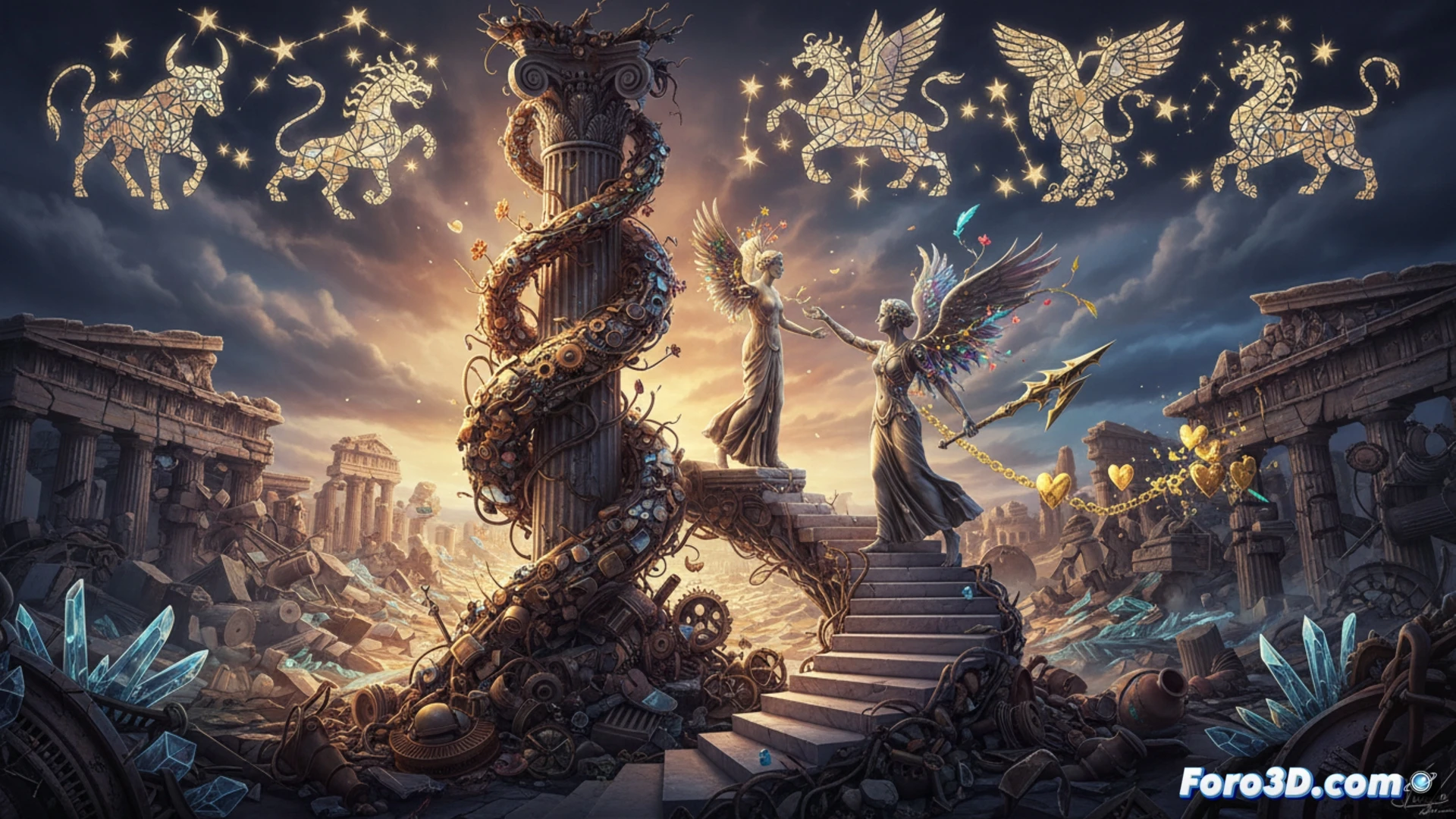
Aphrodite's Algorithm: Narrative Development in Ruins 🏛️
The book's structure functions like an iterative development process: each chapter is an independent module that, when connected with the others, compiles a complete vision of love. Garzo employs a technique of controlled fragmentation, similar to code debugging, where human errors (jealousy, obsession, abandonment) are bugs that generate new plots. The author offers no patches or updates; the characters must deal with their own emotional software, often flawed.
Spoiler: Love Has No Security Patch 🐛
If you're expecting an instruction manual for loving without risks, you'd be better off sticking with the router manual. Garzo drops you into the Minotaur's labyrinth without GPS, and Ariadne's threads are more like tangled charger cables. In the end, you're left with the feeling that love is like a perpetual beta: full of glitches, but nobody uninstalls the app.