3D technology allows livestock breeders to visualize the animal's anatomy and growth before it is born. For example, through ultrasound scans converted into 3D models, it is possible to predict a calf's muscle conformation and select the best breeding stock. This saves time and resources, reducing uncertainty in selective breeding.
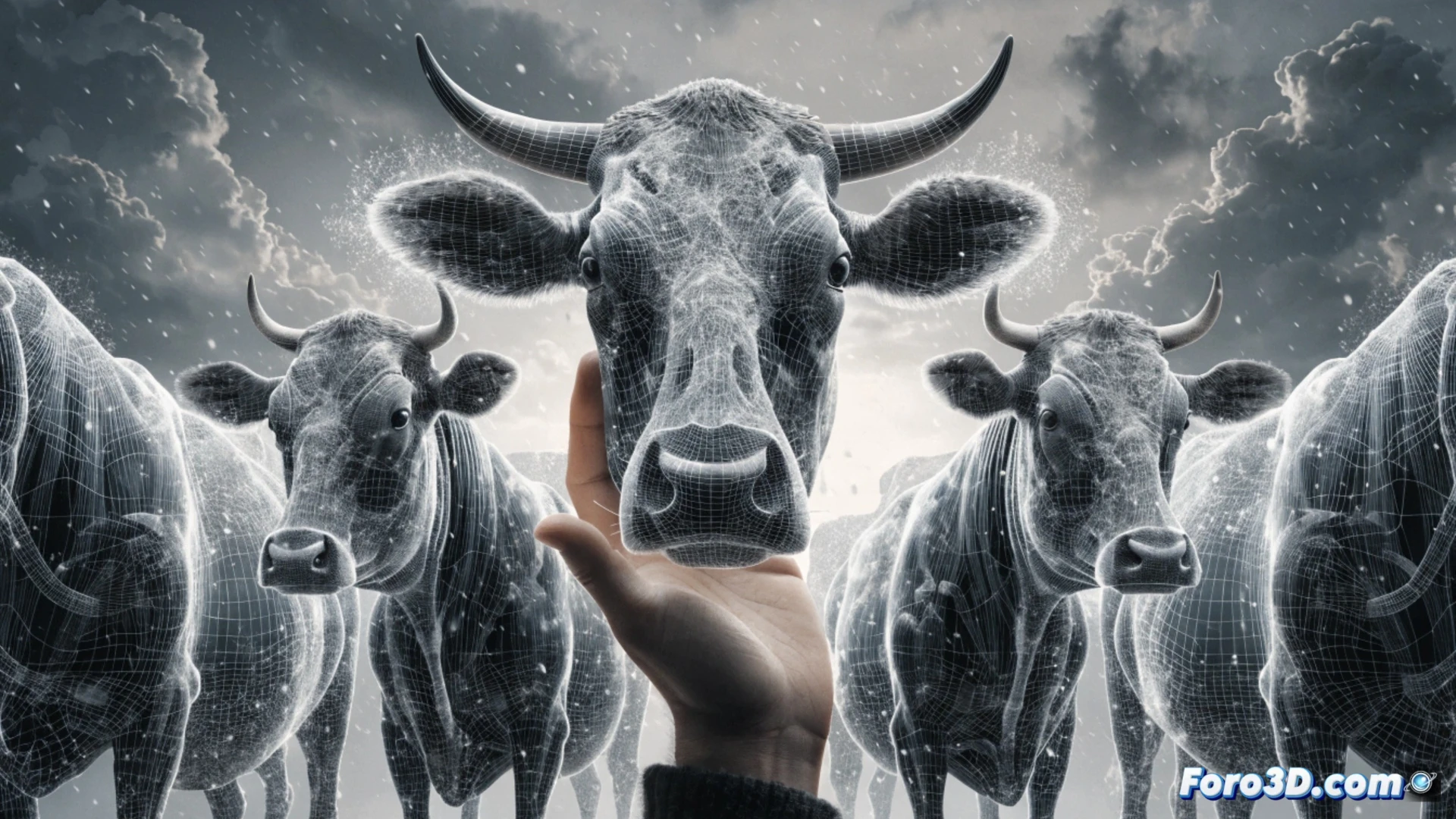
Modeling and simulation for genetic selection 🧬
To apply this, programs like Blender are needed to reconstruct three-dimensional models from ultrasound data, or Rhinoceros 3D to analyze bone structure. Agricultural software such as BreedPlan also integrates 3D data to evaluate hereditary traits. The workflow involves capturing images, processing them into polygonal meshes, and comparing muscle volumes between specimens. This allows for more precise breeding decisions, based on objective data rather than solely the breeder's visual experience.
The 3D bull that doesn't charge but earns royalties 🐂
Of course, modeling a cow in 3D doesn't milk it or feed it. But at least, when the breeder argues with his neighbor about which sire is better, he can open his laptop and show him a textured simulation of the future calf. Sure, the neighbor will still say that his bull has a better pedigree, but at least the 3D model won't escape through the corral gate.