The Queen's Gambit series has achieved 112.8 million views, becoming the most-watched miniseries on Netflix. Its success lies not only in chess but in the precision with which psychiatrists have praised its depiction of addiction and anxiety. Beth Harmon, a prodigy of the board, develops dependence on tranquilizers and alcohol from her childhood in an orphanage, showing a realistic struggle that has resonated with the global audience.
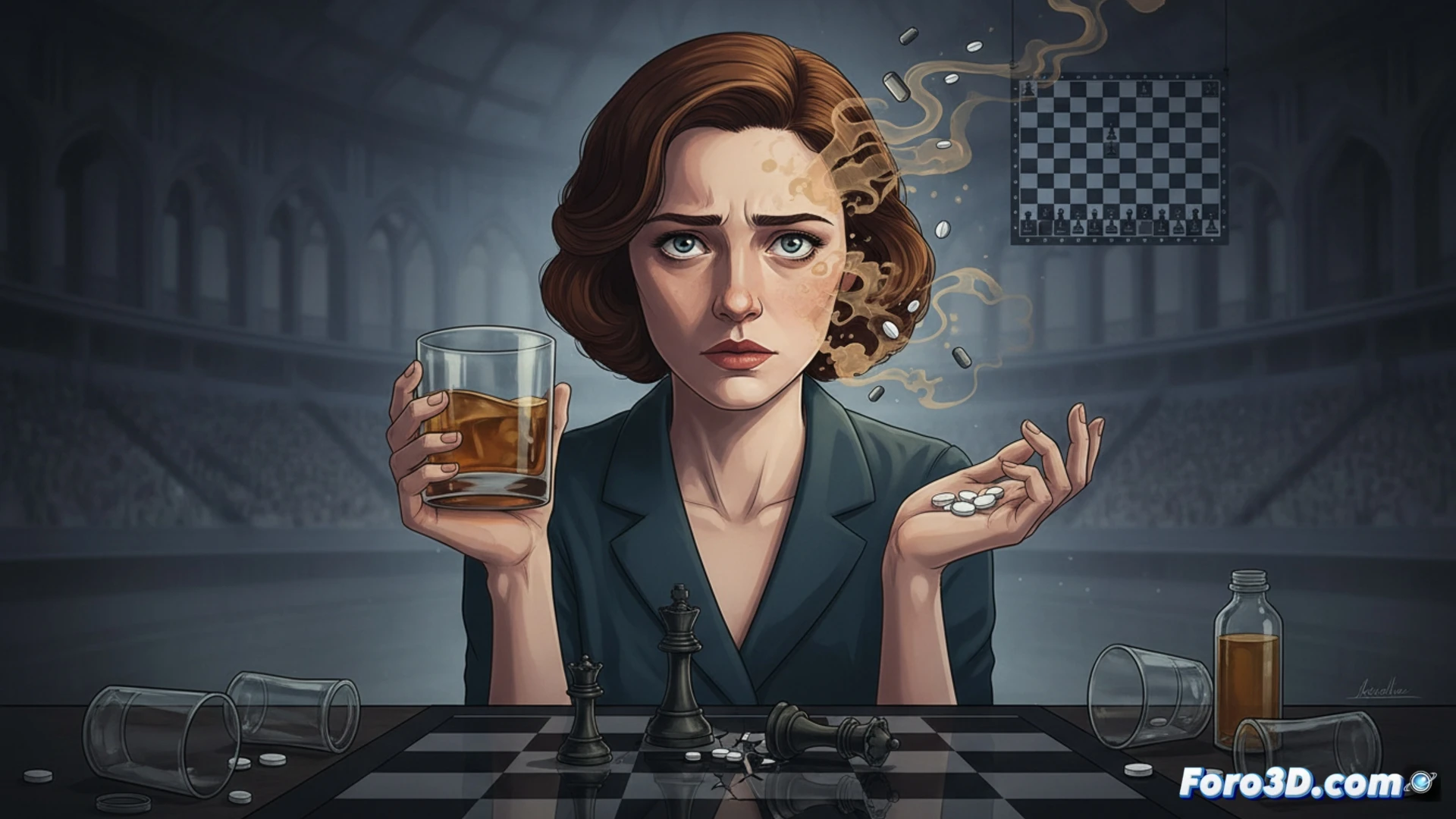
The technical development behind the psychological realism 🧠
The production used addiction counselors and psychiatrists to ensure that every scene faithfully reflected patterns of chemical dependence. The narrative avoids glorifying consumption and shows the physical and emotional consequences of withdrawal. Technically, the series uses close-ups and lighting changes to convey Beth's anxiety. This documentary-like approach in fiction has been key to the story transcending entertainment and raising awareness about real disorders.
A self-help manual they won't recommend to you 😅
If you thought The Queen's Gambit was just a tutorial on chess openings, you missed the real tutorial: how to survive an orphanage with a pharmacy kit. Beth shows that with enough determination and a few tranquilizers, anyone can beat a Soviet champion. Of course, don't try to replicate her study method at home. Your cat, your boss, and your liver will thank you.