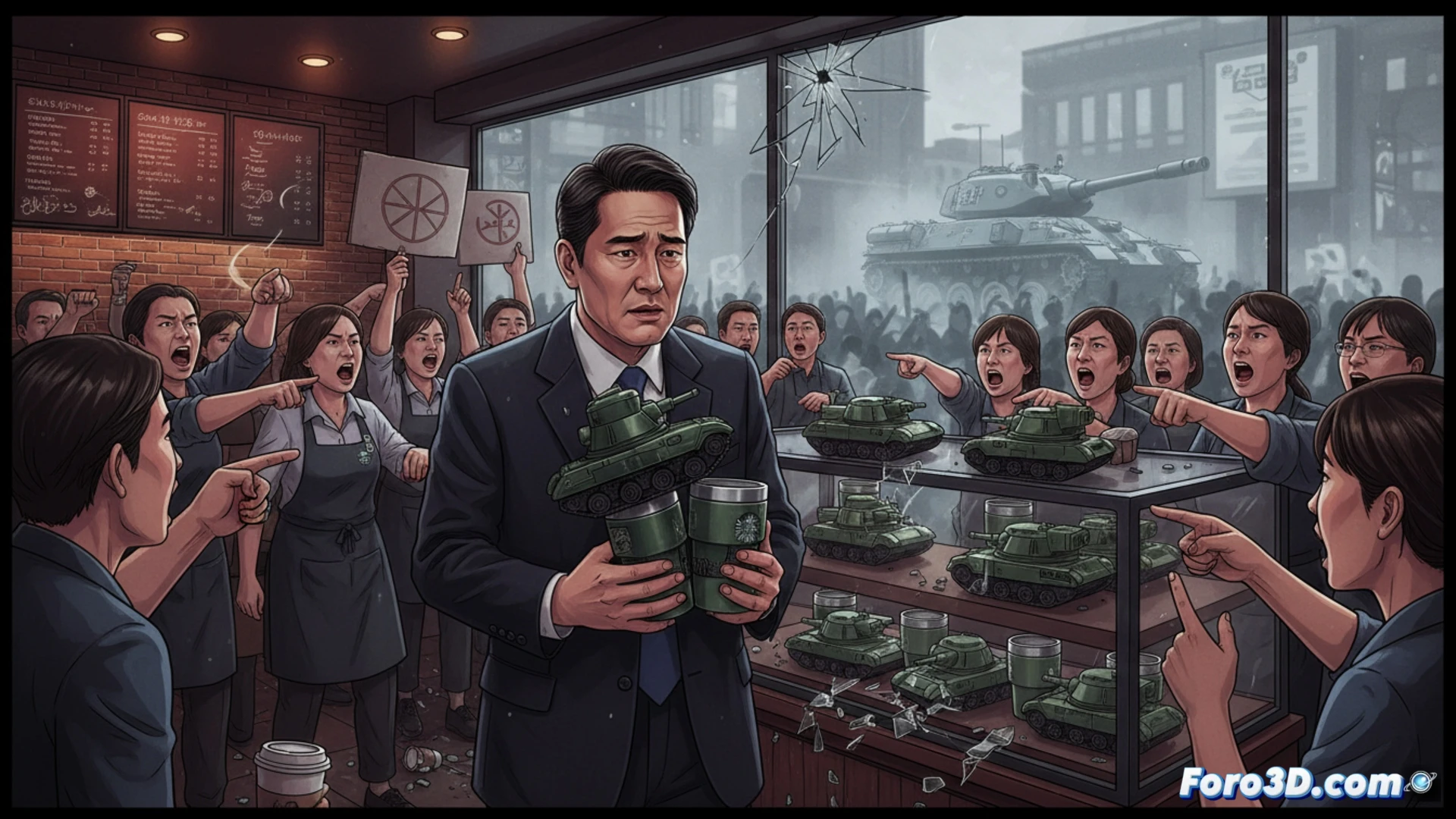
The CEO of Starbucks in South Korea, Son Jung-hyun, was dismissed following an advertising campaign that sparked a political storm. On May 18, the anniversary of the 1980 Gwangju pro-democracy uprising, the company launched a line of reusable cups called Tank tumblers, promoted under the slogan Tank Day. The association between a repressive military vehicle and the historical tragedy caused social outrage and a crisis of image.
The Algorithm of Memory: How AI Moderates Sensitive Content 🧠
This case exposes the flaws in automated campaign review systems. AI tools that filter advertising content often prioritize commercial keywords over historical contexts. A language model trained on generic data might fail to detect the connection between Tank Day and the Gwangju massacre due to a lack of local references. To avoid these errors, companies must integrate regional historical databases into their content filters and conduct human audits on commemorative dates.
The Masterstroke: Selling Tanks on Memorial Day 🎯
The idea was simple: promote a cup called a tank on the anniversary of a massacre involving tanks. The result was as predictable as cold coffee in winter. The marketing team proved that you don't need to travel through time to relive the past; a viral campaign will do. At least now the CEO has free time to reflect on the difference between a reusable cup and a symbol of repression.