AMD has confirmed the expansion of its FSR 4.1 upscaling technology to the RDNA 3 and RDNA 2 graphics architectures, a move that promises to extend the lifespan of cards like the Radeon RX 7000 series and devices like the Steam Deck. According to Jack Huynh, the update will arrive in July for RDNA 3 GPUs and in early 2027 for RDNA 2, opening the door to over 300 compatible games, including titles like Cyberpunk 2077 and Assassin's Creed Shadows. This decision involves a complex optimization process, as older GPUs lack the native hardware to run the FSR 4.1 AI model.
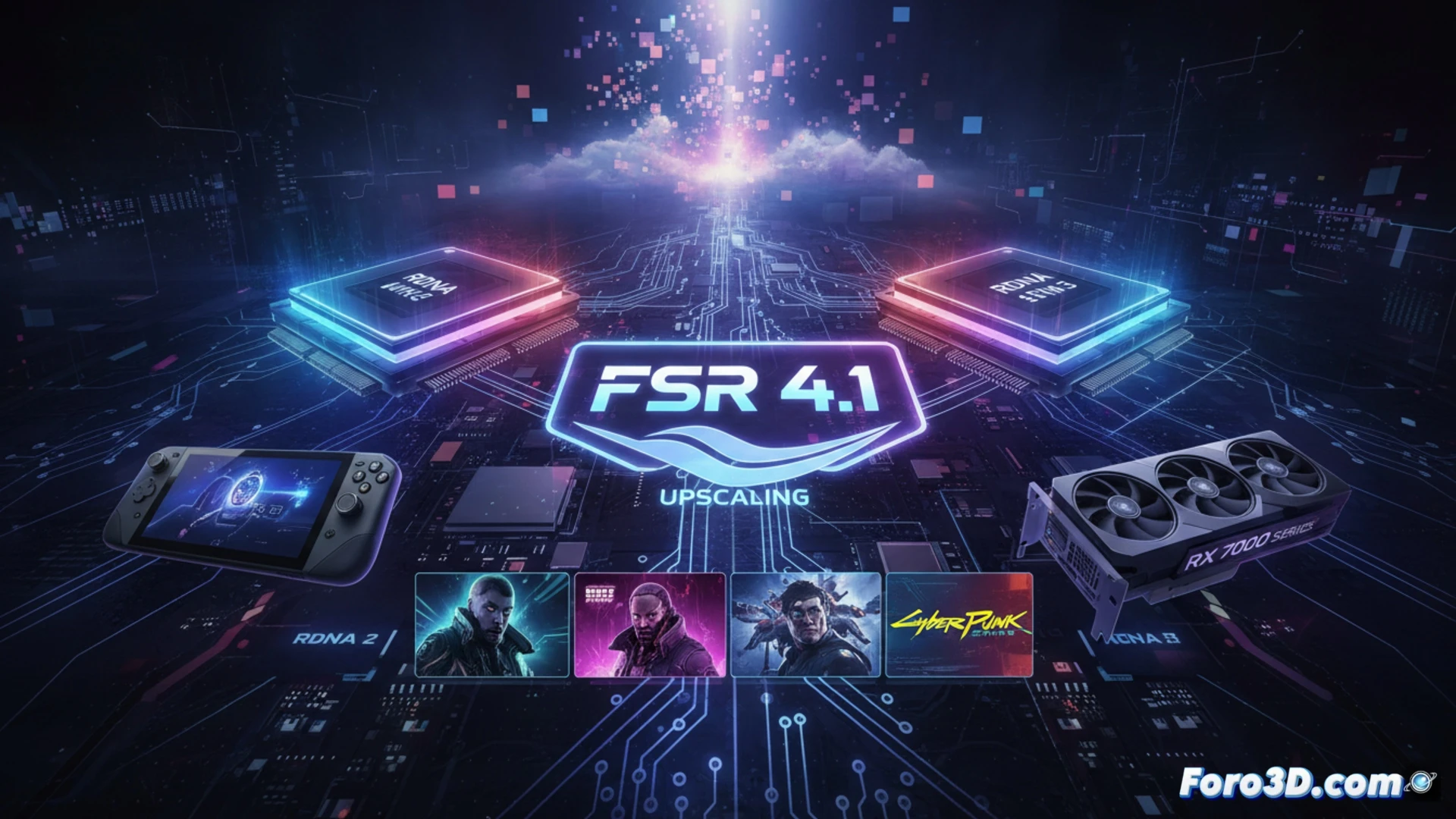
Forced Optimization: The Challenge of AI on Legacy Hardware 🚀
The main technical challenge lies in the fact that RDNA 3 and RDNA 2 chips do not have the dedicated AI accelerators that the Radeon RX 9000 series incorporates. To achieve compatibility, AMD has had to adjust, optimize, and validate the upscaling model across hundreds of configurations and games, according to Huynh. In the realm of 3D modeling and simulation, this translates into a significant performance improvement in viewports and interactive renders, where fluidity is critical. While image quality will not reach the level of modern GPUs, the quality/performance ratio for workstations with RX 7000 or Steam Deck becomes much more attractive, allowing complex scenes to be handled without needing an immediate hardware upgrade.
Long-Term Viability for Professional Workflows 💡
The expansion of FSR 4.1 to older hardware redefines the viability of these platforms for professional 3D environments. For a studio using Radeon RX 7000, the arrival of this technology in July means being able to work with high-resolution textures and real-time simulations without sacrificing frame rate. However, the wait until 2027 for RDNA 2 leaves Steam Deck and RX 6000 card users in a holding pattern. Although it is not a magic solution, this update demonstrates that AMD is committed to extending the lifecycle of its ecosystem, offering a viable alternative to planned obsolescence, especially for those who prioritize overall performance over absolute graphical fidelity.
Considering that FSR 4.1 is based on machine learning, how does its implementation on RDNA 2 and 3 affect performance and visual quality in real-time 3D modeling and rendering workflows?
(PS: If your computer is smoking when you open Blender, you might need more than a fan and faith)