3D technology is not just for designing car parts or making models. In fruit growing, it allows analyzing the exact structure of trees, predicting optimal pruning, and calculating the solar exposure of each fruit. A clear example is using a LiDAR scanner mounted on a drone to create a digital twin of the plantation, optimizing irrigation and harvesting.
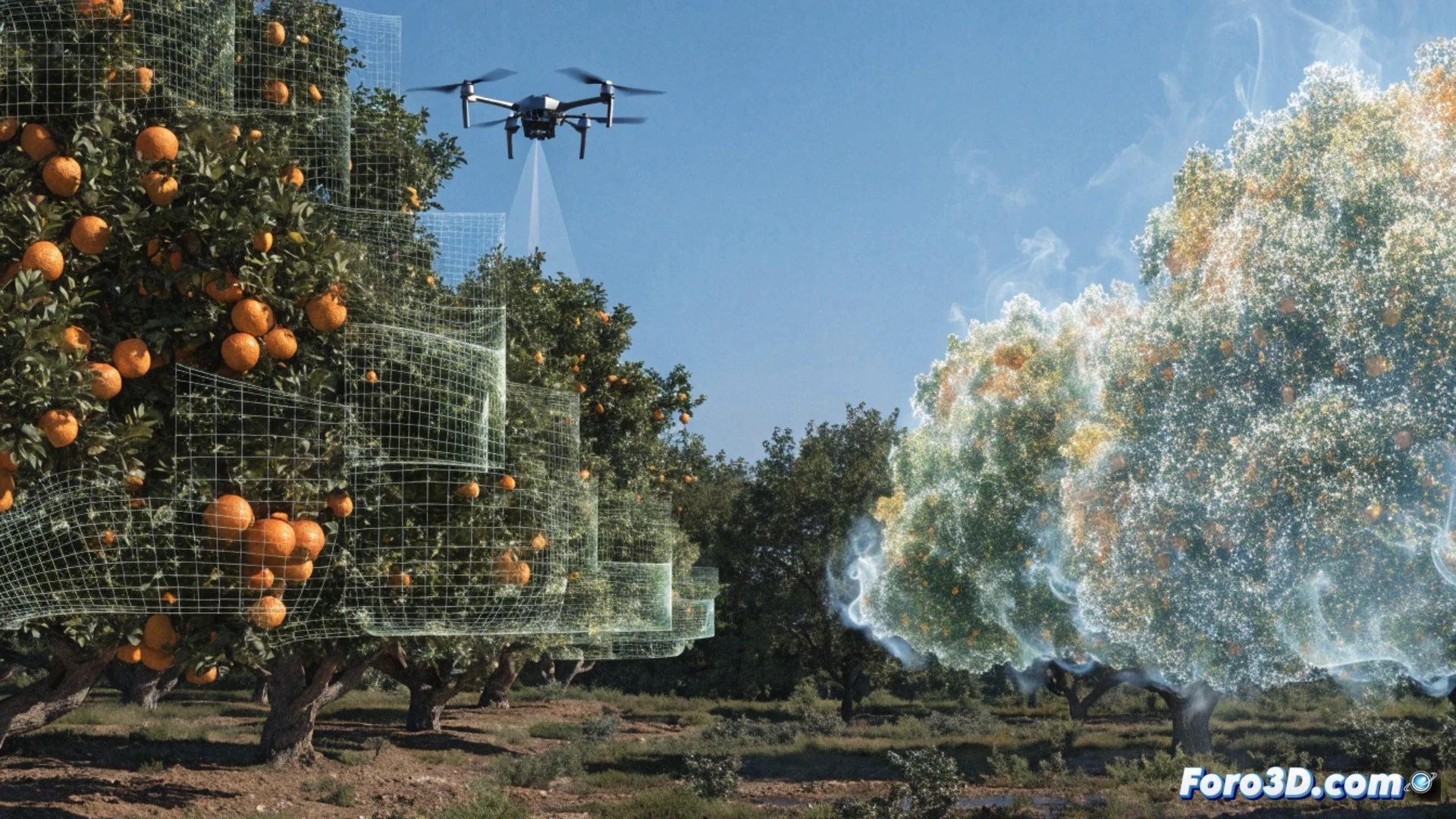
Scanning and modeling: the digital twin of the orchard 🌿
This requires 3D modeling software like Blender or Agisoft Metashape to process the point clouds captured by the drone. Then, agricultural simulation programs like CropTracker or VitiCanopy allow analyzing foliage volume and fruit density. With this information, the fruit grower can adjust fertilizer application and plan pruning with millimeter precision, saving time and resources.
When the apple tree asks you for a 4K render 🍎
Now it turns out that even pears want their own 3D photo shoot before falling from the tree. The modern fruit grower spends more time looking at screens than looking at the sky. But hey, if your apple tree demands a polygonal model with realistic textures before dropping the fruit, you are doing something wrong. Or maybe it just needs a computer technician in work overalls.