The frescoes of the Monastery of Sijena, a masterpiece of Romanesque art, preserve an incalculable historical value despite their fragmented and worn state. Experts point out that their relevance lies in a visual narrative that captures medieval spirituality, although their current value is a pale reflection of the original splendor. The controversy over their transfer has overshadowed their true heritage importance for Europe.
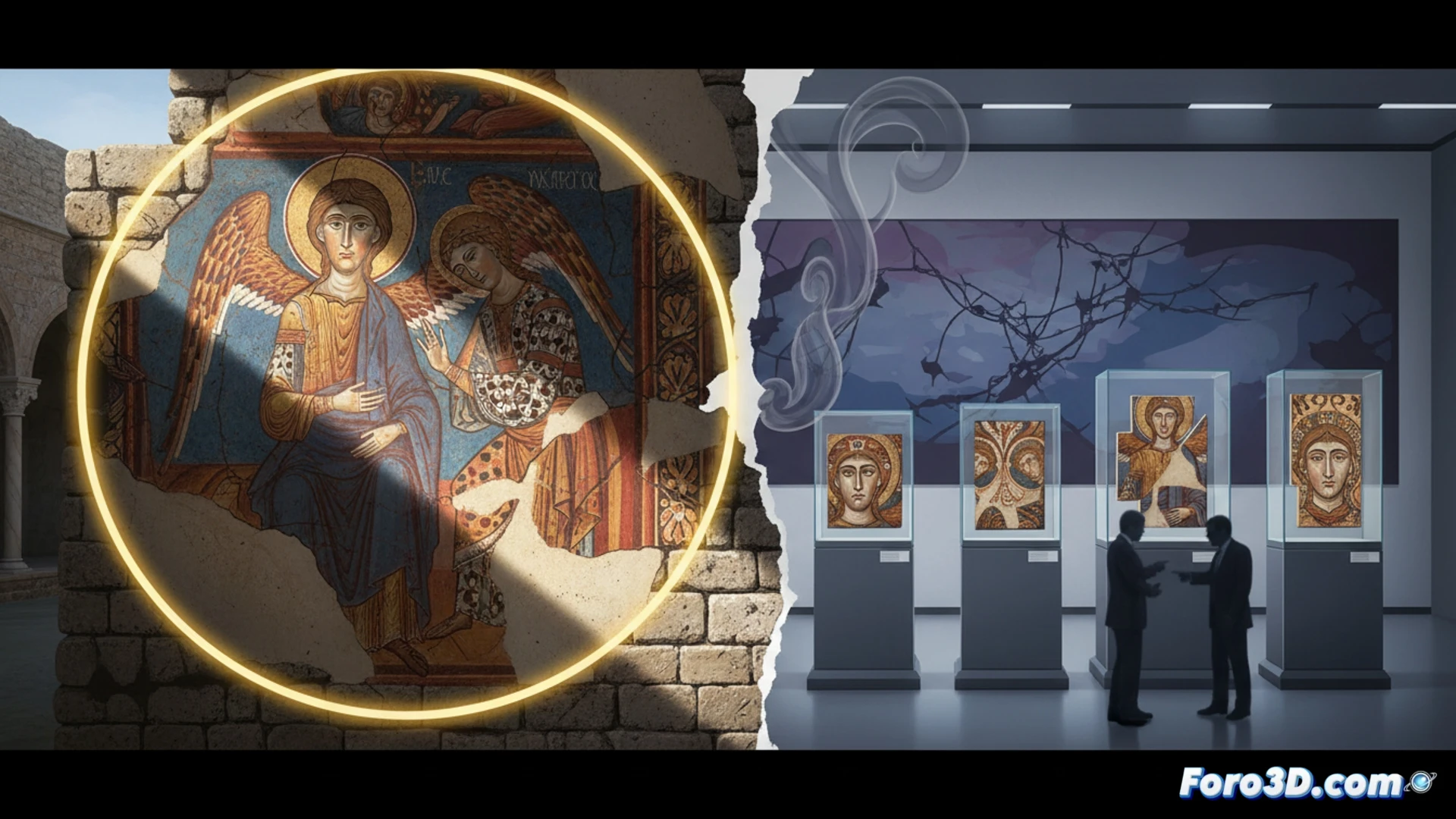
3D scanning and digital restoration: Romanesque art in pixels 🖥️
Technicians have used photogrammetry and structured light scanners to create three-dimensional models of the fragments. This process allows for detailed analysis of pigments and pictorial layers without direct contact. Digital technology facilitates the virtual reconstruction of lost scenes, offering a key tool for historians. However, lack of funding limits the application of these techniques to complete pieces, leaving many remains undocumented.
The pixel that doesn't fight: Sijena's digital peace 🤖
While politicians argue over which wall each stone should decorate, algorithms have already achieved what humans cannot: virtually joining the frescoes without insults or lawyers. Artificial intelligence reconstructs dismembered saints without asking anyone's permission. Perhaps Sijena's next miracle will be experts agreeing on which Instagram filter to use for the restoration.