The transfer of the frescoes from the Monastery of Sijena to Aragon is now a reality. After decades of legal disputes with Catalonia, the 12th-century mural paintings begin their journey back. Although time and conflicts have fragmented their original state, specialists agree that this collection remains a key piece for deciphering European medieval art. Its return not only closes a legal chapter but opens another focused on its conservation.
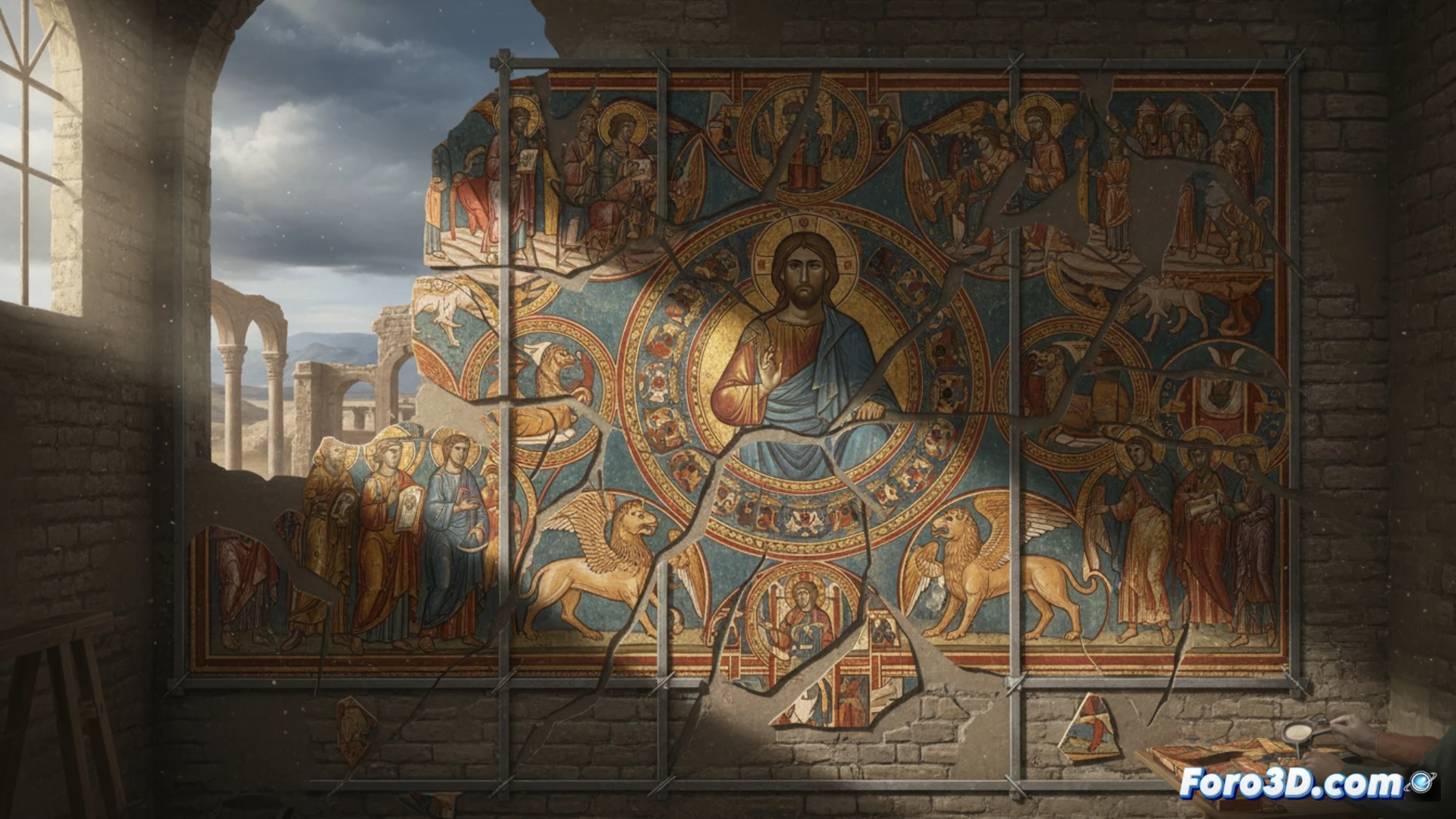
Scanners and drones: technology to the rescue of the frescoes 🛠️
The restoration team has deployed state-of-the-art tools to assess the damage. High-resolution 3D scanners are used to map every centimeter of pigment and plaster, while drones equipped with multispectral cameras detect cracks invisible to the human eye. Artificial intelligence software compares current images with historical photographs to plan color reintegration. The goal is to stabilize the paint layers before fixing them with reversible resins, a process that will take months.
The most expensive medieval move of the 21st century 💸
If the monks of Sijena raised their heads, they would freak out. First, because their masterpiece has traveled more than a digital nomad; second, because the transport insurance costs more than all the candles they lit in their lives. And while experts debate whether a crack is historical or just a moving scratch, the residents of Villanueva de Sijena are already arguing over who gets to invite the frescoes to the town festival. Art, bureaucracy, and a touch of Aragonese chaos.