A supermarket chain faces serious accusations after it was discovered that its digital scales recorded a systematic 5% overweight. The investigation, led by a forensic team, employed a 3D reverse engineering pipeline to demonstrate the manipulation. The case sets a precedent in the fight against commercial fraud using optical metrology technologies.
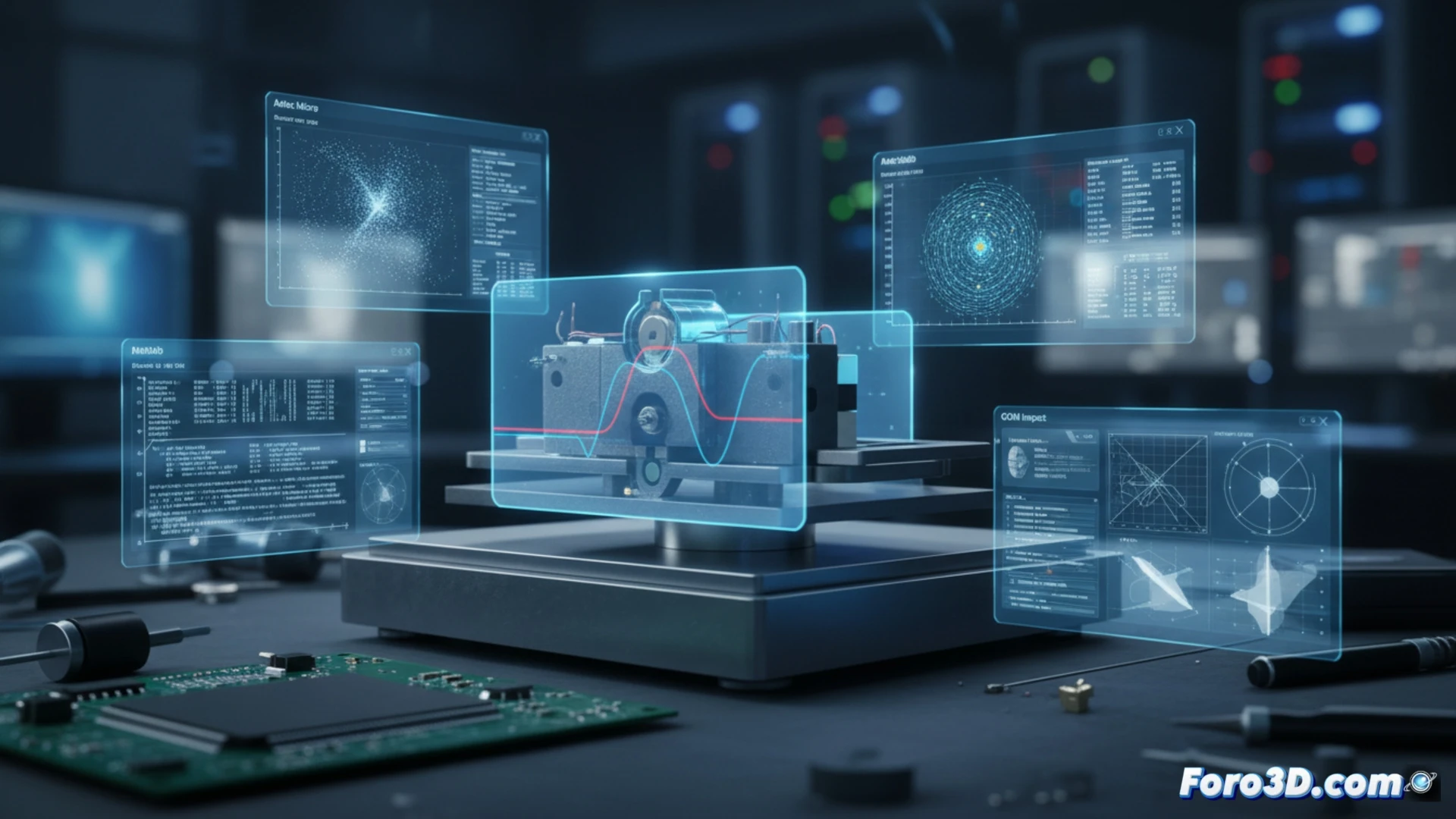
Forensic Pipeline: Scanning, Comparison, and Structural Analysis 🔍
The process began with capturing the suspected load cell using an Artec Micro scanner, achieving a resolution of 0.01 mm. The resulting mesh was imported into GOM Inspect to align it with the original SolidWorks CAD model. Chromatic deviation revealed an anomalous protrusion: an M1.6 micro-screw embedded in the deformation zone of the strain gauge. Using MATLAB, the mechanical behavior of the tampered assembly was simulated, confirming that this rigid element artificially reduced the sensor's bending, inducing a linear 5% error in the weight reading.
Legal Implications and the Value of Technical Expert Evidence ⚖️
The scanned evidence was presented as expert testimony in the litigation. The micro-screw, invisible to the naked eye, became the key piece of the case. This fraud demonstrates that physical manipulation of electronic components is no longer undetectable. The use of a 3D pipeline not only quantifies the exact deviation but also provides an immutable digital record, raising the standard of proof in white-collar crimes and protecting consumer rights.
What specific 3D scanning parameters allowed differentiating between a technical calibration deviation and intentional fraud in the supermarket chain's scales?
(PS: don't forget to calibrate the laser scanner before documenting the scene... or you might be modeling a ghost)