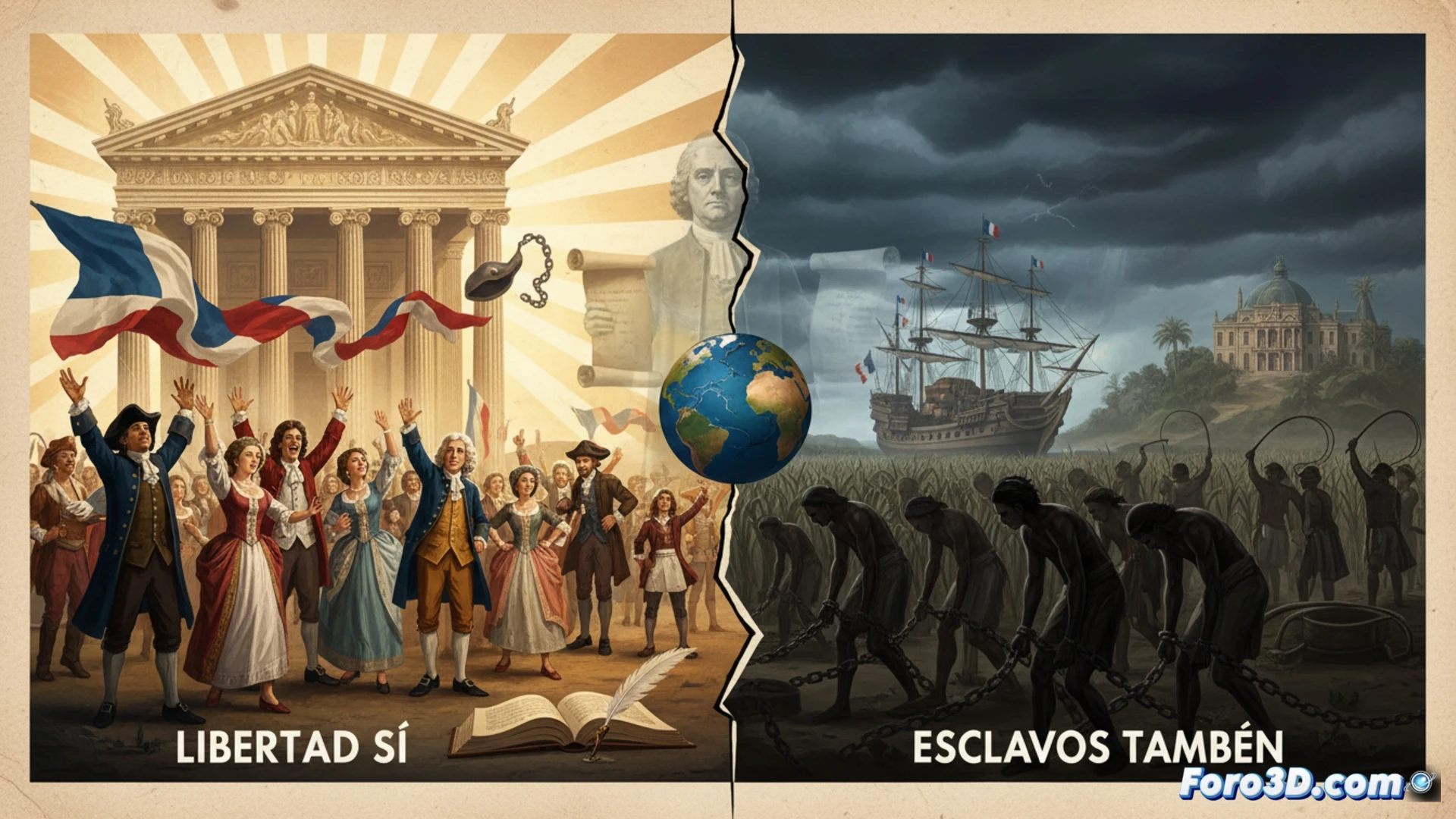
Jeremy D. Popkin dissects France's foundational hypocrisy: while philosophers preached freedom and equality, the Caribbean colonies, led by Saint-Domingue, sustained the empire with slave labor. The abolitionist debate, far from being a side effect of 1789, had been brewing for decades, influencing key figures of the revolution. A contradiction that the Enlightenment never managed to resolve.
The Algorithm of Freedom: How Technology Betrayed the Revolution ⚙️
The mechanization of cane processing and the development of more efficient sugar mills in Saint-Domingue created a perverse feedback loop. The greater the sugar production, the greater the demand for slave labor. The binary code of the era was simple: agricultural efficiency equals more slaves. Advances in navigation and port logistics allowed a constant flow of Africans, making the system technically flawless and morally unsustainable. Technology optimized oppression.
The Enlightenment: When the Wi-Fi of Equality Didn't Reach the Caribbean 📡
French philosophers debated human rights in heated salons, while in the colonies the only right was to die of heat cutting cane. Popkin points out that Voltaire and company owned shares in slave-trading companies, proving that ideological coherence has always been a luxury for the poor. Liberty, equality, and fraternity arrived free in Paris, but in the Caribbean they had a price tag.