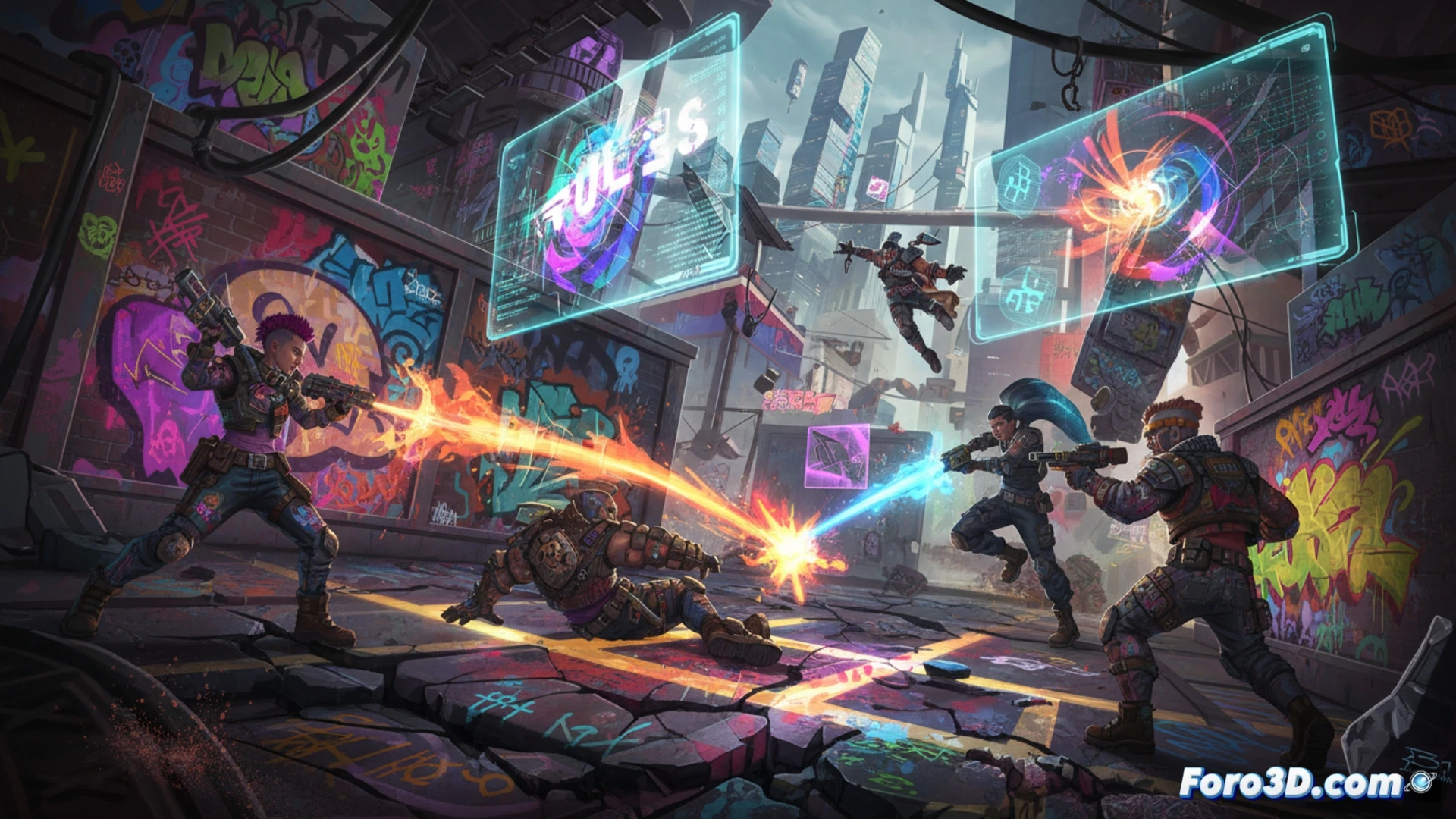
The hero shooter FragPunk bursts onto the scene with a bold visual proposal that combines graffiti art with the power of Unreal Engine 5. Its main appeal is not just the combat, but how the match rules are modified in real-time, altering the map's geometry and lighting. This approach demands a robust technical pipeline that integrates 3ds Max, Substance 3D, and an aggressive use of UE5's post-processing systems to create a unique identity. 🎨
Production Pipeline: From 3ds Max to UE5 with Aggressive Post-Processing 🚀
To achieve the graffiti-punk finish, the FragPunk team likely models the main assets in 3ds Max, prioritizing angular silhouettes and flat surfaces reminiscent of urban art. Then, in Adobe Substance 3D, textures with simulated wear, spray paint, and saturated neon colors are applied, leveraging the roughness and metallic channels for a matte, dirty finish. The real trick lies in UE5's post-processing: Post Process Volumes are used with extreme Color Grading that lifts the blacks, applies an intense vignette, and adds a slight Chromatic Aberration to simulate a cheap camera lens. For rule changes that alter the map, Blueprints and Level Streaming are employed to load or unload sub-levels with different dynamic lighting configurations (Lumen) and particle effects, allowing an area to go from a shadowy alley to a neon-lit dance floor in milliseconds.
Lessons for Indie Devs: How to Replicate Visual Chaos 💡
For independent developers seeking a similar style, the key lies in optimization and control of Shader Complexity. Using the Custom Stencil Buffer in UE5 allows applying post-processing effects only to specific objects, like graffiti edges that glow when a rule changes. It's not necessary to model every detail; a low-poly base in 3ds Max with detailed textures in Substance 3D is more efficient. Finally, limiting rule changes to 2 or 3 variants per map prevents Level Streaming from saturating memory, maintaining the fluidity required by a competitive hero shooter. Visual chaos must be intentional, not the result of poor optimization.
As a developer, what was the biggest technical challenge when integrating graffiti art, which is usually static and flat, with Unreal Engine 5's dynamic lighting system and physics so that FragPunk's visual style was not affected by the game's changing rules?
(PS: game jams are like weddings: everyone is happy, no one sleeps, and you end up crying)