Last month, a liquid hydrogen storage facility suffered a catastrophic explosion during the filling of a cryogenic tank. The failure, initially attributed to overpressure, concealed a more complex phenomenon: hydrogen embrittlement in stainless steel. This article breaks down how a 3D pipeline, combining FLACS, GOM Inspect, RealityCapture, and Unreal Engine, allowed for the reconstruction of the accident, determination of the actual safety radius, and generation of a digital twin for training.
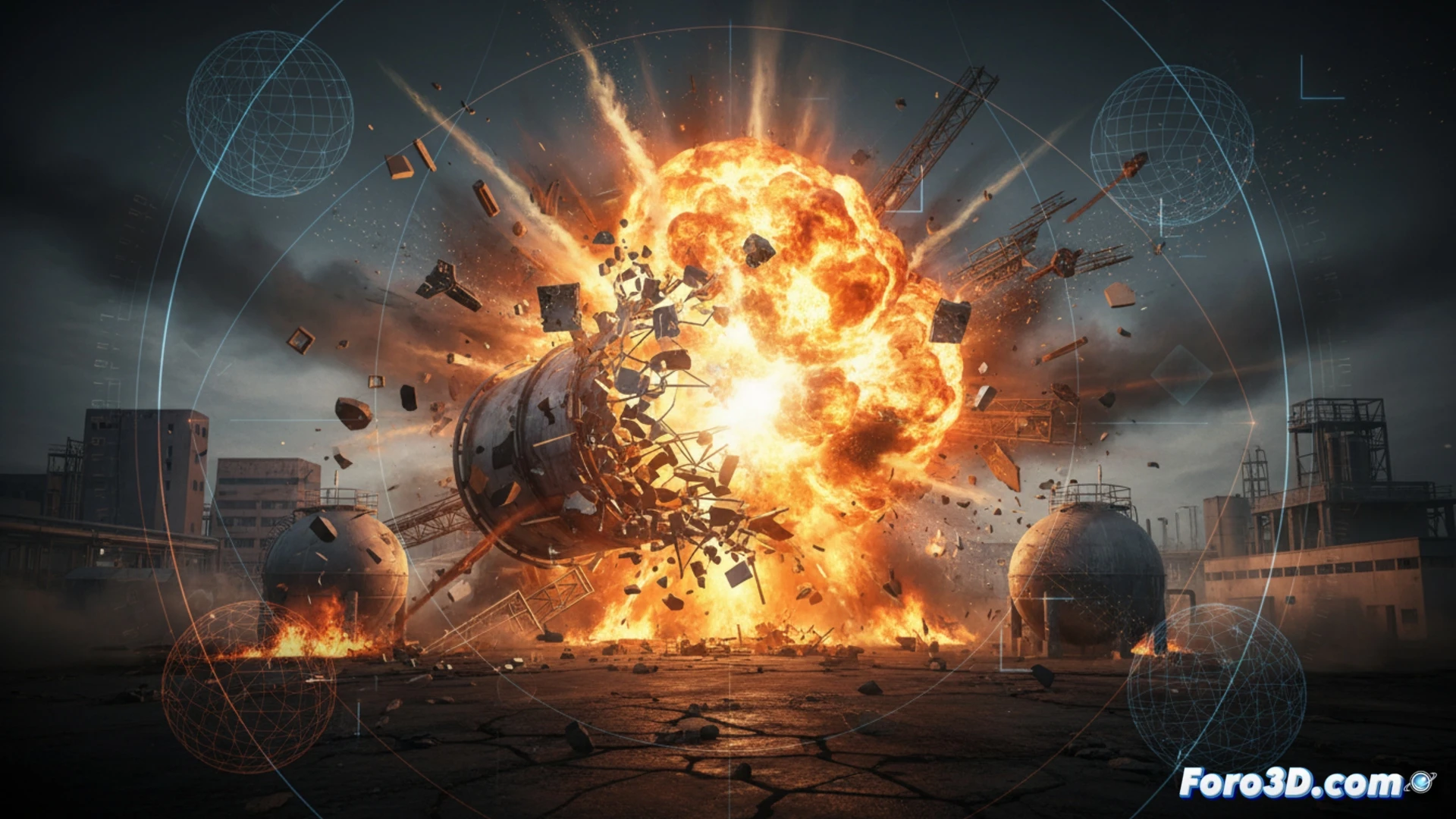
Forensic reconstruction with FLACS and GOM Inspect 🔍
The analysis began with photogrammetry of the environment using RealityCapture, generating a precise 3D mesh of the logistics port and tank debris. With GOM Inspect, the fracture surfaces of the stainless steel were scanned, revealing microcracks characteristic of hydrogen embrittlement, a blind spot in maintenance protocols. This data fed a simulation in FLACS, which modeled the release of the liquefied gas and its ignition. The simulation calculated the shockwave and its propagation, contrasting it with the theoretical safety radius of 150 meters. The result was devastating: the actual lethal damage radius reached 220 meters, invalidating existing evacuation plans.
Digital twins for future safety 🛠️
The reconstruction did not remain a static report. The team integrated the FLACS simulation and the 3D model of the environment into Unreal Engine, creating an interactive digital twin of the accident. This environment allows operators and safety teams to walk through the explosion in real-time, visualize the steel embrittlement, and practice response protocols. The lesson is clear: hydrogen embrittlement is not a theoretical failure, but a tangible risk requiring periodic inspections with 3D scanners and dynamic simulations to adjust safety radii to operational reality.
What was the root cause of the cryogenic embrittlement that caused the liquid hydrogen tank explosion during filling, and what safety measures could have prevented it?
(PS: Simulating catastrophes is fun until the computer melts down and you are the catastrophe.)