A luxury display production line has detected systematic breakage in synthetic sapphire substrates. The problem, identified through a multidisciplinary workflow, reveals a critical thermal gradient during the crystal growth phase. The combination of digitized polariscopy, Zemax OpticStudio, and ANSYS allows mapping residual stresses in 3D, identifying the exact failure point in the Kyropoulos process.
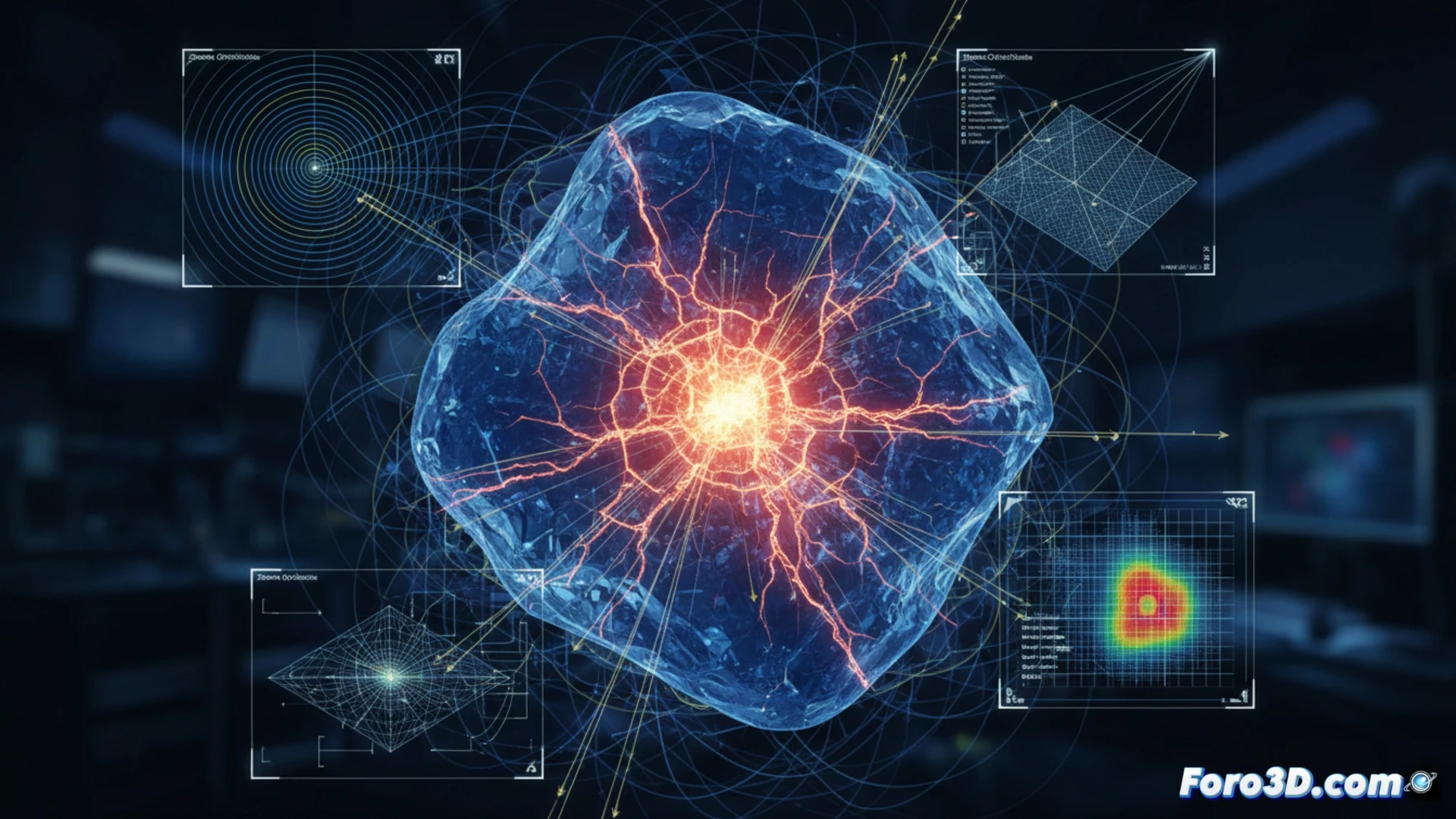
Thermal Diagnosis: From the Kyropoulos Method to ANSYS Simulation 🔥
The Kyropoulos method, used to grow high-purity sapphire crystals, depends on extremely precise thermal control. In this case, analysis with ANSYS (Thermal) revealed a non-uniform temperature profile during solidification, generating internal stresses exceeding the material's strength. Digitized polariscopy acted as a validation sensor, capturing the birefringence pattern that Zemax OpticStudio later modeled to visualize the gradient. The final 3D model, processed in MeshLab, showed that fractures originated at the interface between the crystal and the crucible, where the thermal difference reached 45 degrees Celsius.
Lessons for Microfabrication of Optical Components 💡
This case demonstrates that 3D thermal simulation is not just a design tool, but an indispensable quality control system in the manufacturing of semiconductor substrates. The integration of optical data (Zemax) with mechanical analysis (ANSYS) allows correcting the heating profile before scaling production. For process engineers, the message is clear: a poorly managed thermal gradient in crystal growth can compromise entire batches of luxury displays, making 3D modeling a critical investment rather than a luxury.
How can the distribution of thermal stresses in a synthetic sapphire substrate be modeled in 3D to predict fracture points during the manufacturing process of luxury displays?
(PS: at Foro3D our favorite lithography is printing filament layers)