A quartz lens in an EUV lithography system has fractured, halting microchip production. The failure, attributed to residual absorption of high-energy photons, generated thermal fatigue. For forensic analysis, 3D micro-CT has been employed with VGSTUDIO MAX and Keyence VHX-7000, searching for internal micro-cracks that compromise structural integrity.
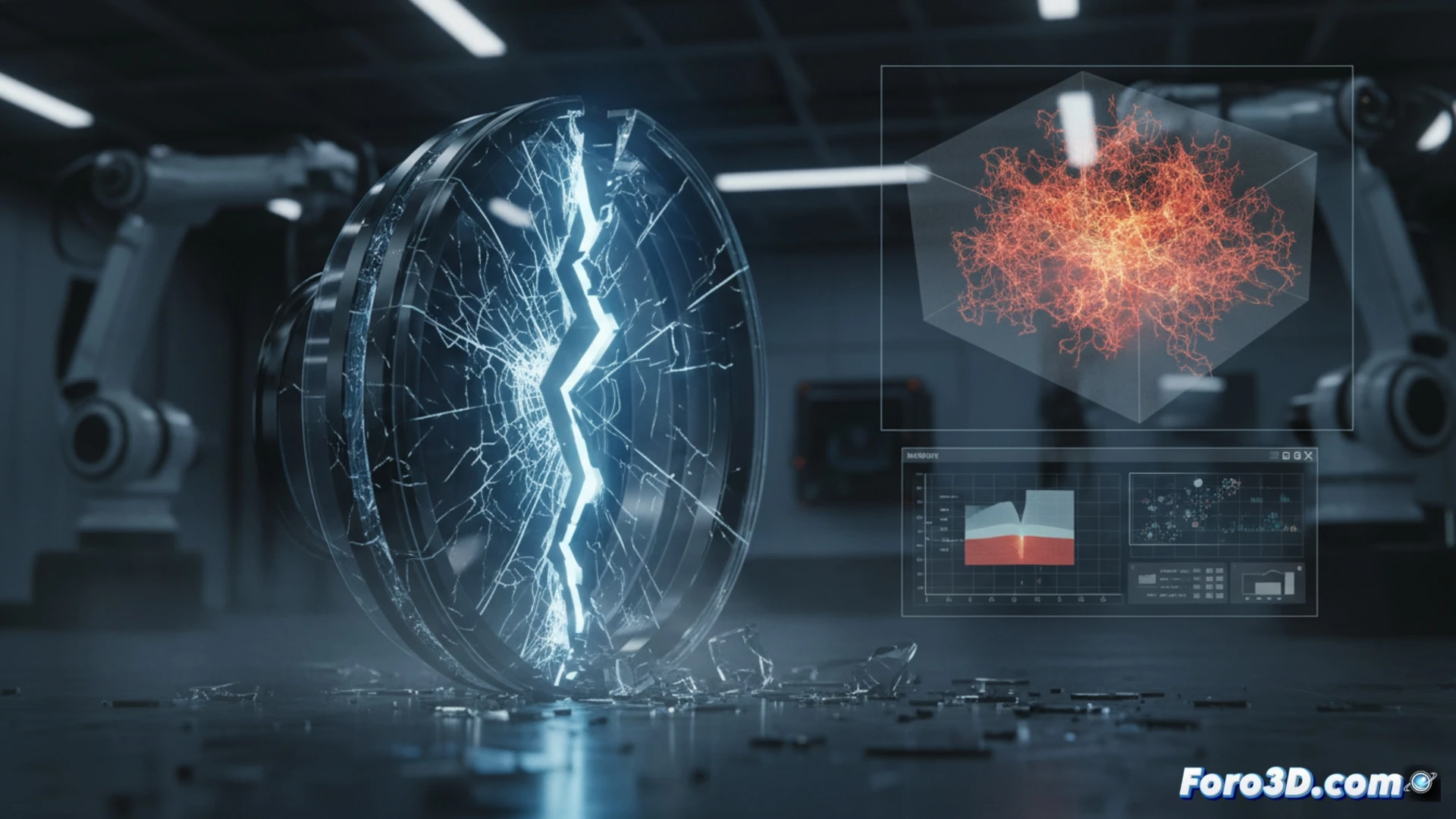
Non-destructive inspection and failure simulation 🔬
3D micro-CT allows detecting sub-surface defects in the quartz without disassembling the optics. With VGSTUDIO MAX, cracks are segmented and correlated with thermal stress patterns. In parallel, Autodesk Fusion 360 models the lens geometry to simulate crack propagation, while NVIDIA Omniverse integrates this data into a digital twin of the EUV system. This workflow anticipates critical failure points before they occur in production.
Lessons for 3D microfabrication ⚙️
A production halt due to a fractured lens costs millions per hour. Non-destructive inspection with micro-CT and 3D simulation not only identify micro-cracks but also validate the thermal cycles of the EUV process. Integrating these tools into predictive maintenance is now a strategic necessity for the semiconductor industry, where optical reliability defines chip performance.
What was the factor of thermal fatigue in the quartz lens that 3D micro-CT identified as the initiator of the fracture in the EUV lithography system?
(PS: at Foro3D our favorite lithography is printing filament layers)