A lightweight modular bridge collapsed under the weight of a rescue vehicle, revealing a critical failure in the aramid fiber connectors. Digital forensic analysis, using a 3D pipeline integrating RealityCapture, Ansys, and CloudCompare, suggests that prolonged exposure to solar radiation degraded the Kevlar surface, initiating a progressive fracture that culminated in the catastrophic failure of the component.
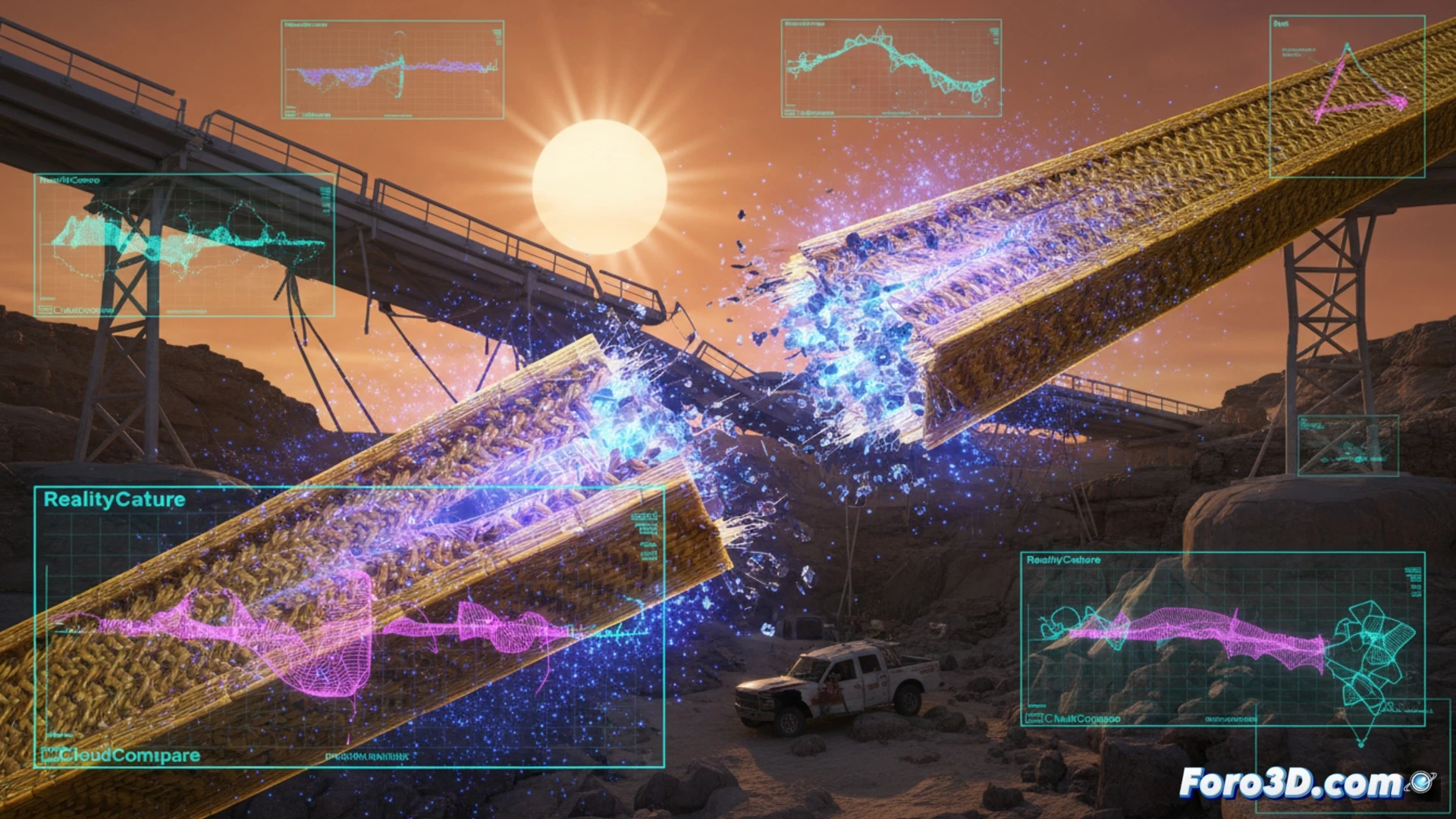
3D Pipeline for Nonlinear UV Fatigue Simulation 🛠️
The process began with RealityCapture to generate a high-precision mesh of the fractured connector from photographs. This geometry was imported into Ansys for a nonlinear analysis, modeling the surface degradation of the aramid fibers as a gradual reduction of the elastic modulus in the exposed layers. Fatigue parameters were calibrated using data from CloudCompare, which aligned the point cloud of the original connector with the post-failure deformed model. The simulation correlated UV exposure with the loss of mechanical strength, reproducing the progressive fracture pattern observed in the emergency bridge.
Failure Prevention in Emergency Infrastructures ⚠️
This case demonstrates that fatigue induced by solar radiation is a critical factor in lightweight composite materials for tactical use. The 3D pipeline not only diagnoses the failure but also allows predicting the remaining service life of exposed connectors. Integrating these analyses into preventive maintenance protocols for modular bridges would prevent collapses in rescue scenarios, where structural reliability is vital. The lesson is clear: environmental degradation must be modeled as an active parameter in fatigue simulations.
How can the combined effect of UV radiation and cyclic loading on the degradation of aramid connectors be modeled using finite element simulation to predict the service life in emergency bridges?
(PS: Material fatigue is like yours after 10 hours of simulation.)