A hydrogel intervertebral implant has failed. The extracted piece, a fractured explant, is the only physical evidence of the collapse. To understand why it happened, a biomedical engineering team has turned to 3D scanning and finite element simulation. The goal is not only to document the break, but to reconstruct the mechanics of the failure to prevent future flawed designs. This analysis combines the precision of scanning with the predictive power of computational biomechanics.
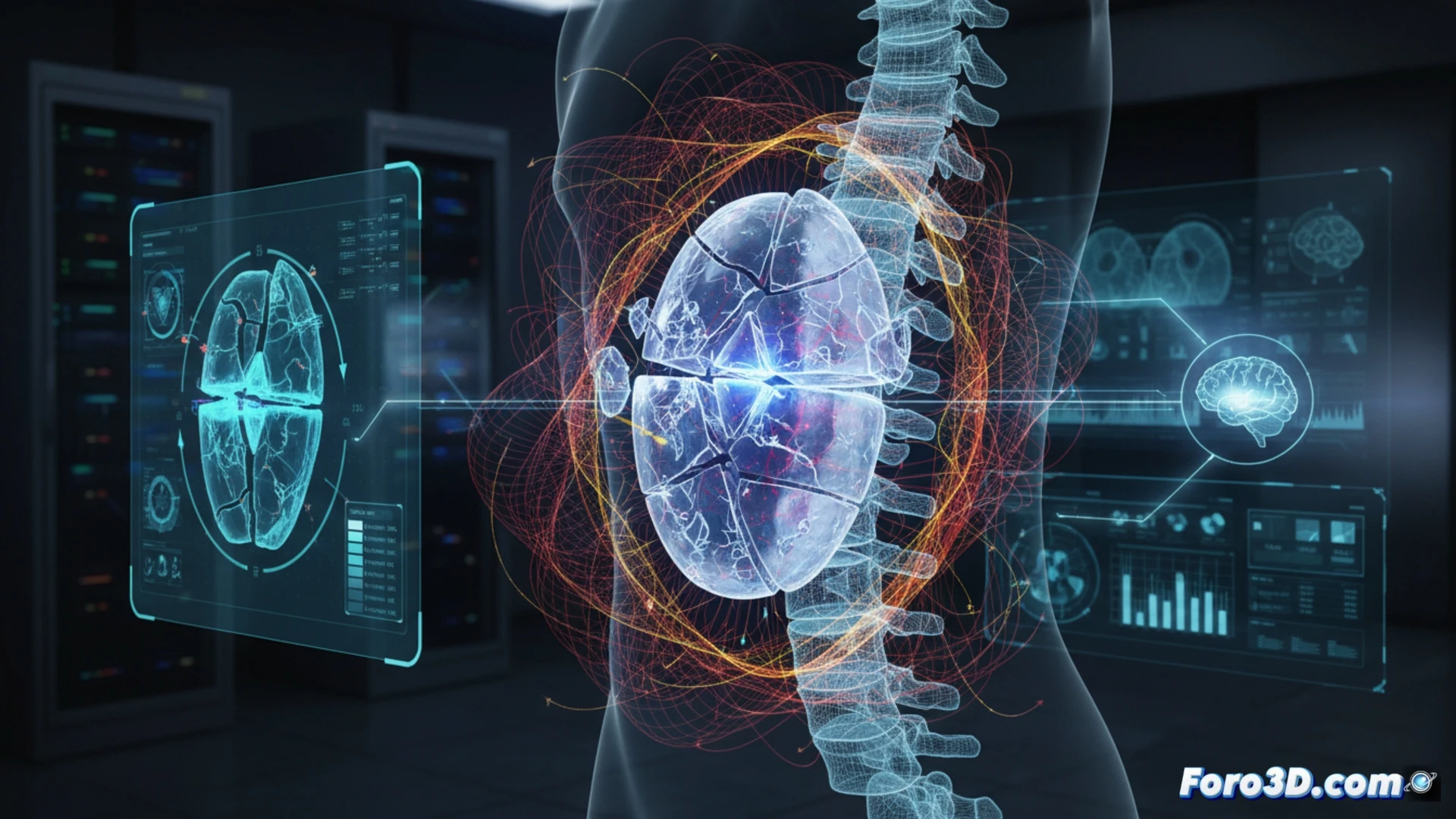
Mimics, Ansys, and 3ds Max workflow for failure simulation 🛠️
The process begins with micro-CT scanning of the hydrogel explant. The DICOM data is imported into Mimics, where the actual geometry of the fracture, including cracks and deformations, is segmented. This volumetric model is exported to Ansys for finite element analysis. There, mechanical properties of the hydrogel are assigned, and typical physiological loads of the lumbar spine are applied. The simulation reproduces the maximum stresses in the areas where the fracture originated. Finally, 3ds Max is used to generate a clear visualization of the fracture mechanism, facilitating communication of the finding to surgeons and implant designers.
Lessons for spinal prosthesis design 💡
This case demonstrates that an implant can fail even with biocompatible materials if the stress distribution is not properly validated. The 3D reconstruction of the explant not only explains the specific failure but provides critical data to improve the hydrogel topology. By integrating the actual scan of the failed piece with simulation, the feedback loop between design and clinical practice is closed. Computational biomechanics thus consolidates itself as an indispensable tool for preventing failures in implantable devices.
What information can be extracted at the microstructural level from the 3D analysis of a hydrogel fracture surface to determine the origin of the mechanical failure in an explanted vertebral implant
(PS: and if the printed organ doesn't beat, you can always add a little motor... just kidding!)